Cassytha, Genus, spp., Multiple species,
- Genus
- Multiple species
Dodder-laurel
Overview
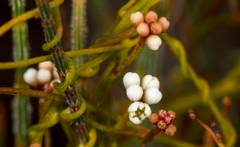
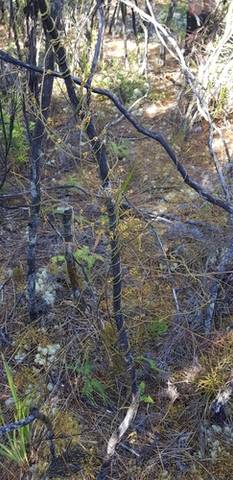
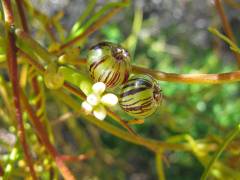
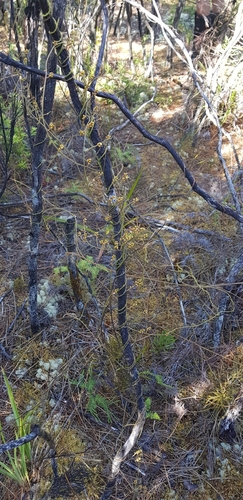
Cassytha is a genus of about twenty parasitic vines in the laurel family (Lauraceae), found mainly in Australia and across the tropics. Unlike most of the family, these are not trees but leafless, twining stems that scramble over other plants, looking much like the unrelated dodder (Cuscuta). The thread-like stems are green to orange-yellow, 1-3 mm thick, and attach to host plants with small sucker-like pads called haustoria that tap into the host for water and nutrients. Leaves are reduced to tiny scales, and the stems carry out what photosynthesis the plant does for itself. Small white to cream flowers cluster along the stems, followed by fleshy berry-like fruit that birds eat and spread. The genus spreads over shrubs and trees in heath, coastal scrub, and open woodland, sometimes covering host plants in a tangled mat. Heavy infestations weaken or smother the host, so Cassytha is regarded as a pest where it builds up. Because it lives as a parasite, it is not grown as a garden plant and cannot be cultivated apart from suitable hosts.
Native Range
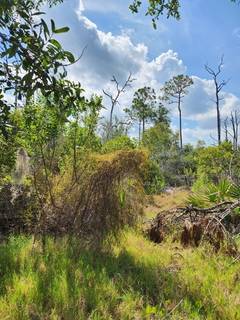
The genus is centred on Australia, where most species occur, and extends through tropical Asia, Africa, the Pacific, and the Americas. Cassytha filiformis is the most widespread, reaching tropical coasts worldwide, including Florida and the Caribbean. The vines grow over shrubs and small trees in heath, dune scrub, and open woodland.Suggested Uses
The genus has no garden use and is not planted, living instead as a wild parasite on other plants. Some species bear fruit that has been eaten by Aboriginal Australians and is taken by birds. In natural areas the vines form part of the local ecology despite their drain on host plants.How to Identify
Appearance
Size & Dimensions
Height3' - 20'
Width/Spread3' - 10'
Bloom Information
Flowering can occur through much of the warm season, with a peak in summer in temperate parts of the range and year-round flushes in the tropics. The small flowers are clustered tightly along the stems. Round fleshy fruits follow and ripen to white, green, or black, drawing fruit-eating birds.
Detailed Descriptions
Flower Description
white to creamFoliage Description
green to yellow-greenGrowing Conditions
Sun Requirements
Requires 6-10 hours of direct sunlight daily
• Full Sun: 6+ hours of direct sunlight
• Partial Shade: 3-6 hours of direct sunlight
• Full Shade: Less than 3 hours of direct sunlight