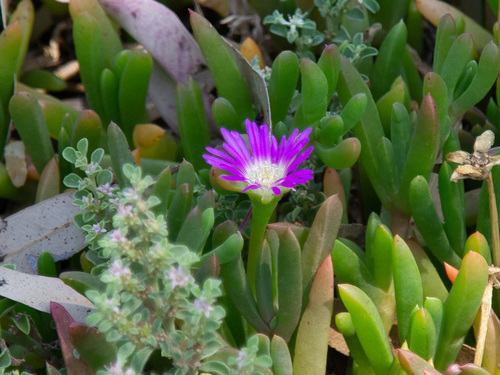
Carpobrotus, Genus, rossii, Species,
- Genus & species
Australian pig face
Overview
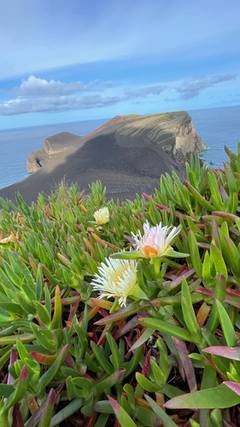
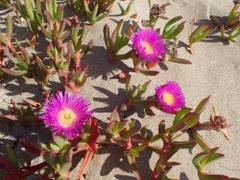
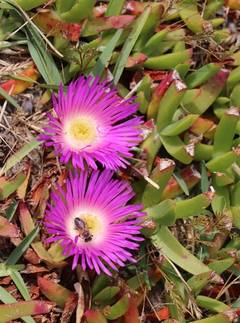
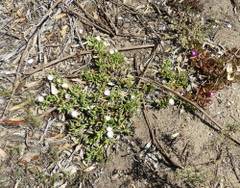
Carpobrotus rossii, Australian pigface or karkalla, is an evergreen, mat-forming succulent with creeping stems that root at the nodes and spread 1-2 m (3-6.5 ft) across while staying only 10-15 cm (4-6 in) high. The leaves are thick and fleshy, triangular in cross-section, 3-9 cm (1.2-3.5 in) long, green and turning red-tinged in strong sun or dry conditions. Large daisy-like flowers 3-6 cm (1.2-2.4 in) across open in spring and summer, with many narrow petals in shades of purple to pink. The flowers are followed by fleshy reddish fruit that are edible and have a sweet, salty taste. It grows on coastal dunes, cliffs, and sandy flats across southern Australia, binding loose sand with its spreading stems. The plant tolerates salt spray, sandy soils, and drought, but rots in wet, poorly drained ground and is damaged by hard frost.
Native Range
Native to southern Australia, including coastal Victoria, Tasmania, South Australia, and Western Australia. It grows on dunes, coastal cliffs, sandy flats, and saltmarsh margins.Suggested Uses
Grown as a sand-binding groundcover for coastal banks, dunes, and dry slopes. Used for erosion control, rockeries, and low-water seaside gardens. Suited to containers and trailing over walls in warm, dry positions.How to Identify
Appearance
Size & Dimensions
Height4" - 6"
Width/Spread3'3" - 6'7"
Bloom Information
Detailed Descriptions
Flower Description
purple to pinkFoliage Description
green to red-tingedGrowing Conditions
Sun Requirements
Requires 6-12 hours of direct sunlight daily
• Full Sun: 6+ hours of direct sunlight
• Partial Shade: 3-6 hours of direct sunlight
• Full Shade: Less than 3 hours of direct sunlight
Care & Maintenance
Care Guide
Grows in full sun on sandy, free-draining soils, including coastal sand and limey ground. Established plants tolerate salt spray and long dry spells, needing no extra water in most coastal gardens. Sharp drainage is needed, as the succulent stems and roots rot in wet or heavy soil. Growth is fast in open sun and weak in shade. Hard frost damages the foliage, though plants recover in mild coastal districts. Stems root as they spread, so new plants can be made by division.Pruning
Trimming overgrown or untidy mats at any time controls spread and removes dead patches. Cutting is tolerated, and stems reshoot from the nodes. Clearing frost-burned growth in spring refreshes the mat.Container Growing
Suitable for container growing
Minimum container size: 2 gallons