Butia, Genus, spp., Multiple species,
- Genus
- Multiple species
Overview
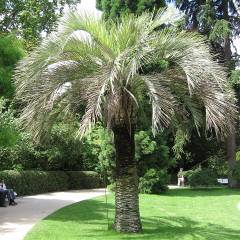
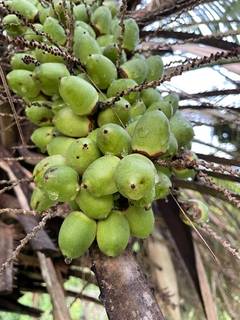
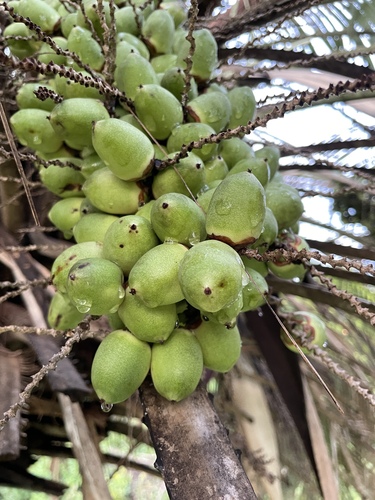
Butia is a genus of around 20 feather palms in the family Arecaceae, native to grasslands and open scrub of southern South America, from Brazil and Paraguay to Argentina and Uruguay. Most cultivated species form a single stout trunk 6-20 ft (2-6 m) tall, retaining old leaf bases, while some are short-stemmed or almost trunkless. The arching, pinnate fronds are 3-8 ft (1-2.4 m) long, strongly recurved, and grey-green to blue-green, giving the crown a distinct fountain-like form. Branched flower clusters emerge from a woody bract, carrying small cream to yellow flowers, followed by oval fleshy fruits about 0.8-1 in (2-2.5 cm) long that ripen yellow to orange and are edible, used for jellies and drinks. The genus tolerates cold better than most feather palms, with the hardiest species withstanding hard frost. In cultivation it takes full sun, well-drained soil, and drought once established, and grows slowly. The recurved fronds and edible fruit make it a feature palm for warm-temperate and subtropical gardens, given the space its spread needs.
Native Range
Butia is native to southern South America, including Brazil, Paraguay, Uruguay, and Argentina. The genus grows in open grassland, savanna, and sandy scrub, often in seasonally dry, well-drained sites.Suggested Uses
Grown as a specimen or feature palm in lawns, courtyards, and coastal gardens, and in large containers while young. The arching blue-green crown suits warm-temperate and subtropical settings. The edible fruit is used for jelly and drinks. Spaced 10-15 ft (3-4.5 m) from structures to allow for frond spread.How to Identify
Appearance
Size & Dimensions
Height6' - 20'
Width/Spread10' - 15'
Colors
Bloom Information
Across the genus, small cream to yellow flowers are carried on a branched cluster emerging from a woody bract, mainly in spring and summer. The flowers are followed over the warm months by oval fleshy fruits ripening yellow to orange. Established palms flower and fruit annually.
Detailed Descriptions
Flower Description
cream to yellowFoliage Description
grey-green to blue-greenGrowing Conditions
Sun Requirements
Requires 6-10 hours of direct sunlight daily
• Full Sun: 6+ hours of direct sunlight
• Partial Shade: 3-6 hours of direct sunlight
• Full Shade: Less than 3 hours of direct sunlight
Care & Maintenance
Care Guide
Grow in full sun on deep, well-drained soil; the genus tolerates sand, poor ground, and drought once established. Water young palms regularly to settle them, then reduce as the root system develops. The hardiest species withstand hard frost, while others take only light frost, so choice depends on local winters. Remove only fully dead fronds, as cutting green leaves weakens the crown. Feeding with a palm fertiliser in the warm season supports steady growth. Growth is slow, especially in cooler climates.Pruning
Remove only completely dead, brown fronds, cutting close to the trunk without cutting into it. Retain green and partly green leaves, which feed the palm. Spent fruit clusters can be cut away once they have dropped their fruit.Container Growing
Suitable for container growing
Minimum container size: 15 gallons