Butia, Genus, odorata, Species,
- Genus & species
jelly palm
Southern Brazil, Uruguay, and Argentina — the 'odorata' means 'fragrant' (the flowers); formerly classified as {Butia capitata}
Overview
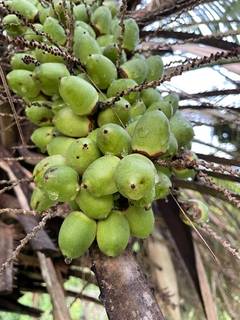
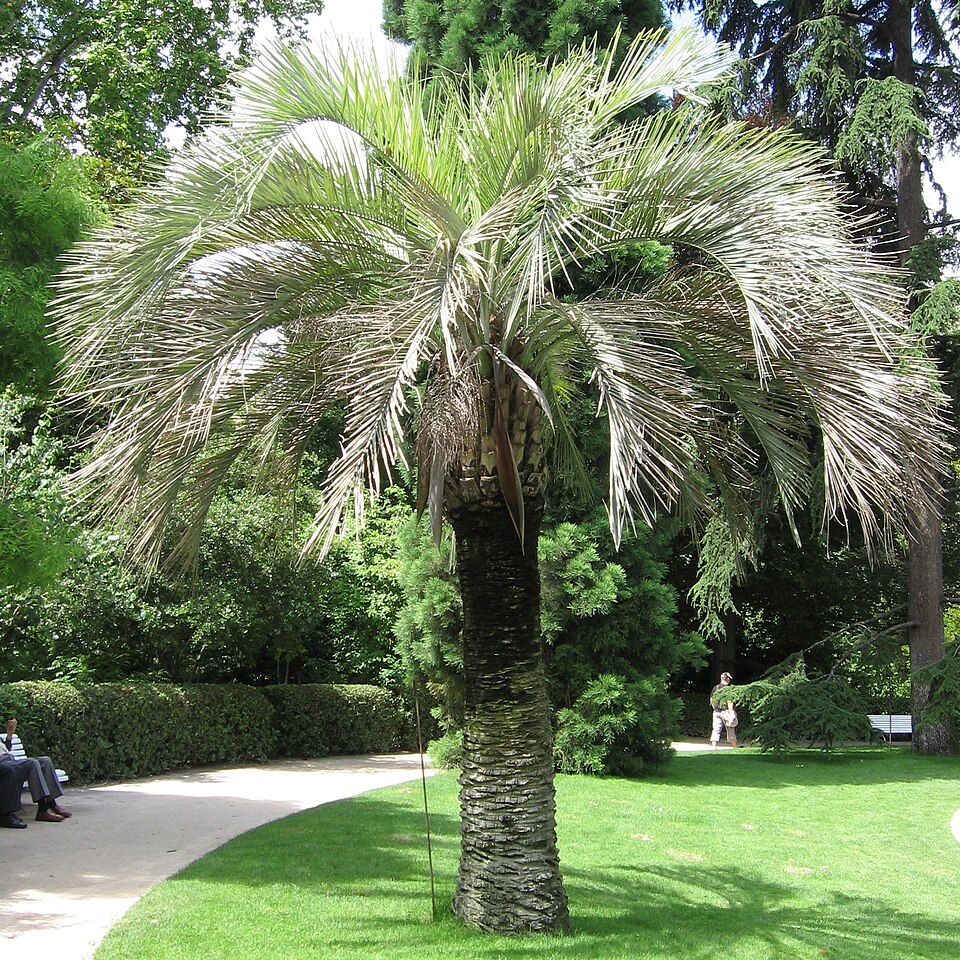
Butia odorata (syn. B. capitata) is the jelly palm, growing 120–240 inches (300–600 cm) tall. Blue-gray to silver-green pinnate (feather-shaped) fronds 72–120 inches (180–300 cm) that arch and recurve. Small orange edible drupes 0.75–1 inch (18–25 mm) with a sweet-tart flavor (pineapple-apricot-banana notes) — used to make jelly, jam, and wine, giving the common name. A mature tree can produce several hundred pounds of fruit per season. Hardy to zone 7b (approximately 5°F / −15°C). Among feather-type palms, Butia tolerates colder temperatures than most — fan palms such as needle palm (Rhapidophyllum hystrix, zone 6) and dwarf palmetto (Sabal minor, zone 7) are hardier but have a different frond type. The species name 'odorata' means 'fragrant' — the flower clusters are scented. Drought-tolerant once established. Deer-resistant. Non-toxic — fruit is edible. Full sun. Tolerates sandy and poor soils. Zones 7b–11. The heavy fruit drop beneath the canopy stains surfaces and attracts insects — position where fallen fruit is manageable. Slow-growing — 6–12 inches (15–30 cm) per year. Lethal bronzing disease (a phytoplasma) is an emerging threat in Florida and the Gulf Coast. Ganoderma butt rot is the primary fungal disease.
Native Range
Butia odorata is native to southern Brazil, Uruguay, and Argentina.Suggested Uses
Grown as a specimen in zones 7b–11 in full sun. Position where fallen fruit staining is acceptable — away from driveways, patios, and light-colored surfaces. Non-toxic edible fruit. Deer-resistant.How to Identify
Appearance
Size & Dimensions
Height10' - 20'
Width/Spread10' - 15'
Colors
Bloom Information
Detailed Descriptions
Flower Description
Yellow to reddish, in large branched clusters — followed by abundant orange EDIBLE fruitFoliage Description
Blue-gray to silver-green, pinnate (feather-shaped) fronds that arch and RECURVE gracefully — the most elegant feather palm for cold climatesGrowing Conditions
Sun Requirements
Requires 6-12 hours of direct sunlight daily
• Full Sun: 6+ hours of direct sunlight
• Partial Shade: 3-6 hours of direct sunlight
• Full Shade: Less than 3 hours of direct sunlight
Care & Maintenance
Care Guide
Full sun. Tolerates sandy and poor soils. Drought-tolerant once established. Zone 7b hardy. Fruit drop stains surfaces. Lethal bronzing disease (emerging threat). Ganoderma butt rot. Slow-growing. Non-toxic edible fruit. Deer-resistant. Zones 7b–11.Pruning
Remove browned fronds by cutting at the base. Do not over-prune green fronds — palms need them for photosynthesis. Remove spent fruit clusters.Container Growing
Suitable for container growing
Minimum container size: 25 gallons