Brodiaea, Genus, elegans, Species,
- Genus & species
harvest brodiaea
California, southwestern Oregon, northern Baja California
Overview
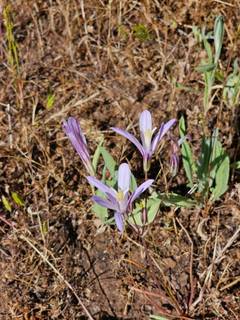
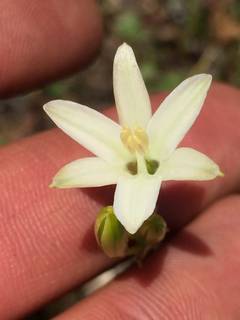
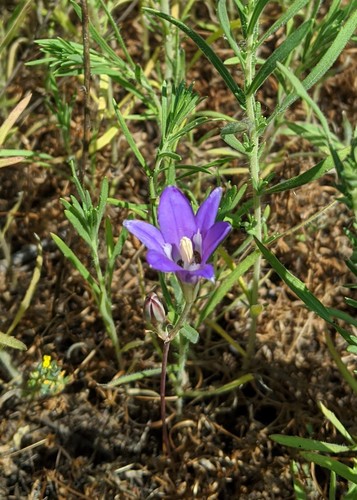
Brodiaea elegans is a herbaceous summer-dormant geophyte arising from a small papery-tunicate corm 0.4-0.8 inch (1-2 cm) across. Plants reach 6-18 inches (15-45 cm) tall in flower with 1-3 narrow basal leaves 4-12 inches (10-30 cm) long that wither before bloom. Flowering stalks bear loose umbels of 2-12 violet-purple to deep blue-purple flowers; each flower is funnel-shaped, 1-1.5 inches (2.5-4 cm) long, with six tepals and three sterile stamens (staminodia) flanking three fertile stamens. Bloom occurs from May through July depending on elevation. After flowering, the seed capsule matures and the entire above-ground plant withers and disappears by late summer. Cormlets form at the base of the parent corm, doubling the colony every 3-4 years in suitable sites. Crown rot and corm decay occur in summer-irrigated or poorly drained soils, the principal cause of decline in cultivated plantings.
Native Range
Native to California, southwestern Oregon, and northern Baja California. Grows in heavy clay soils of valley grasslands, oak woodlands, vernal pool margins, and serpentine seeps at elevations from sea level to 6,500 feet (2,000 m). Persists in seasonally wet sites that dry completely from June through October.Suggested Uses
Used in California native gardens, dry meadows, naturalistic plantings, and slope plantings combined with summer-dry warm-season grasses. Spaced at 6-12 inches (15-30 cm) between corms; tighter spacing creates fuller bloom displays. Compatible with annual wildflower seed mixes and bunchgrasses Stipa pulchra and Festuca californica in revegetation projects on heavy soils.How to Identify
Appearance
Size & Dimensions
Height6" - 1'6"
Width/Spread4" - 6"
Bloom Information
Blooms May through July across California, with peak bloom mid-May at low elevations and mid-June to early July in foothill and mountain populations. Each umbel of flowers lasts 10-14 days; total bloom on a colony extends 3-5 weeks. Bloom intensity varies between years and is reduced by drought during the previous spring's leaf development.
Detailed Descriptions
Flower Description
violet to deep blue-purpleFoliage Description
green; withers before bloomGrowing Conditions
Sun Requirements
Requires 6-9 hours of direct sunlight daily
• Full Sun: 6+ hours of direct sunlight
• Partial Shade: 3-6 hours of direct sunlight
• Full Shade: Less than 3 hours of direct sunlight
Care & Maintenance
Care Guide
Corms are planted in fall at 3-4 inch (7.5-10 cm) depth in well-drained heavy soils that receive winter and spring rainfall and dry summers. Corms tolerate temperatures down to 0°F (-18°C) once buried below 3 inches (7.5 cm) of soil. Summer irrigation causes corm rot; established plantings receive no water from June through September. Corm-feeding gophers and voles can decimate naturalized colonies; hardware cloth baskets at planting depth are commonly used as mechanical protection. Foliage that emerges in fall can experience tip burn from late frosts but plants typically recover. Fertilization is not required in unamended California soils.Pruning
Foliage and flower stalks are not cut while green; nutrients withdraw into the corm during senescence. Brown stalks and leaves can be removed once fully dry, typically by August. Seed heads can be removed before dispersal to limit spread, or left in place to allow self-seeding.Pruning Schedule
Prune: July–August
summer
Container Growing
Suitable for container growing
Minimum container size: 2 gallons