Brodiaea, Genus, coronaria, Species,
- Genus & species
crown brodiaea
Pacific coast from British Columbia to California
Overview
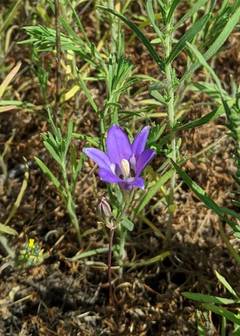
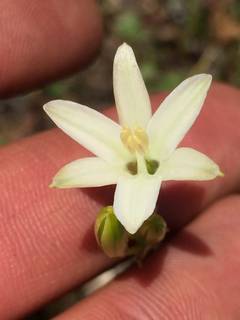
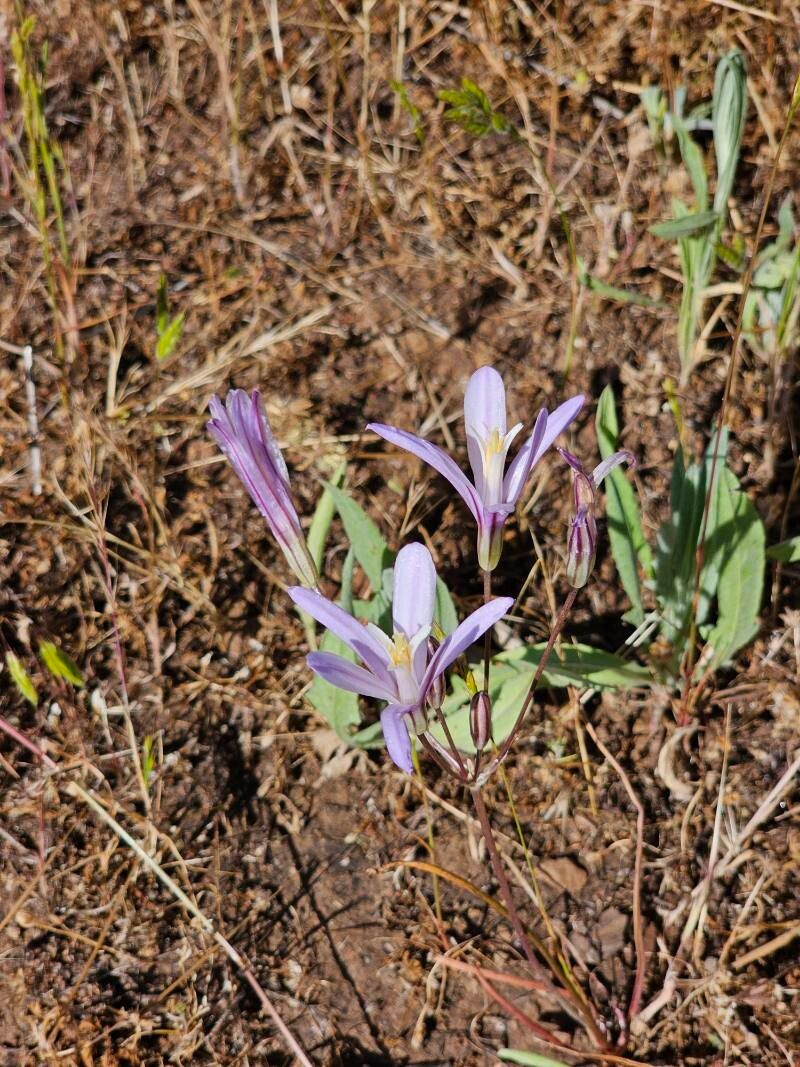
Brodiaea coronaria is a cormous geophyte with linear grass-like basal leaves and an erect flowering scape reaching 4-12 inches (10-30 cm) tall. Corms 0.5-1 inch (12-25 mm) wide, white inside, with brown fibrous tunics. Foliage emerges in fall and winter; basal leaves linear, 4-12 inches (10-30 cm) long and 0.1-0.2 inch (3-5 mm) wide, dark green, dying back by late spring before flowering. Flowering scape leafless, bearing a loose terminal umbel of 2-12 flowers; each flower funnel-shaped, 1-1.5 inches (2.5-4 cm) across, with six blue-purple to violet tepals fused at the base. Three central staminodes (sterile stamens) form a white inner crown bordering the throat, the source of the species common name. Bloom May through July across the range. Seeds dispersed in July-August. Plants spend July through September fully dormant underground; corms survive 3-4 months without rainfall. Lifespan 8-15 years on suitable sites; propagates by cormels (offsets) producing 2-5 daughter corms per parent in 4-5 years.
Native Range
Native to the Pacific coast of western North America from southwestern British Columbia south through Washington and Oregon to central California. Found in seasonally moist meadows, oak savanna, prairie balds, vernal pool margins, and serpentine grasslands at sea level to 4,500 feet (1,400 m) elevation. Tolerates seasonally saturated winter soils but requires summer-dry conditions for corm survival.Suggested Uses
Planted in oak meadow, native bulb lawn, and dry meadow plantings at 4-6 inch (10-15 cm) corm spacing in zones 7-10 with Mediterranean climates. Used in seasonally moist meadow restoration in coastal California and Oregon. Suitable for unheated bulb pans in alpine and bulb-house collections; not suitable for irrigated gardens or summer-watered borders.How to Identify
Appearance
Size & Dimensions
Height4" - 1'
Width/Spread3" - 6"
Bloom Information
May through July across most of the range, with peak bloom in May and June at low elevations and into August above 3,000 feet (900 m). Individual umbels bloom for 2-3 weeks; total flowering on a single plant 3-4 weeks. Foliage senesces 2-4 weeks before flowering, leaving the flower scape rising from bare ground.
Detailed Descriptions
Flower Description
Blue-purple to violet with white staminodesFoliage Description
Dark green; senesces yellow before bloomGrowing Conditions
Sun Requirements
Requires 6-12 hours of direct sunlight daily
• Full Sun: 6+ hours of direct sunlight
• Partial Shade: 3-6 hours of direct sunlight
• Full Shade: Less than 3 hours of direct sunlight
Care & Maintenance
Care Guide
Plants establish from corms planted 3-4 inches (7.5-10 cm) deep in fall before winter rains. Mature plants require winter rainfall during foliage growth and complete summer dryness during dormancy. Container culture is feasible in 1-gallon (4 L) pots set in unheated frames; corms must dry out completely from June through September. Few pest pressures occur on natural sites; gophers and voles consume corms in mowed lawn settings. Lifespan 8-15 years on suitable sites with annual cormel reproduction. Plants tolerate fall mowing or grazing but not summer disturbance during dormancy.Pruning
Foliage is left to yellow naturally in late spring; cutting green leaves before they brown reduces corm vigor for the following year. Spent flower scapes can be cut back to ground level in July or left to release seed in naturalistic plantings.Pruning Schedule
Prune: July
summer
Container Growing
Suitable for container growing
Minimum container size: 1 gallons