Bossiella, Genus, spp., Multiple species,
- Genus
- Multiple species
bossiella coral algae
Northeastern Pacific (Alaska to Mexico)
WaterHigh
Overview
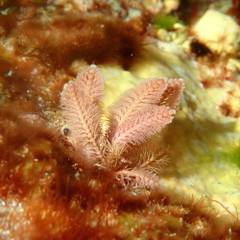
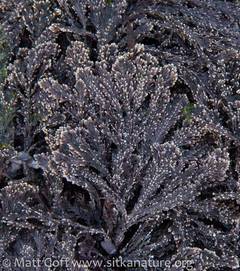
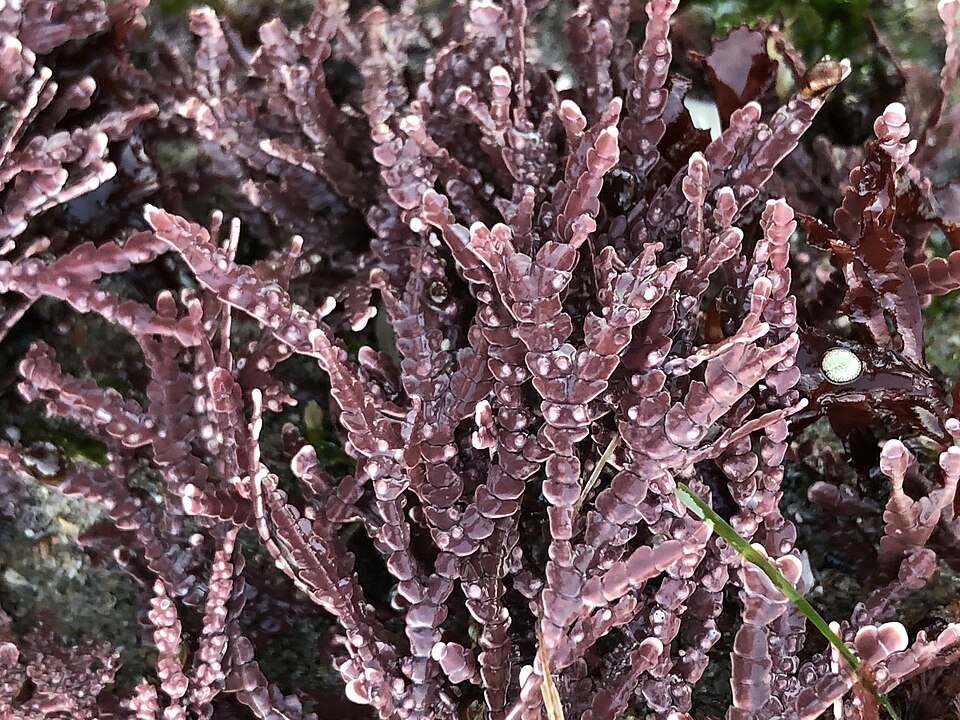
Bossiella is a genus of articulated coralline red algae in the family Corallinaceae, growing on rock and other seaweeds along the cool coasts of the northeastern Pacific. Like other jointed corallines, it has upright, calcified fronds built from flat, hard segments linked by flexible uncalcified joints that let the plant bend in waves. In Bossiella the segments are typically flattened and winged, often wedge- or fan-shaped, giving the fronds a neat, jointed, ladder-like look, 1-4 inches (2.5-10 cm) tall and pink to purple-red. The fronds grow from an encrusting base attached to rock or to larger seaweeds, and reproductive structures form in raised swellings called conceptacles along the segment surfaces and margins. Bossiella is common in tide pools and on wave-washed rock from the low intertidal into the subtidal zone, where it adds to the pink coralline turf that shelters small marine animals. The calcite skeleton makes the fronds stiff and chalky and, like other calcified algae, vulnerable to ocean acidification. The flattened, winged segments separate Bossiella from the more cylindrical segments of Corallina, though microscopic study confirms the genus and species.
Native Range
Bossiella grows along the cool coasts of the northeastern Pacific, from Alaska to California and Mexico, on rock and on larger seaweeds in tide pools and on wave-washed shores from the low intertidal into the subtidal zone.Suggested Uses
Bossiella adds to the pink coralline turf that shelters small marine animals and is studied as an indicator of cool-water shore conditions and ocean acidification. It is kept in cold-water reef aquaria as part of the coralline community. The calcified fronds are of interest in research on biomineralisation.How to Identify
Appearance
Bloom Information
Bossiella does not flower. It reproduces by spores and gametes formed in raised swellings called conceptacles along the segment surfaces and margins, following the three-phase life cycle of red algae. Reproduction continues through the year, with peaks in the cooler, productive months.
Growing Conditions
Water & Climate
Water Needs