Bistorta, Genus, officinalis, Species,
- Genus & species
common bistort
Overview
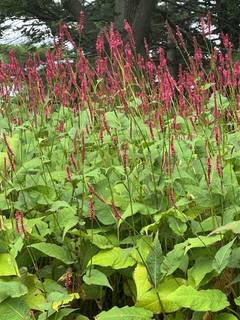
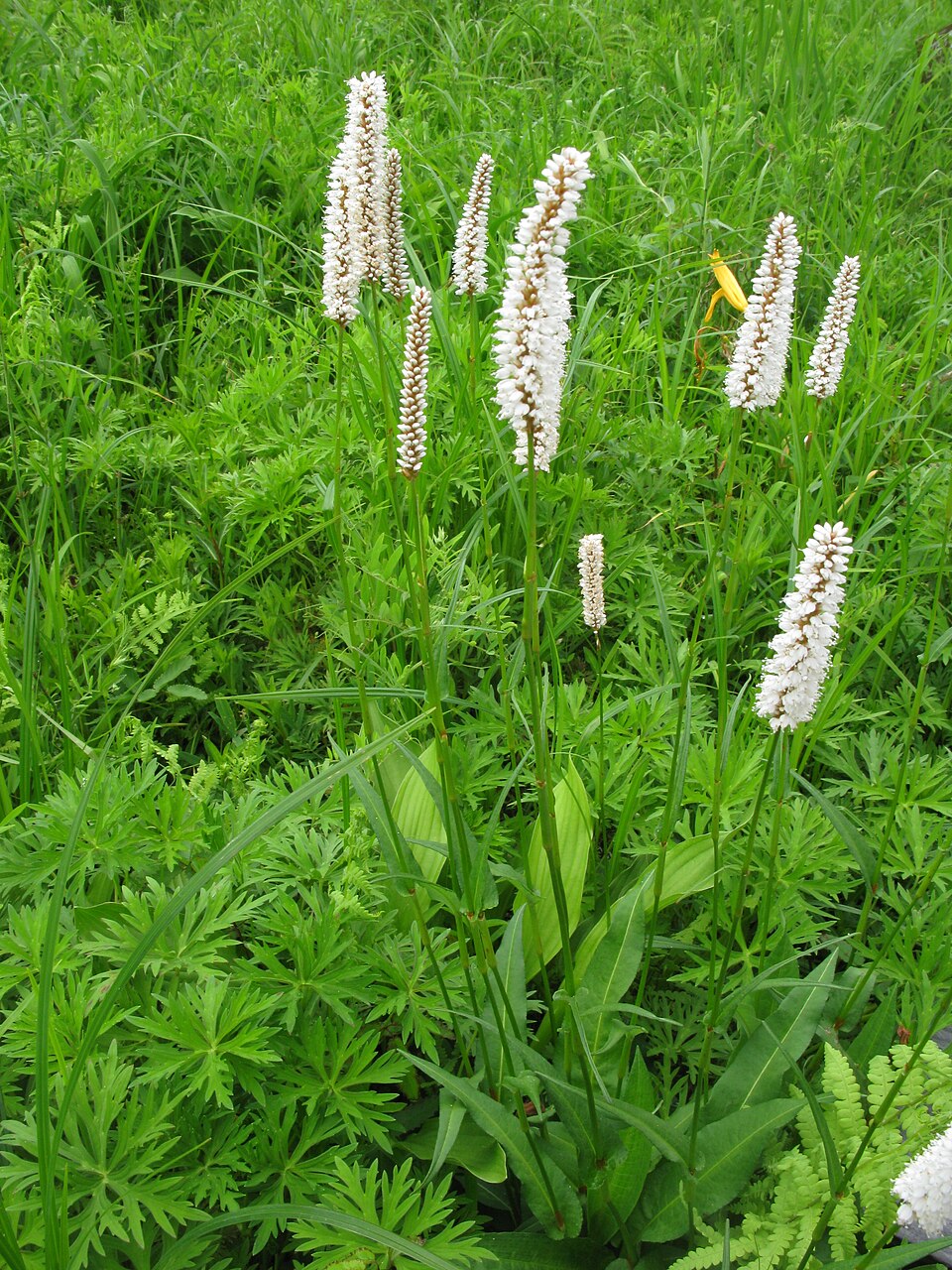
Bistorta officinalis is a clump-forming, rhizomatous perennial of the knotweed family, growing 16-32 inches (40-80 cm) tall from a thick, twisted rootstock. The basal leaves are oval to triangular, 4-8 inches (10-20 cm) long, with a heart-shaped or squared base running down into a winged leaf stalk. From late spring through summer it sends up slender, unbranched stems each topped with a dense, cylindrical spike 1.5-3 inches (4-7 cm) long of soft pink flowers, held above the foliage like a poker. It grows in damp meadows, marshy grassland, ditches, and streamsides on moist, neutral to acidic soils, spreading steadily by its creeping rhizomes to form broad patches. The young leaves are gathered in spring for the traditional bitter pudding known as Easter-ledge. Native across Europe and temperate Asia, it is locally common in northern Britain. It can spread widely on wet ground, and flowering thins on dry soils, where the leaves scorch in summer.
Native Range
Bistorta officinalis is native across Europe and temperate Asia, from Britain east to Japan. It is locally common in damp meadows of northern and upland Britain and naturalizes from gardens elsewhere.Suggested Uses
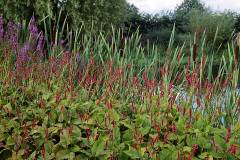
Used in damp borders, bog gardens, pond margins, and wildlife and meadow plantings, where the pink spikes draw bees and butterflies. The spreading clumps work as ground cover on moist ground, and young leaves are gathered as a wild vegetable.How to Identify
Appearance
Size & Dimensions
Height1'4" - 2'8"
Width/Spread1'6" - 3'
Bloom Information
Detailed Descriptions
Foliage Description
mid-greenGrowing Conditions
Sun Requirements
Requires 4-10 hours of direct sunlight daily
• Full Sun: 6+ hours of direct sunlight
• Partial Shade: 3-6 hours of direct sunlight
• Full Shade: Less than 3 hours of direct sunlight
Care & Maintenance
Care Guide
Grows in full sun to part shade on moist, fertile soils and tolerates seasonally wet ground and heavy clay. A soil pH from 5.5 to 7.5 suits it, and it grows most strongly where the soil stays damp through summer. The rhizomes spread steadily, so clumps are lifted and divided every few years to control their spread and renew growth. On dry soils the leaf margins scorch and flowering thins. Plants die back to the rootstock in winter and reshoot in spring. It is hardy to USDA zone 4.Pruning
Faded flower spikes are cut back to tidy the clump and can prompt a lighter second flush. Old foliage is cleared in late autumn or winter. Congested clumps are lifted and divided in spring or autumn.Pruning Schedule
summer
Container Growing
Suitable for container growing
Minimum container size: 2 gallons