Bistorta, Genus, spp., Multiple species,
- Genus
- Multiple species
bistorts
Temperate Northern Hemisphere: Europe, Asia, and North America
Overview
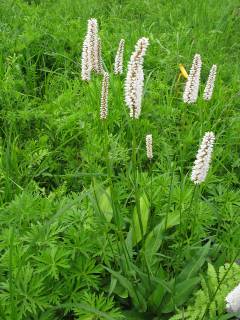
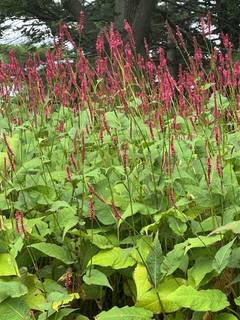
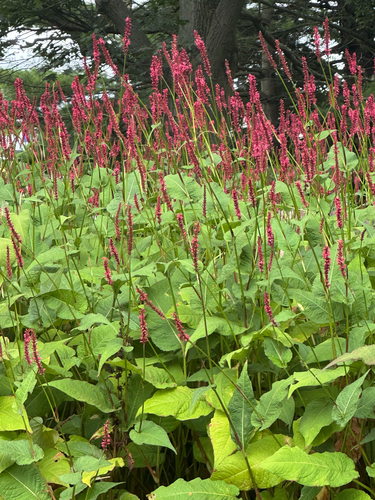
Bistorta is a genus of about 40 species of rhizomatous perennial herbs in the knotweed family, native to cool temperate and mountain regions across the Northern Hemisphere. Plants spread by thick, often contorted rhizomes to form clumps of long-stalked, oval to lance-shaped basal leaves, above which rise unbranched stems 1 to 4 feet (30 to 120 cm) tall. Each stem ends in a dense, cylindrical, bottlebrush-like spike of tiny flowers, usually pink but sometimes white or red, 1 to 4 inches (2.5 to 10 cm) long. Common bistort (B. officinalis) blooms in late spring, while B. amplexicaulis flowers from summer into fall. The young leaves and rhizomes of some species are eaten as cooked greens and were once a traditional food. The genus needs reliably moist soil and declines in hot, dry sites, and the spreading rhizomes can crowd smaller neighbors.
Native Range
Bistorta is native across the temperate and subarctic Northern Hemisphere, including Europe, northern and central Asia, and North America. Species grow in damp meadows, streamsides, mountain grassland, and open woodland, often where the soil stays moist through the growing season. Several alpine species occur high in mountain ranges.Suggested Uses
Grown in moist borders, bog and streamside plantings, wildflower meadows, and cottage gardens, where the spikes draw bees and butterflies. Taller forms are used in the middle of borders and as cut flowers. Plants are spaced 18 to 24 inches (45 to 60 cm) apart in groups.How to Identify
Appearance
Size & Dimensions
Height1' - 4'
Width/Spread1'6" - 3'
Bloom Information
Flowering depends on species and spans late spring through fall, broadly May to September. Common bistort (B. officinalis) peaks in late spring and early summer, while B. amplexicaulis and its forms flower over many weeks from midsummer into autumn. Removing spent spikes prolongs flowering in the long-flowering species.
Detailed Descriptions
Flower Description
pink, sometimes white or redFoliage Description
greenGrowing Conditions
Sun Requirements
Requires 4-8 hours of direct sunlight daily
• Full Sun: 6+ hours of direct sunlight
• Partial Shade: 3-6 hours of direct sunlight
• Full Shade: Less than 3 hours of direct sunlight
Care & Maintenance
Care Guide
Plants grow in full sun to part shade and need moisture-retentive soil that does not dry out; growth and flowering suffer in hot, dry positions. A fertile loam or clay enriched with organic matter suits the genus, and plants tolerate heavy soils and damp ground. Clumps are long-lived and need little care once established, spreading steadily by rhizomes. Congested clumps are lifted and divided in spring or fall to renew vigor and control spread. Foliage may develop powdery mildew or rust in dry conditions or where air movement is poor.Pruning
Pruning is limited to cutting back spent flower stems to tidy the clump and encourage rebloom in the longer-flowering species. Foliage is cut to the ground after it dies down in late fall. Crowded clumps are divided every few years.Container Growing
Suitable for container growing
Minimum container size: 2 gallons