Barbarea, Genus, vulgaris, Species,
- Genus & species
bitter wintercress
Europe, North Africa, temperate Asia
SunFull Sun – Part Shade
WaterMedium
Overview
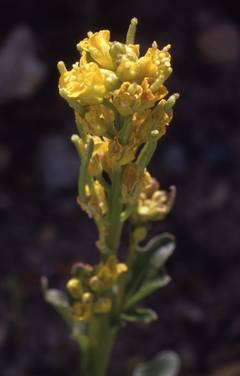
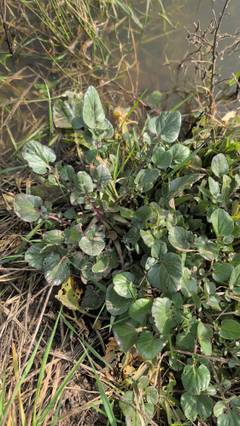
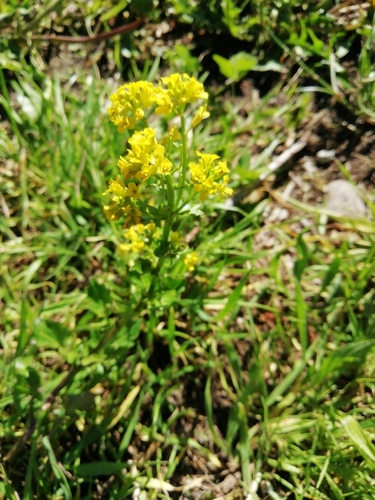
Barbarea vulgaris, bitter wintercress or yellow rocket, is a biennial or short-lived perennial in the mustard family, forming a low overwintering rosette in its first year and flowering stems 1-3 feet (30-90 cm) tall in the second. The glossy, dark green basal leaves are lyre-shaped, with a large rounded end lobe and several smaller side lobes, while the upper stem leaves are smaller and clasp the stem. In spring it bears dense clusters of small, four-petalled bright yellow flowers about 0.3 inch (7-9 mm) across at the stem tips, opening over several weeks. The flowers are followed by slender upright seed-pods 0.7-1.2 inches (18-30 mm) long that release many seeds. It grows quickly on moist, disturbed, and cultivated ground and self-sows freely, often appearing in fields, ditches, and gardens. The leaves are edible but bitter and were once eaten as a winter green. It is native to Europe and Asia and naturalized across much of North America, where it can be weedy in damp ground.
Native Range
Native to Europe, North Africa, and temperate Asia, where it grows in damp meadows, riverbanks, and disturbed ground. It has naturalized widely across North America and other temperate regions. It is common on moist, fertile, disturbed soils such as field margins and roadsides.Suggested Uses
Grown occasionally as an early bee plant and as a foraged bitter green, but more often treated as a weed of damp ground. Its early yellow bloom feeds emerging pollinators. It suits wild and naturalized areas rather than tidy borders because of its free seeding.How to Identify
Appearance
Size & Dimensions
Height1' - 3'
Width/Spread1' - 1'6"
Bloom Information
Flowers in spring, mainly April and May, with clusters opening from the base of the stem upward over several weeks. The yellow flowers are visited by bees, hoverflies, and other insects. Plants set seed quickly and may produce a smaller second flush in cool, moist conditions.
Detailed Descriptions
Foliage Description
dark greenGrowing Conditions
Sun Requirements
Requires 4-12 hours of direct sunlight daily
• Full Sun: 6+ hours of direct sunlight
• Partial Shade: 3-6 hours of direct sunlight
• Full Shade: Less than 3 hours of direct sunlight
Water & Climate
Water Needs
Care & Maintenance
Care Guide
Grows in full sun to part shade on moist, fertile soil and tolerates heavy, damp, and disturbed ground. It needs no care and self-sows readily, growing from a rosette through winter into a spring-flowering plant. Because it seeds heavily, removing flower stems before the pods ripen limits its spread. It is short-lived, often behaving as a biennial, and dies after flowering. It can host some crop pests and clubroot as a member of the mustard family. The young leaves can be harvested before flowering as a bitter salad green.Pruning
Cutting or pulling the flower stems before the seed-pods ripen reduces self-seeding. Plants die after they set seed, so there is no regrowth to manage. No ornamental pruning is needed.Pruning Schedule
Prune: May–June
late spring
Toxicity
Non-toxicPlanting Guide
Planting Methods & Timing
Planting Method
direct sow
Direct Sow Timing
Late summer or spring
Plant Spacing
10 inches