Barbarea, Genus, spp., Multiple species,
- Genus
- Multiple species
wintercresses
Overview
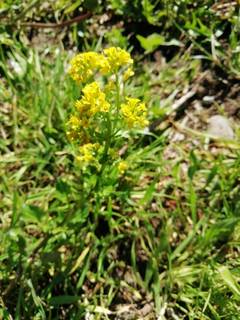
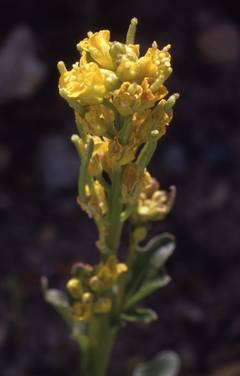
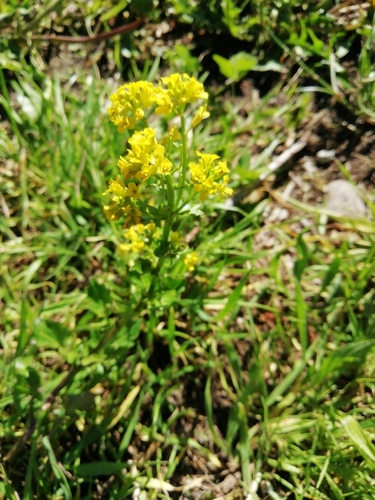
Barbarea is a genus of about 30 species of biennial and short-lived perennial herbs in the family Brassicaceae, native to temperate Eurasia. Plants begin as a basal rosette of glossy, dark green, lyre-shaped leaves with a large rounded terminal lobe and smaller side lobes. In the second year, erect, ribbed flowering stems rise 30-90 cm (12-35 in), branching toward the top. The flowers are typical of the mustard family: four yellow petals in a cross, 5-9 mm (0.2-0.35 in) across, clustered in dense terminal racemes. They are followed by slender, four-angled seed pods called siliques, 1.5-3 cm (0.6-1.2 in) long, held erect against the stem. The rosettes stay green through winter, which gives the group its common name of wintercress. B. vulgaris has naturalized across North America and is a weed of fields, roadsides, and damp ground. Several species are eaten as bitter winter salad greens. Plants flower in spring and set abundant seed, spreading quickly in moist, disturbed soil.
Native Range
Native to temperate regions of Europe and Asia, extending from the British Isles east to Siberia. B. vulgaris and B. verna have naturalized broadly in North America after introduction from Europe. A few species are native to North America, including B. orthoceras.Suggested Uses
Grown in herb and salad gardens for the bitter winter rosette leaves, and in wildlife and naturalized plantings where early yellow flowers feed emerging pollinators. Tolerance of wet ground suits rain gardens and pond margins.How to Identify
Appearance
Size & Dimensions
Height1' - 2'11"
Width/Spread8" - 1'
Bloom Information
Flowering occurs in mid- to late spring, typically April to June, with dense clusters of yellow flowers at the stem tips. Bloom lasts several weeks before giving way to seed pods. Plants flower in their second year after forming a rosette in the first.
Detailed Descriptions
Foliage Description
dark greenGrowing Conditions
Sun Requirements
Requires 4-8 hours of direct sunlight daily
• Full Sun: 6+ hours of direct sunlight
• Partial Shade: 3-6 hours of direct sunlight
• Full Shade: Less than 3 hours of direct sunlight
Care & Maintenance
Care Guide
Wintercresses grow in full sun to part shade in moist to wet soil and tolerate poor, compacted, and disturbed ground. They withstand winter cold across the temperate zone, with rosettes staying green under snow. Plants self-seed heavily and can become weedy in cultivated areas and pastures. The bitter foliage hosts certain cabbage-family pests, including the diamondback moth. Growth is fast in fertile, damp conditions and sparse in dry sites.Pruning
Flower stems are cut before seed pods ripen to limit self-sowing, which is the main maintenance concern. Spent plants are pulled after flowering, as many are short-lived. No structural pruning is needed.Pruning Schedule
Prune: June
late spring