Image 1 of 10
1 / 10
© Photographs by Gnangarra...commons.wikimedia.org, some rights reserved (CC-BY) · Wikimedia Commons
Banksia, Genus, menziesii, Species,
- Genus & species
firewood banksia
Overview
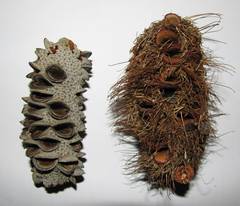
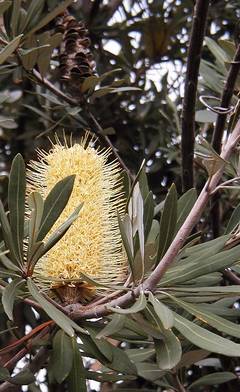
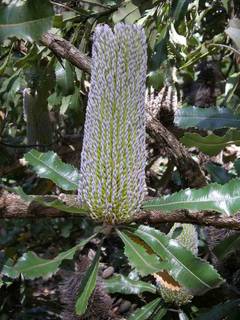
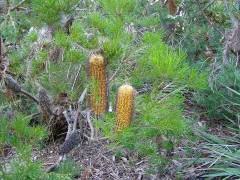
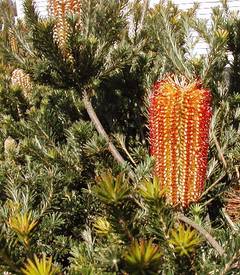
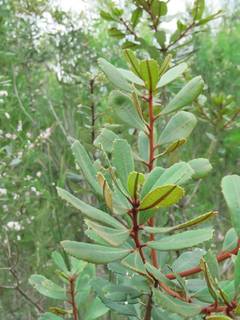
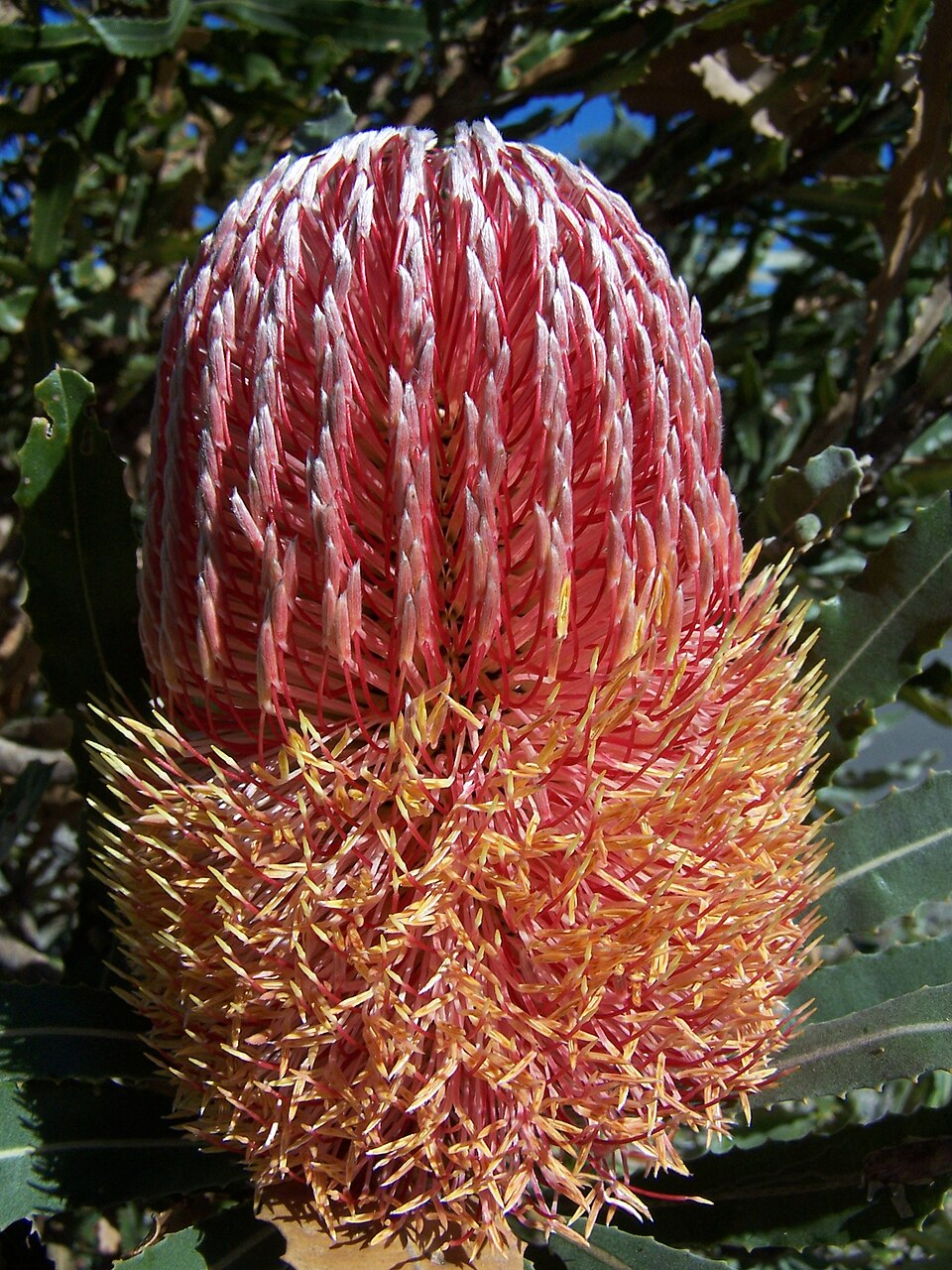
Banksia menziesii is an evergreen shrub or small tree in the family Proteaceae, growing 10-33 feet (3-10 m) tall and 8-20 feet (2.5-6 m) wide, often gnarled and crooked with rough grey bark. The leaves are long and narrow, 4-10 inches (10-25 cm) long, with regularly toothed margins, dull green above and white-felted beneath, arranged in irregular whorls. Cylindrical flower spikes 3-5 inches (8-13 cm) tall hold thousands of small flowers, opening from the base upward in shades of pink, red, and yellow, mainly through autumn and winter. As the spikes age they develop woody, beaked seed follicles embedded in a grey cone that holds the seed until heat from fire opens it. Growth is slow to moderate, and plants flower from about four to six years. The species needs sandy, sharply drained, low-phosphorus soils and full sun, and is sensitive to humidity, summer water, and root-rot disease.
Native Range
Native to south-western Western Australia, on the sandplains from north of Perth south along the coast. It grows in low woodland and shrubland on deep, pale, sandy soils with a Mediterranean climate of wet winters and dry summers.Suggested Uses
Grown as a feature shrub or small tree in native and water-wise gardens on sandy soils in dry-summer climates, spaced 10-16 feet (3-5 m) apart. The flower spikes draw honeyeaters and other nectar birds and are cut for floral work. It suits low-phosphorus, free-draining sites and performs poorly in humid eastern gardens.How to Identify
Appearance
Size & Dimensions
Height10' - 33'
Width/Spread8' - 20'
Bloom Information
Detailed Descriptions
Flower Description
pink, red, and yellowFoliage Description
dull green above, white beneathGrowing Conditions
Sun Requirements
Requires 6-10 hours of direct sunlight daily
• Full Sun: 6+ hours of direct sunlight
• Partial Shade: 3-6 hours of direct sunlight
• Full Shade: Less than 3 hours of direct sunlight
Care & Maintenance
Care Guide
Grows in full sun on deep, sandy, sharply drained soils that are low in phosphorus, matching its native sandplain habitat. It needs dry summers and free drainage, and rots in heavy, humid, or summer-watered conditions, which limits it in wetter eastern Australia. Water is needed only to establish young plants; mature plants rely on winter rain. Phosphorus-sensitive like other proteas, it is harmed by standard fertilizers and suits only low-phosphorus native blends. Root-rot caused by Phytophthora is the main cause of sudden death on poorly drained or warm-humid sites. Growth is slow, and plants develop a gnarled form over many years.Pruning
Light pruning, including cutting flower spikes for indoor use, keeps plants bushier, though cuts are kept above bare old wood, which reshoots poorly. Old woody cones can be left in place or removed for appearance. Hard pruning into leafless stems risks killing branches.Pruning Schedule
Prune: August–September
winterearly spring