Bahiopsis, Genus, laciniata, Species,
- Genus & species
tornleaf goldeneye
Southern California and Baja California
Overview
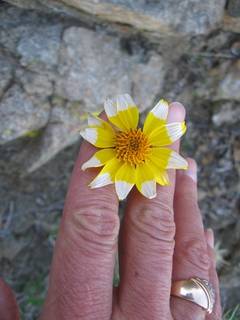
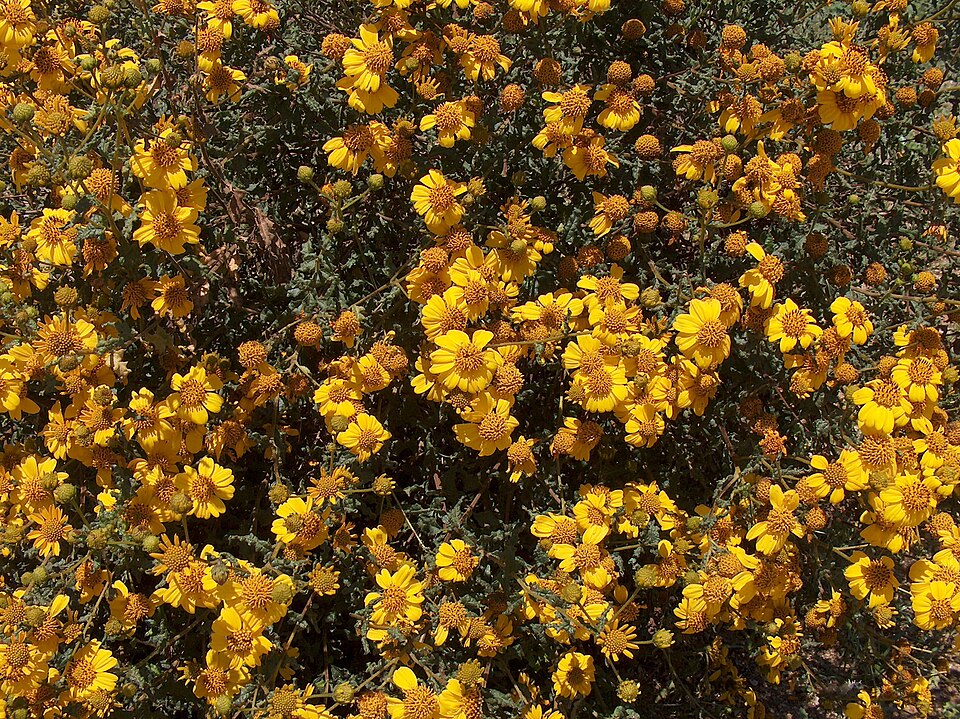
Bahiopsis laciniata is an evergreen shrub reaching 3-5 feet (0.9-1.5 m) tall and as wide, with a rounded, densely branched form. The triangular to oval leaves are 1-2.5 inches (2.5-6 cm) long, dark green, rough to the touch, and edged with coarse, jagged teeth, set oppositely on the stems. Yellow daisy-like flower heads about 1-1.5 inches (2.5-4 cm) across, with 10-15 ray florets around a yellow disc, are carried singly or in small clusters on slender stalks above the foliage. Flowering occurs over a long season, mainly from late winter into summer, with scattered heads at other times after rain. The heads mature into dry seed surrounded by short scales. Native to coastal sage scrub and chaparral, the shrub tolerates heat, drought, and poor soils but is sensitive to frost and prolonged wet soils. It can become open and woody with age and is renewed by cutting back.
Native Range
Native to southern California and Baja California, mainly within a few dozen miles of the coast. Grows in coastal sage scrub, chaparral, and on dry rocky slopes below about 3,000 feet (900 m).Suggested Uses
Planted in dry native gardens, coastal sage scrub restoration, and erosion control on slopes. Spaced 3-5 feet (0.9-1.5 m) apart for massing or informal screening. Suited to hot, dry, frost-free coastal sites.How to Identify
Appearance
Size & Dimensions
Height3' - 5'
Width/Spread3' - 5'
Bloom Information
Detailed Descriptions
Foliage Description
Dark greenGrowing Conditions
Sun Requirements
Requires 6-10 hours of direct sunlight daily
• Full Sun: 6+ hours of direct sunlight
• Partial Shade: 3-6 hours of direct sunlight
• Full Shade: Less than 3 hours of direct sunlight
Care & Maintenance
Care Guide
Grown in full sun on dry, well-drained soil; established plants tolerate heat, drought, and poor or rocky ground. Frost damages tender growth, and prolonged wet soils cause root rot. Watering is limited to the first season, after which rainfall suffices in its native range. Cutting back by about a third in late winter keeps the shrub dense and reduces woodiness. Plants are short-lived, persisting five to ten years, and self-sow on open ground. Few pests affect it in dry, sunny sites.Pruning
Cut back by up to one-third in late winter before new growth to maintain a dense, rounded form. Removing spent flower stalks tidies the plant and can extend bloom. Old, woody plants are renewed by harder cutting back to live wood.Pruning Schedule
Prune: February
winter