Avicennia, Genus, germinans, Species,
- Genus & species
black mangrove
Tropical and subtropical Atlantic coasts (Americas and West Africa)
Overview
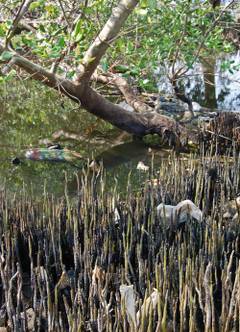
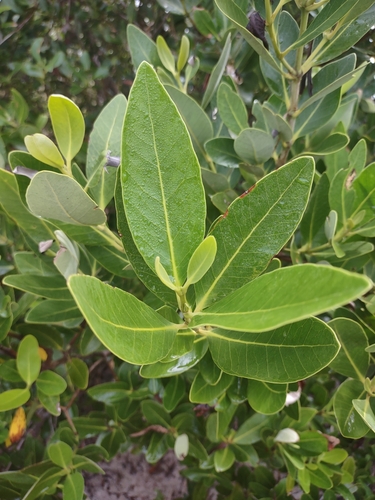
Avicennia germinans is an evergreen tree or shrub of coastal wetlands, typically 10-40 feet (3-12 m) tall but often shorter and shrubby at the cold edge of its range. It grows in saline and brackish mud along sheltered shorelines and produces dense fields of pencil-like aerial roots, called pneumatophores, that rise vertically from the mud around the trunk and carry oxygen to the submerged root system. The opposite leaves are leathery, oblong, 1.5-4 inches (4-10 cm) long, dark green above and gray-hairy beneath, and excrete salt that often crusts the upper surface. Small white flowers about 0.4 inch (10 mm) across open in clusters in summer and are worked heavily by bees, which produce a mangrove honey sought by beekeepers. The fruit is a flattened capsule that germinates while still attached or soon after dropping, a strategy called vivipary that lets seedlings establish quickly in tidal mud. Black mangrove tolerates more cold and higher salinity than red mangrove and forms the landward zone of many mangrove stands. Its dependence on saline tidal conditions limits cultivation to coastal restoration and shoreline stabilization rather than ordinary gardens.
Native Range
Native to tropical and subtropical coasts on both sides of the Atlantic, including Florida, the Gulf of Mexico, the Caribbean, Central and South America, and West Africa. It grows in intertidal mudflats, lagoons, and estuaries along sheltered saltwater shorelines.Suggested Uses
Used in coastal wetland restoration, living shorelines, and erosion control along sheltered saltwater margins, where its roots trap sediment and buffer wave energy. It also creates nursery habitat for fish, crustaceans, and shorebirds in estuarine systems.How to Identify
Appearance
Size & Dimensions
Height10' - 40'
Width/Spread10' - 20'
Bloom Information
Flowers in summer, mainly June through August, with small white flowers in dense clusters. Bees work the flowers heavily and produce a mangrove honey sought by beekeepers. Capsules develop over the following weeks and germinate on or soon after dropping.
Detailed Descriptions
Foliage Description
dark green above, gray beneathGrowing Conditions
Sun Requirements
Requires 6-12 hours of direct sunlight daily
• Full Sun: 6+ hours of direct sunlight
• Partial Shade: 3-6 hours of direct sunlight
• Full Shade: Less than 3 hours of direct sunlight