Image 1 of 7
1 / 7
Plant Reference
Aucuba, Genus, japonica, Species, 'Gold Dust', Cultivar,
- Genus & species
- Cultivar
gold dust aucuba
Japan, Korea, China (species); cultivar of garden selection
Overview
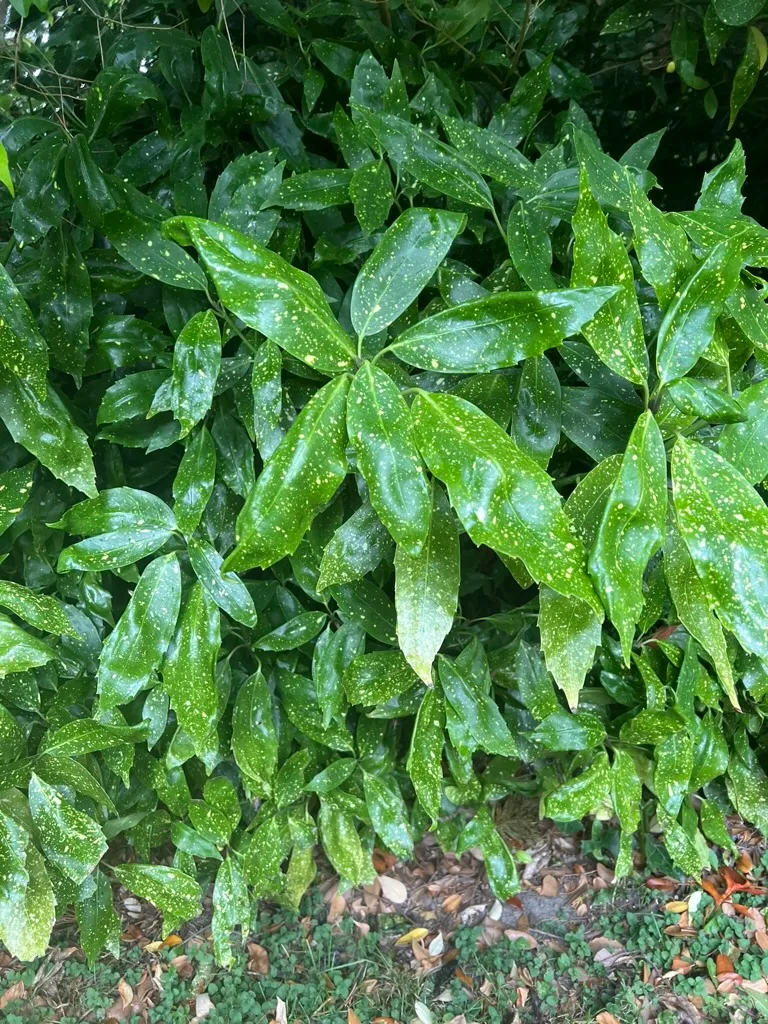
Aucuba japonica 'Gold Dust' is the gold dust aucuba, growing 72–120 inches (180–300 cm) tall and 48–96 inches (120–240 cm) wide. Dark green glossy leathery oval leaves 4–8 inches (10–20 cm) with gold speckles and spots scattered across the leaf surface — the gold dust pattern is the cultivar feature and is visible year-round. The gold speckling results from a chimeral mutation (genetically distinct cell layers producing chlorophyll-free patches). Dioecious: 'Gold Dust' is a female cultivar — bright red oval berries 0.5 inch (12 mm) develop in fall and persist through winter when a male A. japonica is within insect-flight distance for pollination. Inconspicuous dark purple flowers in early spring. In the silk tassel family (Garryaceae). Full sun causes leaf scorch: black blotching and bleaching, especially in hot climates — partial shade to full shade is required. Tolerates deep shade where the gold speckling remains visible. Also tolerates dry shade, urban pollution, and salt spray. Compared to the plain green species type: 'Gold Dust' has the same growth rate, size, and cultural requirements, but the gold speckling adds foliage interest in shaded positions. All parts contain aucubin — mildly toxic to humans and animals (gastrointestinal irritation). Native species from Japan, Korea, and China. Deer-resistant. Zones 7–10. Growth rate is slow to moderate.
Native Range
The species A. japonica is native to Japan, Korea, and China. 'Gold Dust' is a female cultivar selected for the gold-speckled leaf pattern.Suggested Uses
Grown in deep shade and dry shade positions in zones 7–10. The gold-speckled evergreen foliage is visible in all seasons. Plant a male A. japonica nearby for red winter berries. Tolerates pollution and salt spray. All parts mildly toxic. Deer-resistant.How to Identify
Appearance
Size & Dimensions
Height6' - 10'
Width/Spread4' - 8'
Bloom Information
Early spring (March–April) — inconspicuous dark purple flowers. Bright red berries on this female cultivar ripen in fall and persist through winter (male pollinator required). The gold-speckled foliage is the year-round feature.
Detailed Descriptions
Flower Description
Dark purple, tiny, inconspicuous, in erect paniclesFoliage Description
Dark green with gold speckles and spots scattered across the leaf surface; glossy, leathery, oval, 4-8 inches (10-20 cm)Growing Conditions
Sun Requirements
Tolerates up to 3 hours of direct sunlight daily
• Full Sun: 6+ hours of direct sunlight
• Partial Shade: 3-6 hours of direct sunlight
• Full Shade: Less than 3 hours of direct sunlight
Care & Maintenance
Care Guide
Partial shade to full shade — full sun causes leaf scorch (black blotching). Tolerates deep shade, dry shade, pollution, salt spray. Female cultivar — plant a male A. japonica nearby for berry production. All parts mildly toxic (aucubin). Deer-resistant. Zones 7–10.Pruning
Prune for shape in spring. Tolerates hard renovation pruning. Remove any all-green reverted shoots (they lack the gold speckling and are more vigorous — they will dominate if left).Pruning Schedule
Prune: April
spring
Container Growing
Suitable for container growing
Minimum container size: 5 gallons