Image 1 of 19
1 / 19
Plant Reference
Aucuba, Genus, japonica, Species,
- Genus & species
Japanese aucuba
Japan, Korea, and China; moist forest understory at low to middle elevations in temperate and subtropical broadleaf forest zones
Overview
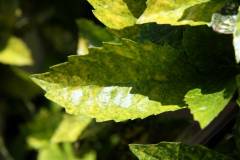
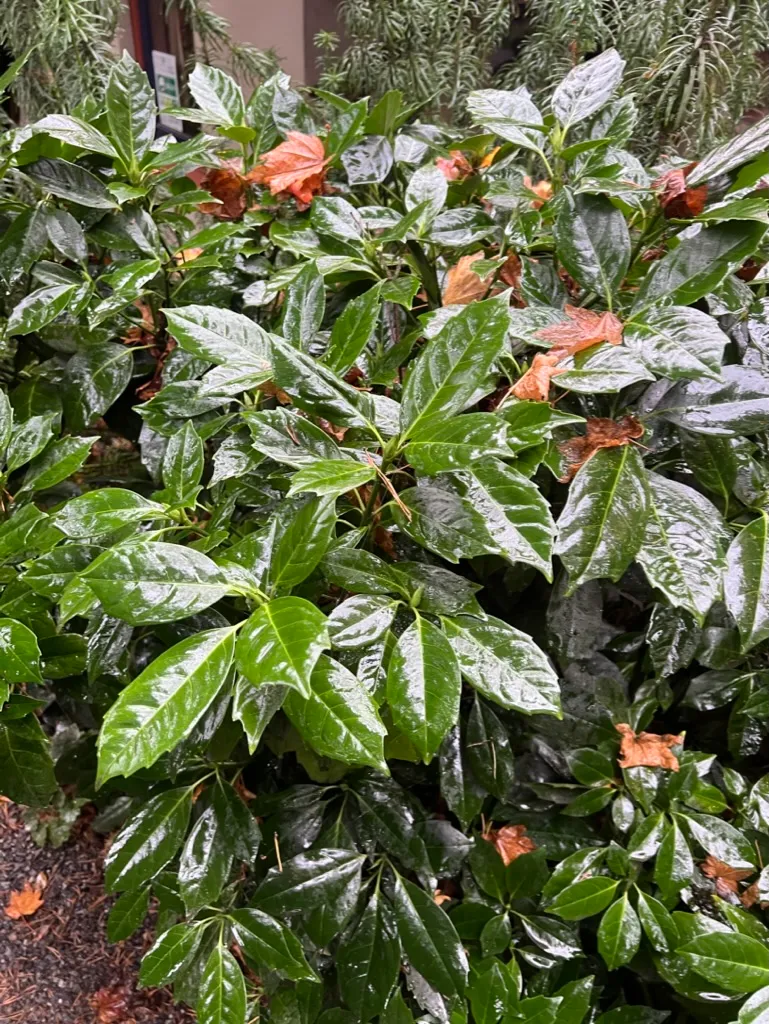
Aucuba japonica is an upright broadleaf evergreen shrub in the silk tassel family Garryaceae growing 72–120 inches (180–300 cm) tall and 48–96 inches (120–240 cm) wide from a multi-stemmed base that develops a rounded to dome-shaped canopy over several years of growth. The species maintains glossy dark green foliage in deep shade — a performance level that few broadleaf evergreen shrubs can match because most other broad-leaved evergreens develop sparse or etiolated growth under the low light levels where A. japonica holds a full dense canopy. Leaves are dark green and glossy on the upper surface, leathery, oval, 4–8 inches (10–20 cm) long, and retained through the full year without significant leaf drop. The cultivar 'Variegata' (gold dust aucuba) carries gold speckling scattered irregularly across the dark green leaf surface and is the form planted where a brighter foliar accent is wanted in deep shade positions. The cultivar 'Crotonifolia' carries larger bold gold blotches rather than scattered speckling and is a second variegated form in the nursery trade. The species is dioecious: male and female flowers are borne on separate plants, and a male pollinator within insect-flight distance is required for the female plants to set the bright red oval berries 0.5 inch (12 mm) that develop in fall and persist through winter — the berries are a secondary ornamental feature that is lost if the male pollinator is absent or too distant. Dark purple tiny 4-petaled flowers open in erect panicles at the branch tips in March and April, but the flowers are inconspicuous and rarely noticed because the species is grown for the evergreen foliage and the winter berries rather than for the bloom. Limitation: full sun causes leaf scorch on the glossy foliage — the leaves develop black blotching and bleaching in direct sun exposure, especially in hot climates, and the scorch is permanent on the affected leaves until they are replaced by new growth in the following spring. The species also tolerates dry shade, urban pollution, salt spray, and root competition from mature trees, which makes it a suited shrub for the difficult combination of deep shade and dry soil under established tree canopies. All parts of the plant contain aucubin, an iridoid glycoside that is mildly toxic to humans and animals and produces gastrointestinal irritation if the foliage or berries are ingested. Native to Japan, Korea, and China, growing in the moist forest understory at low to middle elevations. Deer-resistant.
Native Range
Native to Japan, Korea, and China, growing in the moist understory of temperate and subtropical broadleaf forest at low to middle elevations. The species has been cultivated in Japanese and Chinese gardens for centuries and was introduced to European gardens in the 18th century, where the gold-speckled 'Variegata' form became a popular Victorian conservatory and shade-garden plant.Suggested Uses
Used in deep shade borders, dry shade positions under trees, foundation plantings on north-facing walls, and containers of at least 5 gallons (19 L) at 48–96 inch (120–240 cm) spacing between plants. The ability to maintain glossy foliage in deep shade and dry shade makes the species a suited shrub for the difficult positions under established tree canopies and on north-facing building exposures where most other broadleaf evergreens decline. The gold-speckled 'Variegata' is planted where a foliar accent is wanted in low-light positions, and the green-leaved species type is planted where a dark green background foliage mass is the design goal. Full-sun positions, hot south-facing walls, and any exposure with extended direct afternoon sun are unsuitable because of the leaf scorch. Gardens where pet or child access to the foliage and berries is a concern are unsuitable because of the aucubin toxicity.How to Identify
Appearance
Size & Dimensions
Height6' - 10'
Width/Spread4' - 8'
Bloom Information
Dark purple tiny 4-petaled flowers open in erect panicles at the branch tips in March and April across a 1–2 week period. The flowers are inconspicuous and rarely noticed because the species is grown for the evergreen foliage and the winter berries rather than for the bloom. Bright red oval berries 0.5 inch (12 mm) develop on female plants in fall and persist through winter when a male pollinator is present within insect-flight distance.
Detailed Descriptions
Flower Description
dark purple tiny 4-petaled flowers in erect panicles at the branch tips in early spring; the flowers are inconspicuous and rarely noticed because the plant is grown for the evergreen foliage and the winter berries rather than for the bloomFoliage Description
dark green and glossy on the upper surface; leathery oval leaves 4-8 inches (10-20 cm) long; the cultivar 'Variegata' (gold dust aucuba) carries gold-speckled leaves where the gold speckling is scattered irregularly across the dark green background; the cultivar 'Crotonifolia' carries larger bold gold blotches rather than scattered speckling; evergreen year-roundGrowing Conditions
Sun Requirements
Tolerates up to 3 hours of direct sunlight daily
• Full Sun: 6+ hours of direct sunlight
• Partial Shade: 3-6 hours of direct sunlight
• Full Shade: Less than 3 hours of direct sunlight
Care & Maintenance
Care Guide
Site in partial shade to full shade with 0–3 hours of direct sun per day — the species maintains glossy dark green foliage in deep shade and develops leaf scorch (black blotching and bleaching) in direct sun exposure, especially in hot climates. Well-drained loam or clay soil with a pH of 5.5–7.5 holds the root system through all seasons, and the species tolerates a wide range of soil conditions including dry shade, urban pollution, and salt spray. Drought tolerance develops once the root system is established. The species is dioecious and both male and female plants must be present within insect-flight distance for the female plants to produce the bright red winter berries. Pruning for shape is done in spring (April), and the species tolerates hard renovation pruning when needed. All-green reverted shoots on variegated cultivars are removed as they appear because the all-green shoots are more vigorous than the variegated growth and can overtake the plant. All parts contain aucubin (iridoid glycoside) and are mildly toxic to humans and animals. Deer-resistant. Hardy in USDA zones 7–10.Pruning
Pruning for shape is done in spring (April) by cutting back overlength or misshapen stems to a bud or side branch. The species tolerates hard renovation pruning: an overgrown or leggy shrub can be cut back to 12–18 inches (30–45 cm) from the ground in spring and the crown regrows a full canopy within 1–2 growing seasons. All-green reverted shoots on variegated cultivars ('Variegata', 'Crotonifolia') are removed at the base as they appear because the all-green growth is more vigorous than the variegated growth and can overtake the plant if left in place.Pruning Schedule
Prune: April
spring
Container Growing
Suitable for container growing
Minimum container size: 5 gallons