Aucuba, Genus, spp., Multiple species,
- Genus
- Multiple species
Overview
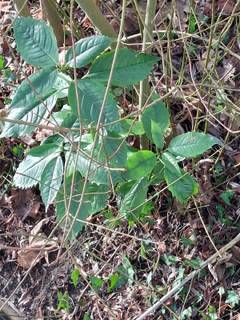
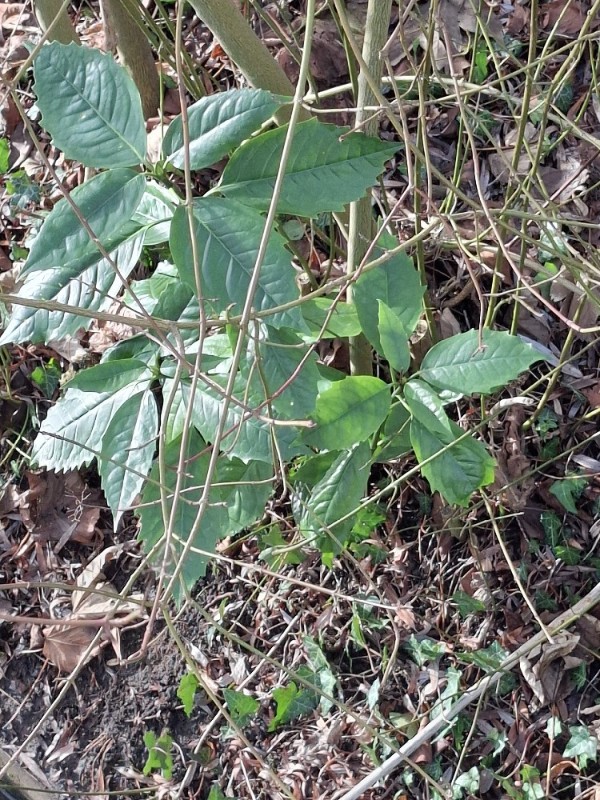
Aucuba is a genus of about three to ten evergreen shrubs in the family Garryaceae, native to the Himalaya and eastern Asia. A. japonica, spotted laurel, is the most familiar, forming a rounded shrub 6-10 feet (1.8-3 m) tall and nearly as wide, with glossy, leathery, coarsely toothed leaves 3-8 inches (7.5-20 cm) long; many cultivars are speckled or blotched with yellow. Plants are dioecious, carrying small maroon-purple flowers in spring on separate male and female plants. Female plants set glossy red berries about 0.5-0.7 inch (1.3-1.8 cm) long in autumn and winter where a male grows nearby. Growth is moderate, and plants tolerate deep shade, urban pollution, and dry soil under trees. Leaves scorch and blacken in strong direct sun and after hard frost. The berries and leaves can cause stomach upset if eaten.
Native Range
Native to the Himalaya, central and southern China, Korea, Taiwan, and Japan, where it grows in the understorey of moist broadleaf and mixed forest, on shaded slopes and in ravines.Suggested Uses
Grown as a shade shrub, informal hedge, and screen in shaded courtyards and beneath trees, spaced 4-6 feet (1.2-1.8 m) apart. Long grown as a container and indoor plant for low-light spots. Variegated forms add yellow speckling in dark corners where many shrubs grow thin.How to Identify
Appearance
Size & Dimensions
Height6' - 10'
Width/Spread5' - 10'
Bloom Information
Small maroon-purple flowers open in spring, about March through May, the male in larger clusters than the female. The flowers are inconspicuous among the leaves. On pollinated female plants, red berries follow and persist from autumn through winter.
Detailed Descriptions
Foliage Description
glossy dark green, often speckled yellowGrowing Conditions
Sun Requirements
Tolerates up to 4 hours of direct sunlight daily
• Full Sun: 6+ hours of direct sunlight
• Partial Shade: 3-6 hours of direct sunlight
• Full Shade: Less than 3 hours of direct sunlight
Care & Maintenance
Care Guide
Plants grow in part to deep shade in moist, well-drained, humus-rich soil and tolerate dry shade, pollution, and a wide pH range once established. Strong direct sun, especially in cold or dry wind, scorches and blackens the leaves. A male plant within range is needed for female plants to set berries. Watering is regular until established, then occasional. Scale insects and mealybugs can appear, and root rot follows in waterlogged soil. Plants are clipped in spring to shape and to remove winter-damaged growth.Pruning
Plants are pruned in early to mid spring to shape them and cut out frost-damaged or leggy stems, cutting back to a leaf pair or branch. Older shrubs tolerate hard renewal pruning and reshoot from old wood. Cut foliage is used in indoor arrangements.Pruning Schedule
early spring
Container Growing
Suitable for container growing
Minimum container size: 5 gallons