Atriplex, Genus, confertifolia, Species,
- Genus & species
Shadscale saltbush
Western United States (cold deserts)
Overview
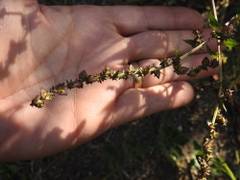
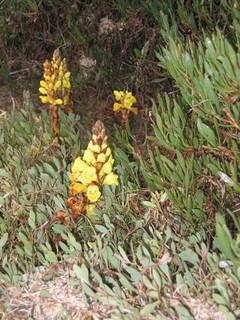
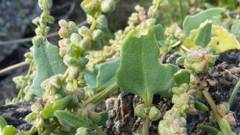
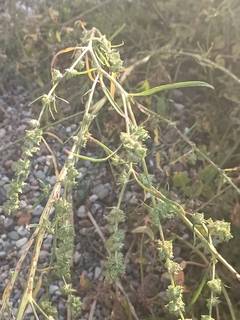
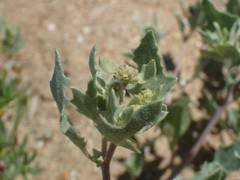
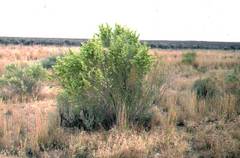
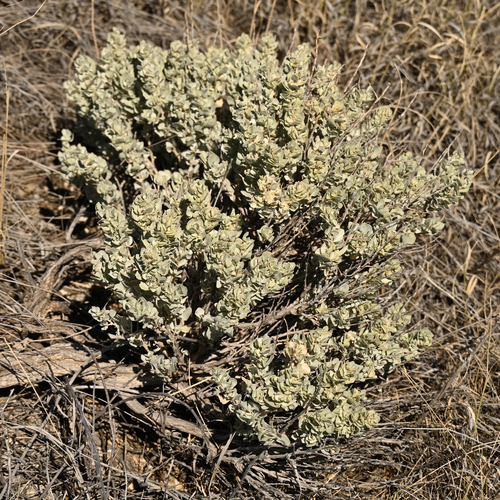
Atriplex confertifolia is a compact, intricately branched shrub reaching 1 to 3 feet (30 to 90 cm) tall and roughly as wide, with rigid stems that end in spines. The rounded to oval leaves measure 0.3 to 0.8 inch (8 to 20 mm) long and are coated in a gray, scaly bloom that gives the shrub a silver-gray tone. It is dioecious: male and female flowers occur on separate plants, both small and without petals. Female plants form papery, two-winged seed bracts that turn straw-colored and persist into winter. Native to the cold deserts of the western United States, it withstands intense drought, saline and alkaline soils, heat, and cold. The shrub sheds some leaves in extended drought to conserve water. The dense, spiny form shelters small desert animals and is browsed by wildlife and livestock. Slow growth and a need for sharp drainage and full sun limit its use to dry, open sites; it fails in moist, fertile, or shaded gardens. The wood is brittle and the spines make close handling awkward.
Native Range
Native to the cold deserts and arid basins of the western United States, including the Great Basin and Colorado Plateau, and ranging into northern Mexico. It grows on dry flats, alkaline valleys, and saline soils.Suggested Uses
Used in dryland and desert restoration, on saline or alkaline sites, and in low-water native plantings. It stabilizes eroding soils and is browsed by deer, pronghorn, and livestock. The spiny form serves as nesting and shelter cover for desert birds and small mammals.How to Identify
Appearance
Size & Dimensions
Height1' - 3'
Width/Spread1' - 3'
Bloom Information
Flowering occurs from late spring into summer, generally April through July. The petalless flowers are small and wind-pollinated, with males and females on separate plants. Female bracts enlarge into papery two-winged structures through summer. These straw-colored bracts hold seed and persist into winter.
Detailed Descriptions
Foliage Description
gray-greenGrowing Conditions
Sun Requirements
Requires 6-12 hours of direct sunlight daily
• Full Sun: 6+ hours of direct sunlight
• Partial Shade: 3-6 hours of direct sunlight
• Full Shade: Less than 3 hours of direct sunlight
Care & Maintenance
Care Guide
Grow in full sun in sandy, gravelly, or rocky soil with sharp drainage. Atriplex confertifolia tolerates saline and alkaline soils up to a pH near 8.5 and survives on minimal water once established. It will not tolerate wet, rich, or poorly drained ground, where root rot sets in. The shrub is hardy in USDA zones 5 through 8 and handles both desert heat and winter cold. Overwatering is the most frequent cause of failure. Growth is slow, and plants resent root disturbance after establishment.Pruning
Prune lightly in late winter to remove dead or damaged wood. The naturally dense, rounded form needs little shaping. Spent seed bracts can be left for winter cover or sheared off. Hard pruning into old wood produces weak regrowth.Pruning Schedule
Prune: February
winter