Arundinaria, Genus, spp., Multiple species,
- Genus
- Multiple species
canes
Overview
Arundinaria is a genus of woody bamboos in the family Poaceae and the only bamboo native to North America, made up of three species restricted to the southeastern United States. Plants spread by running rhizomes to form dense colonies called canebrakes, with hollow, jointed culms reaching 2-26 ft (0.6-8 m) tall and 0.2-2.4 in (0.5-6 cm) in diameter depending on species. The evergreen to semi-evergreen leaves are lance-shaped, 4-12 in (10-30 cm) long, and borne in fan-like clusters at the upper nodes. Flowering is infrequent and often gregarious, with an entire colony blooming at intervals of many years before the flowered culms die back. A. gigantea is the tallest species and once formed extensive canebrakes across river floodplains, while A. tecta occupies wetter swamp margins and A. appalachiana grows on drier upland slopes. The running rhizomes spread aggressively and can extend well beyond the original planting. Canebrakes create habitat for several specialized insects and birds, including species that depend on cane for breeding.
Native Range
Arundinaria is endemic to the southeastern United States, ranging from Maryland and Ohio south to Florida and west to Texas. Historically the genus formed vast canebrakes along rivers and wetlands across this region. The three species occupy floodplain, swamp-margin, and upland habitats respectively.Suggested Uses
Used in native landscapes, streambank stabilization, and wildlife plantings in the southeastern United States. Canebrakes supply nesting cover and forage for birds and were historically worked into fishing poles, baskets, and woven goods. The running habit suits large naturalized areas rather than small beds.How to Identify
Appearance
Size & Dimensions
Height2' - 26'
Width/Spread3' - 10'
Bloom Information
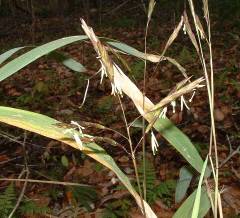
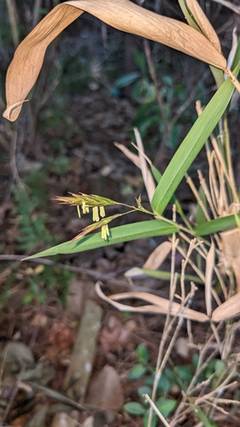
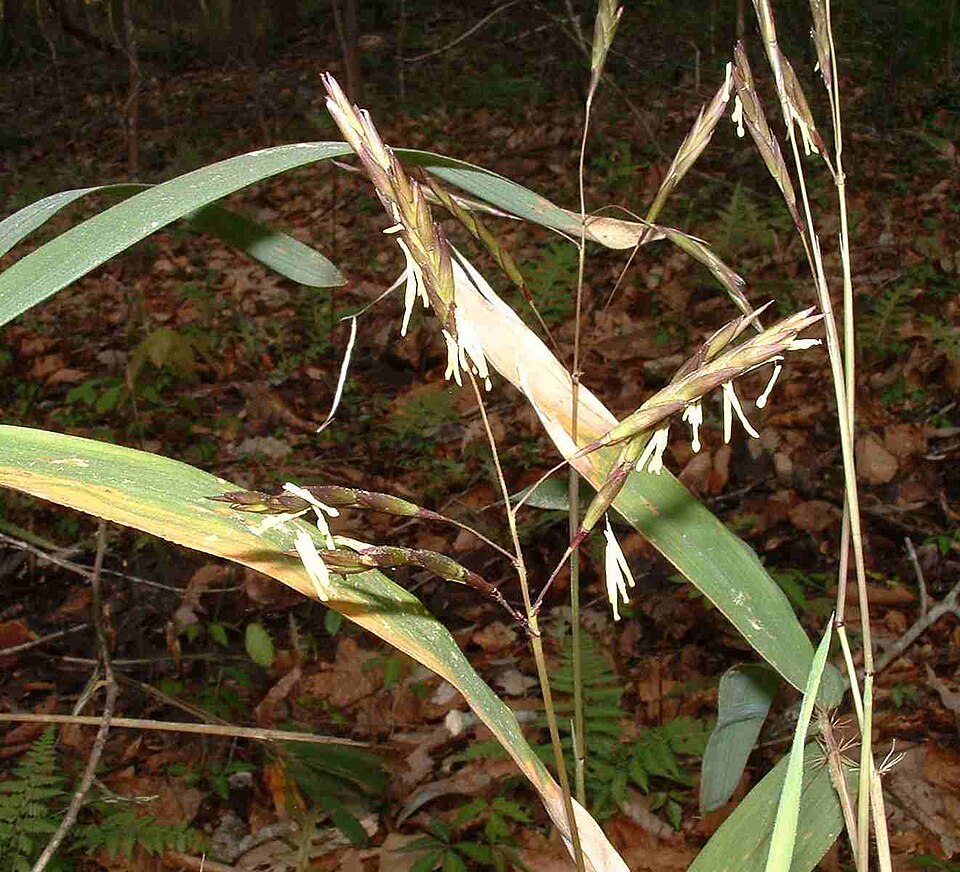
Flowering is rare and irregular, occurring at intervals of many years to several decades, often with many culms in a colony blooming together. When it occurs, the grass-like flower spikelets appear in spring to early summer. Flowered culms usually die afterward, and colonies regenerate from rhizome or seed.
Detailed Descriptions
Flower Description
green to strawFoliage Description
greenGrowing Conditions
Sun Requirements
Requires 4-10 hours of direct sunlight daily
• Full Sun: 6+ hours of direct sunlight
• Partial Shade: 3-6 hours of direct sunlight
• Full Shade: Less than 3 hours of direct sunlight
Care & Maintenance
Care Guide
Plants grow in full sun to part shade in moist, fertile soil with a pH from about 5.0 to 7.0, and tolerate occasional flooding. A. gigantea and A. tecta grow in consistently moist to wet ground, while A. appalachiana tolerates drier upland soils. The running rhizomes spread widely, so colonies are often contained with root barriers or grown where lateral spread is acceptable. Established plants are cold hardy through USDA zone 6. Foliage may bronze or partly die back in severe winters and regrows in spring.Pruning
Thinning old or dead culms at the base each spring keeps colonies open and maintains air flow. Dead culms after a flowering event are cut to the ground to allow regeneration. Rhizome spread is limited by installing root barriers or severing runners at the colony edge.Container Growing
Suitable for container growing
Minimum container size: 10 gallons