Arctium, Genus, minus, Species,
- Genus & species
burrdock
Native to Europe and western Asia, occurring in waste ground, roadsides, hedgerows, and woodland margins from sea level to approximately 4,500 ft (1,400 m); naturalized across most of North America, most abundant in temperate regions with moderate rainfall; listed as a noxious weed in several U.S. states and Canadian provinces; the hooked bur seed-dispersal mechanism is the species' primary vector across agricultural, rangeland, and recreational landscapes
Overview
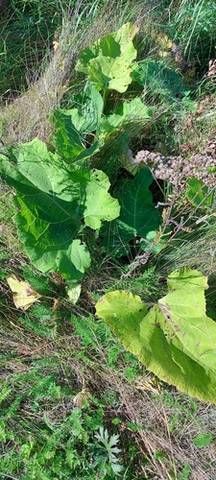
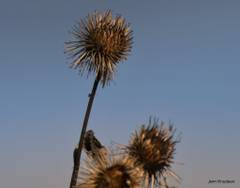
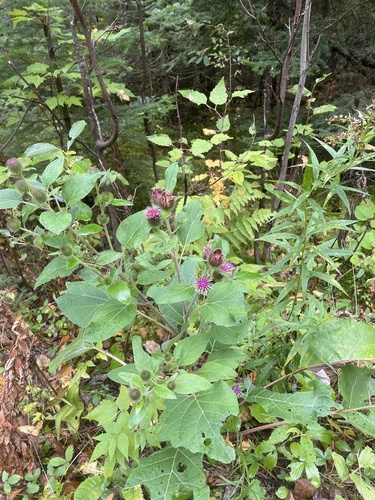
Arctium minus is a coarse biennial in the daisy family (Asteraceae) reaching 24-60 inches (60-150 cm) tall with a 24-36 inch (60-90 cm) spread. First-year plants form a large basal rosette of broadly ovate to heart-shaped leaves up to 18 inches (45 cm) long and 14 inches (35 cm) wide, dark green on the upper surface and grayish-white woolly on the lower surface with entire to slightly wavy margins. Second-year plants produce erect branching grooved stems. Flower heads are globular, 0.5-1 inch (12-25 mm) in diameter, with tubular purple to pink disc florets surrounded by hooked involucral bracts (burs). Flower heads sit singly or in short-stalked clusters along the upper branches. Burs attach to animal fur, clothing, and hair, dispersing seeds away from the parent plant. Each plant produces 6,000-16,000 seeds per second-year generation. Plants develop a large fleshy taproot reaching 12 inches (30 cm) or more in depth. Naturalized widely across North America in disturbed sites, pastures, roadsides, and fence rows. The deep taproot makes removal of second-year plants labor-intensive; root fragments left in soil may resprout.
Native Range
Arctium minus is native to Europe and western Asia, occurring in waste ground, roadsides, hedgerows, and woodland margins from sea level to approximately 4,500 ft (1,400 m). Naturalized across most of North America, most abundant in temperate regions with moderate rainfall.Suggested Uses
Used in weed identification training for agricultural and rangeland management programs. Taproot is harvested as the food crop gobo in Japanese cuisine and as a herbal medicine ingredient in several traditions. Seeds are consumed by goldfinches. Included in ethnobotany and weed ecology curricula at land-grant universities and agricultural extension programs.How to Identify
Appearance
Size & Dimensions
Height2' - 5'
Width/Spread2' - 3'
Bloom Information
Flowers from July through September in the second year of the life cycle across a 4-6 week bloom window. Individual flower heads bloom for 5-7 days. Flowering progresses from the upper terminal heads downward over 4-6 weeks. Burs mature and dry by late September through October and persist on dead stems through winter. Pollinated primarily by bumblebees and other long-tongued bees that can access the tubular florets.
Detailed Descriptions
Flower Description
Purple to pink tubular disc florets 0.5-1 inch (12-25 mm) across carried in globular heads surrounded by hooked involucral bracts (burs); heads borne singly or in short-stalked clusters along the upper stem branchesFoliage Description
Dark green on the upper surface, grayish-white woolly on the lower surface; basal leaves broadly ovate to heart-shaped up to 18 inches (45 cm) long and 14 inches (35 cm) wide with entire to slightly wavy margins; upper stem leaves smaller and more lance-shapedGrowing Conditions
Sun Requirements
Requires 4-8 hours of direct sunlight daily
• Full Sun: 6+ hours of direct sunlight
• Partial Shade: 3-6 hours of direct sunlight
• Full Shade: Less than 3 hours of direct sunlight