Arctium, Genus, spp., Multiple species,
- Genus
- Multiple species
burdocks
Europe and temperate Asia (naturalized in North America)
Overview
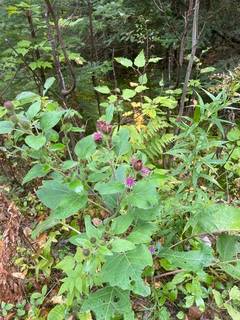
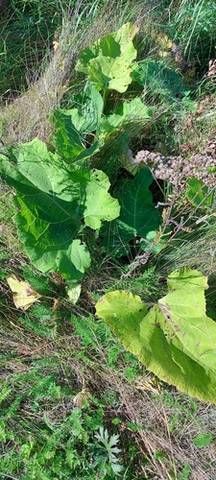
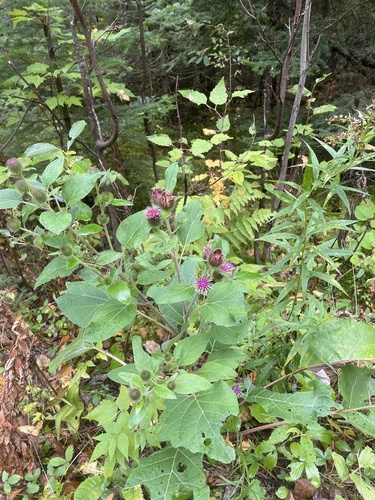
Arctium is a genus of about 10 to 20 species of biennial herbs in the Asteraceae family, the burdocks, native to Europe and Asia and naturalized widely across North America and other temperate regions. In the first year a plant forms a large rosette of broad, heart-shaped leaves up to 28 inches (70 cm) long, gray-woolly beneath, above a deep, fleshy taproot. In the second year it sends up a branching, grooved stem 3 to 9 feet (90 to 270 cm) tall, flowers, sets seed, and dies. The flower heads are thistle-like, with purple to pink disc florets sitting in a globe of stiff bracts that end in hooked tips. After bloom these bracts dry into burs that latch onto fur and clothing, scattering the seeds; the hooked burs inspired the design of hook-and-loop fastener. Burdock spreads into a weed of pastures, roadsides, and waste ground, and the clinging burs can tangle the coats of livestock and pets and trap small birds and bats. The taproot of A. lappa, called gobo, is grown and eaten as a root vegetable, and young leaf stalks and roots are also used in food and drink.
Native Range
Arctium is native to Europe and temperate Asia and has naturalized across North America, where it grows in disturbed ground throughout much of the continent. The genus is most diverse in Eurasia.Suggested Uses
Grown as a root vegetable, where A. lappa is raised for its long edible taproot, and used in herbal teas and bitters. The summer flowers feed bees and butterflies, and the seeds feed some birds. Most populations occur as weeds of disturbed and waste ground rather than as planted ornamentals.How to Identify
Appearance
Size & Dimensions
Height3' - 9'
Width/Spread2' - 4'
Bloom Information
Flowering occurs in the second year from summer into early fall, generally July to September. The purple to pink heads open over several weeks and draw bees and butterflies for nectar and pollen. As the heads dry, the bracts harden into clinging burs around the ripening seeds. Each plant can produce thousands of seeds before it dies.
Detailed Descriptions
Flower Description
purple to pinkFoliage Description
greenGrowing Conditions
Sun Requirements
Requires 4-12 hours of direct sunlight daily
• Full Sun: 6+ hours of direct sunlight
• Partial Shade: 3-6 hours of direct sunlight
• Full Shade: Less than 3 hours of direct sunlight