Arctium, Genus, lappa, Species,
- Genus & species
greater burdock
Overview
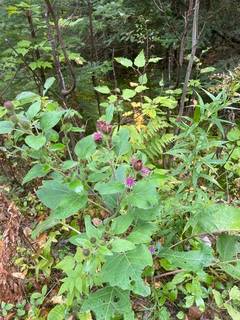
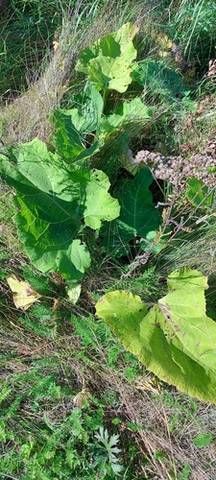
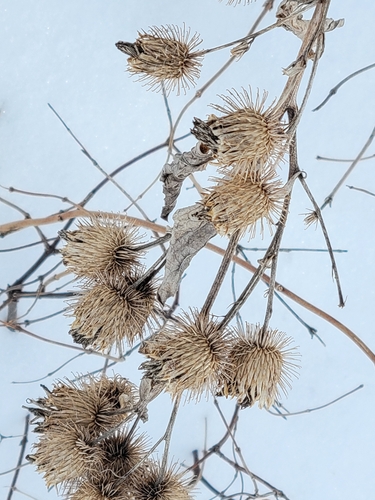
Arctium lappa is a stout biennial that forms a broad rosette of very large leaves in its first year and a branching flowering stalk 3-9 feet (90-300 cm) tall in its second. The lower leaves are heart-shaped and can reach 20-28 inches (50-70 cm) long, dark green above and grey-woolly beneath, on solid, grooved stalks. From mid to late summer of the second year it bears thistle-like flower heads about 1-1.5 inch (2.5-4 cm) across, each a tuft of purple disc florets sitting in a globe of stiff green bracts that end in hooked tips. As the heads dry, these burs catch on fur and clothing and carry the seeds away, the structure that inspired hook-and-loop fastener. A. lappa grows on roadsides, waste ground, ditch banks, and field edges across Europe and Asia and as a naturalised plant in North America. It has a deep, fleshy taproot eaten as a vegetable in East Asia. The plant dies after seeding, and the dry burs can mat the coats of animals.
Native Range
Arctium lappa is native across Europe and temperate Asia, from the British Isles to Japan. It has naturalised widely in North America and other temperate regions, growing in disturbed, nitrogen-rich ground such as roadsides, farmyards, and waste places.Suggested Uses
Grown in vegetable gardens for its edible taproot, known as gobo, and in herb gardens for traditional medicinal use. It is also kept in wildlife and naturalistic plantings for its bold first-year foliage and late-summer nectar. The burs and large leaves suit informal, rough-ground settings.How to Identify
Appearance
Size & Dimensions
Height3' - 9'
Width/Spread3' - 5'
Bloom Information
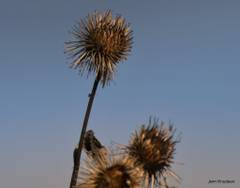
Flowering occurs from July to September in the second year, after which the plant dies. Bees and other insects visit the purple heads through late summer. The bracts harden into burs as the seeds ripen and cling to anything that brushes past well into winter.
Detailed Descriptions
Foliage Description
dark green above, grey beneathGrowing Conditions
Sun Requirements
Requires 4-12 hours of direct sunlight daily
• Full Sun: 6+ hours of direct sunlight
• Partial Shade: 3-6 hours of direct sunlight
• Full Shade: Less than 3 hours of direct sunlight