Aralia, Genus, spinosa, Species,
- Genus & species
devil's walkingstick
Overview
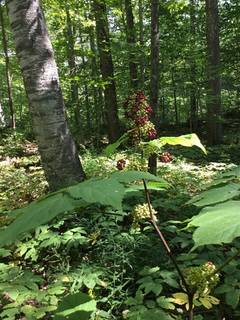
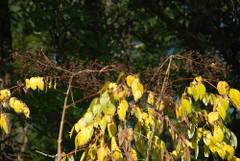
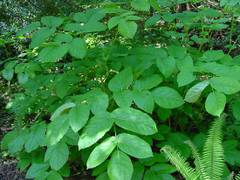
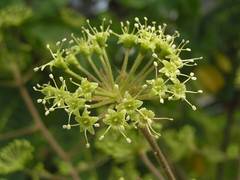
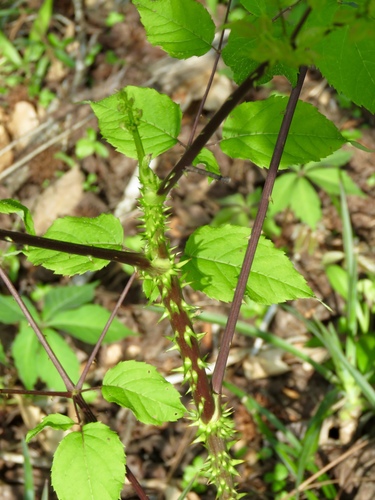
Aralia spinosa is a deciduous large shrub or small tree in the ginseng family (Araliaceae), reaching 10-30 feet (3-9 m) tall with an open, sparsely branched, often colonial form. The stout, club-like stems are armed with sharp prickles, the trait behind the names devil's walkingstick and Hercules club. Leaves are bipinnately to tripinnately compound and very large, 3-4 feet (0.9-1.2 m) long and nearly as wide, with many ovate, toothed leaflets 2-3 inches (5-8 cm) long; the leaf stalks also bear prickles. In mid to late summer, broad terminal panicles 1-4 feet (30-120 cm) across carry many small white to creamy flowers. These give way to dark purple-black berries on pink-red stalks in fall. Autumn foliage turns yellow, bronze, to reddish-purple. The plant suckers freely and forms thickets, which limits its use in small or formal gardens. All parts, especially the roots and berries, contain saponins that are toxic if eaten, and contact with the prickles and fresh sap can irritate skin.
Native Range
Native to the southeastern United States, Aralia spinosa ranges from New Jersey and Pennsylvania south to Florida and west to Texas and Iowa. It grows in moist woodland edges, clearings, roadsides, and floodplains, often in disturbed ground.Suggested Uses
Used in native plant gardens, naturalistic borders, wildlife plantings, and as a coarse-textured specimen where its size and spread are accommodated. The spiny stems and suckering habit suit informal screens and barrier plantings. Flowers support pollinators and the berries feed birds in late summer and fall.How to Identify
Appearance
Size & Dimensions
Height10' - 30'
Width/Spread6' - 15'
Bloom Information
Flowers open in mid to late summer, generally July to August, in broad terminal panicles. Bloom lasts about 3-4 weeks. The nectar-rich flowers draw many bees, wasps, and butterflies, and the late-summer berries that follow feed migrating birds.
Detailed Descriptions
Flower Description
white to creamy whiteFoliage Description
dark greenGrowing Conditions
Sun Requirements
Requires 4-10 hours of direct sunlight daily
• Full Sun: 6+ hours of direct sunlight
• Partial Shade: 3-6 hours of direct sunlight
• Full Shade: Less than 3 hours of direct sunlight
Care & Maintenance
Care Guide
Grows in full sun to part shade in moist, well-drained soil of average fertility, tolerating a wide pH range from about 5.5 to 7.5. It adapts to clay, loam, and sandy soils and withstands brief flooding and urban conditions. Root suckers spread the plant into colonies, and unwanted shoots are removed as they appear to contain its spread. The prickly stems make handling difficult, so placement accounts for its mature spread and armament. Once established it needs little water or feeding. Plants regrow readily from the base if cut or damaged.Pruning
Pruning needs are low. Suckers and crowded stems are cut to the ground in late winter to limit thicket spread and renew growth. Cutting the main stem encourages dense basal regrowth and a more shrub-like form.Pruning Schedule
Prune: February–March
winterearly spring