Aralia, Genus, spp., Multiple species,
- Genus
- Multiple species
spikenards
Overview
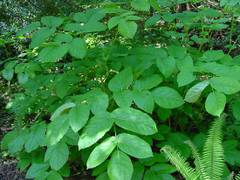
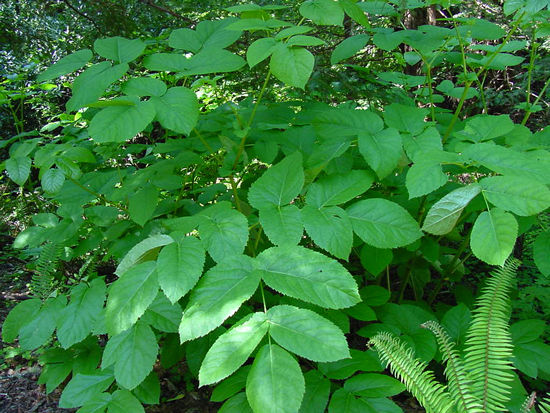
Aralia is a genus of about 70 species in the family Araliaceae, ranging from large herbaceous perennials to multi-stemmed shrubs and small trees, native to eastern and southern Asia and to North and Central America. Size spans the genus widely: herbaceous species such as A. racemosa reach 3-6 feet (0.9-1.8 m), while woody species such as A. spinosa and A. elata form sparsely branched trunks 15-40 feet (4.5-12 m) tall. The leaves are among the largest of any temperate plant, doubly or triply compound and up to 3-4 feet (0.9-1.2 m) long, divided into many toothed leaflets. Small white to greenish flowers are borne in large terminal panicles or umbel clusters in mid- to late summer, followed by dark purple-black berry-like drupes 0.2-0.3 inch (5-8 mm) wide. Several woody species carry stout prickles on the stems and leaf stalks, giving rise to the name devil walking stick. The genus occupies woodland edges, clearings, and disturbed ground on moist, fertile soil. Sap and raw berries of some species contain saponins that can irritate skin and digestion, whereas the blanched shoots of A. cordata are eaten as a cooked vegetable. Woody species sucker freely and can form thickets.
Native Range
Native to eastern and southern Asia, including China, Korea, and Japan, and to eastern North America and the highlands of Central America.Suggested Uses
Used as bold-foliage specimens in woodland gardens, shrub borders, and naturalized plantings where the coarse texture and large compound leaves create contrast. Herbaceous species suit shaded perennial borders, and the berries draw birds in autumn. Prickly woody species are sometimes grown as informal barrier plantings.How to Identify
Appearance
Size & Dimensions
Height3' - 40'
Width/Spread3' - 20'
Bloom Information
Flowers from July to August in branched terminal clusters that can exceed 12 inches (30 cm) across. Bloom lasts about 3 weeks and draws many flies, bees, and wasps. Purple-black fruit ripens in early autumn.
Detailed Descriptions
Flower Description
white to greenish-whiteFoliage Description
greenGrowing Conditions
Sun Requirements
Requires 4-8 hours of direct sunlight daily
• Full Sun: 6+ hours of direct sunlight
• Partial Shade: 3-6 hours of direct sunlight
• Full Shade: Less than 3 hours of direct sunlight
Care & Maintenance
Care Guide
Grows in full sun to partial shade on moist, fertile, well-drained soil with a pH near 5.5-7.0. Most species tolerate clay, loam, and sandy soils but need steady moisture while establishing. Water needs are moderate once roots reach surrounding soil. Woody species produce root suckers that extend the clump and can be removed to limit spread. An annual mulch maintains the cool, humus-rich conditions the genus favors. Established plants need little feeding.Pruning
Woody species are pruned in late winter to remove dead or crossing stems and to thin suckers. Herbaceous species are cut to the ground after frost blackens the foliage. Stems and leaf stalks of prickly species carry sharp spines along their length.Pruning Schedule
Prune: February–March
winter