Annona, Genus, muricata, Species,
- Genus & species
soursop
Caribbean, Central America, South America
Overview
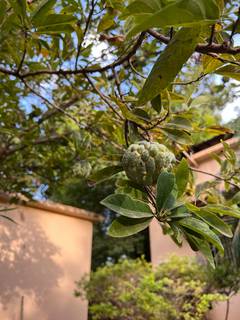
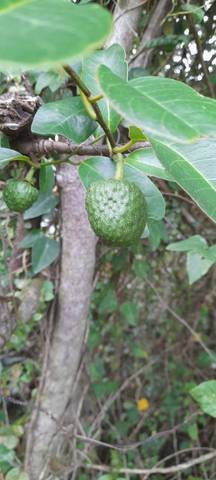
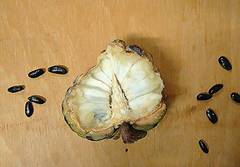
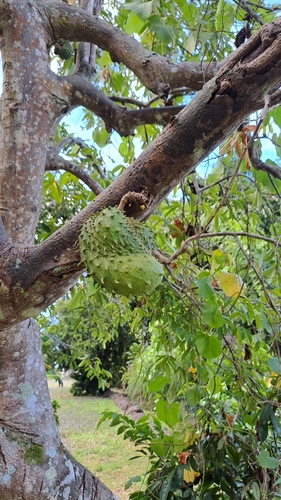
Annona muricata is soursop (guanabana), growing 120–300 inches (300–750 cm) tall. Large irregularly shaped green fruit 6–12 inches (15–30 cm) long and up to 10 pounds (4.5 kg), covered with soft curved spines. White fibrous flesh with a tart-sweet flavor combining strawberry, pineapple, and citrus notes — consumed as fresh fruit, juice, ice cream, and smoothies throughout the Caribbean and Latin America. The flowers emerge directly from the trunk and older branches (cauliflory) — yellow-green fleshy flowers 1–1.5 inches (2.5–4 cm) with three outer petals and three smaller inner petals. The flowers exhibit protogynous dichogamy (female-receptive phase before male pollen release), reducing self-pollination — hand-pollination improves fruit set. Related to sugar apple (A. squamosa) and cherimoya (A. cherimola) in the custard apple family (Annonaceae). Seeds contain annonacin, a neurotoxin — do not chew or swallow seeds. The flesh is safe when consumed without seeds. Leaves also contain annonacin. Native to the Caribbean, Central America, and South America. Frost-tender: killed by temperatures below 40°F (4°C). Full sun to partial shade. Well-draining slightly acidic soil. Heavy water needs. Mealybugs and scale. Growth rate is fast. Container culture at 15–25 gallons (60–95 liters) with indoor winter storage. Zones 10–12.
Native Range
Native to the Caribbean, Central America, and northern South America. Widely cultivated throughout the tropics.Suggested Uses
Grown in the ground in zones 10–12 or in containers of 15–25 gallons (60–95 liters) with indoor winter storage. Full sun. Hand-pollinate for fruit set. Seeds toxic (annonacin); fruit flesh safe without seeds.How to Identify
Appearance
Size & Dimensions
Height10' - 25'
Width/Spread8' - 15'
Bloom Information
Yellow-green fleshy flowers year-round in tropical conditions, emerging directly from the trunk and branches (cauliflory). Protogynous dichogamy — hand-pollination improves fruit set. Fruit matures 5–7 months after pollination.
Detailed Descriptions
Flower Description
Yellow-green, fleshyFoliage Description
Dark green, glossy, oblongGrowing Conditions
Sun Requirements
Requires 6-10 hours of direct sunlight daily
• Full Sun: 6+ hours of direct sunlight
• Partial Shade: 3-6 hours of direct sunlight
• Full Shade: Less than 3 hours of direct sunlight
Care & Maintenance
Care Guide
Full sun to partial shade. Well-draining slightly acidic soil pH 5.5–6.5. Heavy water needs. Frost-tender — killed below 40°F (4°C). Hand-pollinate for fruit set. Seeds toxic (annonacin) — do not chew or swallow. Fruit flesh safe without seeds. Mealybugs and scale. Zones 10–12.Pruning
Prune for shape and size control. Remove dead or crossing branches. The tree can be maintained at 120–180 inches (300–450 cm) with annual pruning. Fruit develops on the trunk and older branches.Container Growing
Suitable for container growing
Minimum container size: 15 gallons