Annona, Genus, squamosa, Species,
- Genus & species
sugar apple
Tropical Americas — exact origin unclear (possibly Caribbean or Central America); cultivated throughout the tropics for centuries
Overview
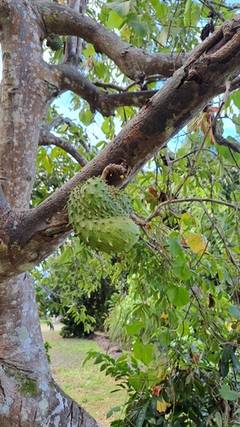
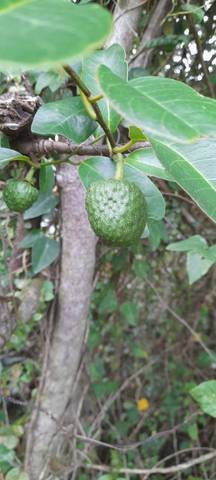
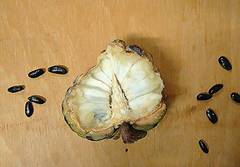
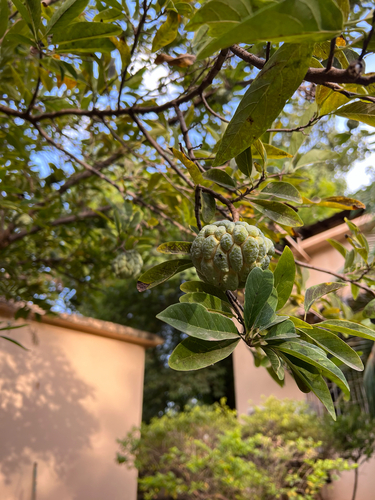
Annona squamosa is the sugar apple (sweetsop), growing 120–240 inches (300–600 cm). The fruit 2.5–4 inches (6–10 cm) in diameter has a bumpy exterior composed of individual fused carpels that break apart into segments when ripe, revealing white custard-textured flesh with a flavor combining vanilla, banana, and pineapple notes. In the custard apple family (Annonaceae) — the genus includes cherimoya (A. cherimola), soursop (A. muricata), and atemoya (A. squamosa × A. cherimola). Hand-pollination improves fruit set significantly — the flowers exhibit protogynous dichogamy (the female parts are receptive before the male pollen is released on the same flower), which limits natural self-pollination. The seeds contain annonacin, a neurotoxin — do not chew or swallow seeds; spit them out. The fruit flesh does not contain the toxin and is safe to eat. Tropical: killed by frost. Zones 10–11 outdoors. Semi-deciduous — drops leaves during dry periods or cool weather. Full sun (6+ hours). Well-draining soil. Native to the tropical Americas and West Indies. Mealybugs and scale insects are the primary pests. Container culture possible at 15–25 gallons (60–95 liters) with indoor winter storage. Growth rate is moderate. Self-fertile with hand-pollination assistance.
Native Range
Annona squamosa is native to the tropical Americas — possibly Caribbean or Central America.Suggested Uses
Grown in the ground in zones 10–11 or in containers of 15–25 gallons (60–95 liters) with indoor winter storage. Full sun. Hand-pollinate for fruit set. Seeds are toxic (annonacin) — do not chew or swallow. Fruit flesh is safe.How to Identify
Appearance
Size & Dimensions
Height10' - 20'
Width/Spread10' - 15'
Colors
Bloom Information
Detailed Descriptions
Flower Description
Yellowish-green, fleshy, drooping — inconspicuous but fragrantFoliage Description
Dark green, lance-shaped, aromatic when crushedGrowing Conditions
Sun Requirements
Requires 6-12 hours of direct sunlight daily
• Full Sun: 6+ hours of direct sunlight
• Partial Shade: 3-6 hours of direct sunlight
• Full Shade: Less than 3 hours of direct sunlight
Care & Maintenance
Care Guide
Full sun (6+ hours). Tropical — killed by frost. Well-draining soil. Hand-pollinate for fruit set (protogynous dichogamy limits natural pollination). Seeds are toxic (annonacin) — spit out, do not chew. Fruit flesh is safe. Mealybugs and scale. Zones 10–11.Pruning
Prune for shape in early spring. Remove dead or crossing branches. The semi-deciduous habit means periodic leaf drop is normal during cool or dry periods.Pruning Schedule
Prune: February–March
late winter
Container Growing
Suitable for container growing
Minimum container size: 20 gallons