Anigozanthos, Genus, flavidus, Species,
- Genus & species
Tall kangaroo paw
Overview
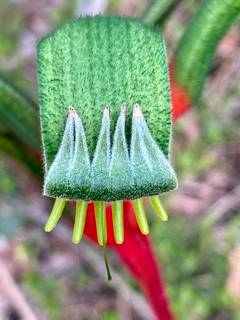
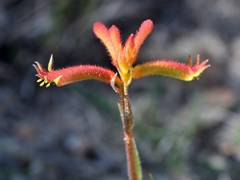
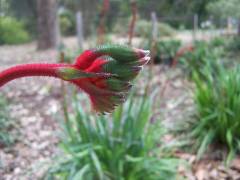
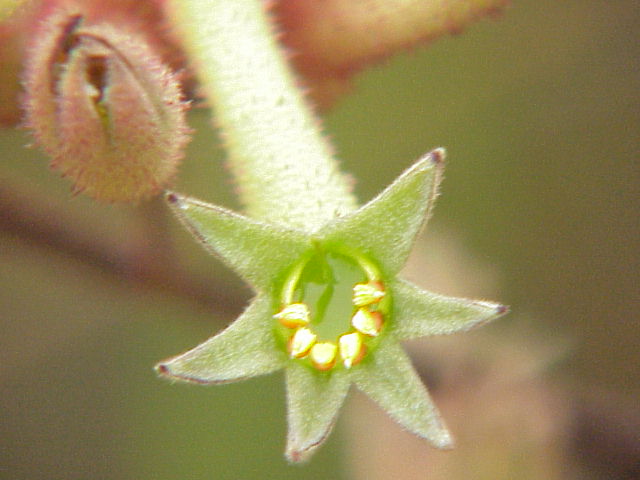
Anigozanthos flavidus is an evergreen rhizomatous perennial forming clumps of strap-shaped leaves 2-4 feet (60-120 cm) across, with branched flowering stems rising 5-10 feet (1.5-3 m) above the foliage. Leaves are flat, grey-green, 12-40 inches (30-100 cm) long and 0.4-0.8 inch (1-2 cm) wide, arranged in fans from a horizontal rhizome. Flowering stems branch in the upper third and carry tubular flowers 1.2-1.6 inches (3-4 cm) long, densely coated in woolly hairs that give the surface a felted texture. Flower color within a single population ranges from yellow-green through orange to dull red, and the hairs on the stem often differ in color from the flower tube itself. Flowers open in sequence from the base of each branch upward over 8-12 weeks in late spring and summer, and are visited by nectar-feeding birds. Capsules split to release black seeds about 0.08 inch (2 mm) long. Clumps widen 4-8 inches (10-20 cm) per year and are divided after 3-4 years. Each fan of leaves dies after it has flowered and is replaced by new fans from the rhizome, so dead leaves accumulate at the clump base through summer. Leaf tips and margins blacken where the fungal disease ink spot is present, most often in humid summers and under overhead irrigation.
Native Range
Native to southwestern Western Australia, from the Perth region south to Albany and east to the Stirling Range. Grows on winter-wet flats, swamp margins, and seasonally damp depressions in sand over clay, below about 1,000 feet (300 m) elevation. Populations occur in open eucalypt woodland and along roadside seepage lines.Suggested Uses
Planted at 24-36 inch (60-90 cm) spacing in mixed borders, dry-climate gardens, and mass plantings on road verges across southern Australia, coastal California, and Mediterranean-climate Europe. Grown in containers of 10 gallons (38 L) or larger, where flowering stems reach 3-5 feet (0.9-1.5 m) rather than the full height of ground-grown clumps. Stems are cut for the florist trade and hold 10-14 days in water.How to Identify
Appearance
Size & Dimensions
Height5' - 10'
Width/Spread2' - 4'
Bloom Information
Flowers open from late spring into summer, May through September in USDA zones 9-11 of the Northern Hemisphere and November through February in southern Australia. Each stem holds flowers for 8-12 weeks as buds open in sequence along the branches. Stems cut to the base after the first flush are often followed by a second, shorter flush 6-8 weeks later. Flowering drops in the season after division and in positions receiving under 6 hours of direct sun.
Detailed Descriptions
Flower Description
Yellow-green to dull redFoliage Description
Grey-greenGrowing Conditions
Sun Requirements
Requires 6-10 hours of direct sunlight daily
• Full Sun: 6+ hours of direct sunlight
• Partial Shade: 3-6 hours of direct sunlight
• Full Shade: Less than 3 hours of direct sunlight
Care & Maintenance
Care Guide
Water weekly through the first summer after planting; established clumps hold without water for 3-4 weeks at temperatures below 86F (30C). Free-draining sand or sandy loam is required, since rhizome rot from Phytophthora cinnamomi develops in soil that stays saturated above 68F (20C), although the species tolerates winter waterlogging at temperatures below 60F (15C). Phosphorus above about 5 ppm causes leaf yellowing and shoot dieback, so low-phosphorus fertilizers formulated for Australian natives are applied at 1 ounce per square yard (30 g per square meter) in early spring. Ink spot caused by Alternaria alternata blackens leaf tips and margins in humid weather; cutting affected fans to the base and using drip rather than overhead irrigation reduces spread. Clumps flower less after 4-6 years as the rhizome center becomes woody, and division in early spring returns stem numbers to earlier levels. Snails graze emerging flower stems in spring, severing them 2-4 inches (5-10 cm) above the crown.Pruning
Spent flowering stems are cut at the base once the flowers have dried, from late summer through autumn. Leaf fans that have flowered are removed at ground level at the same time, since they produce no further growth. Whole clumps are cut back to 4 inches (10 cm) above the rhizome in early spring every 3-4 years, and regrowth reaches full leaf height within one season. Cutting in cold, wet weather exposes the cut rhizome to rot organisms and can kill the clump.Pruning Schedule
Prune: September–October
fall
Container Growing
Suitable for container growing
Minimum container size: 10 gallons