Anaphalis, Genus, spp., Multiple species,
- Genus
- Multiple species
everlastings
Mountains of Asia, with one species across North America and Europe
Overview
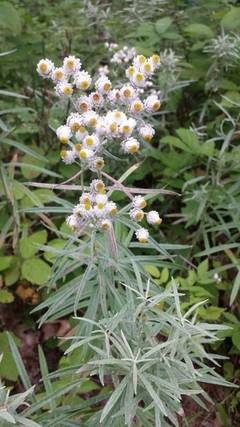
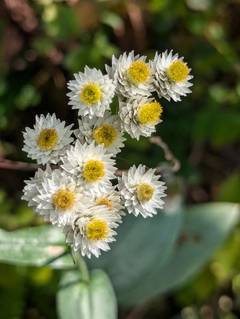
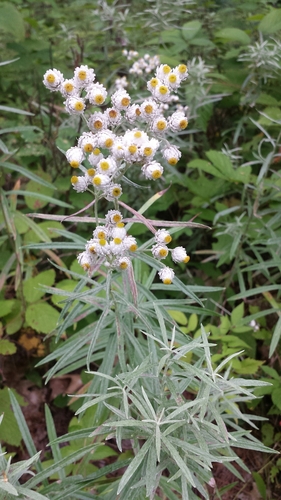
Anaphalis is a genus of about 110 species of perennial herbs in the daisy family, Asteraceae, commonly called everlastings or pearly everlastings, found mainly in the mountains of Asia, with a few species in Europe and North America. The plants form upright clumps 1-3 ft (30-90 cm) tall with narrow leaves that are grey-green above and covered in white woolly hairs beneath, giving the foliage a silvery cast. In mid- to late summer the stems carry flat clusters of small, rounded flower heads in which papery white bracts surround tiny yellow disc florets. These dry, straw-textured bracts hold their shape and colour long after cutting, which is the source of the everlasting name and their use in dried arrangements. A. margaritacea, pearly everlasting, is native across much of North America and into eastern Asia and serves as a larval food plant for painted lady butterflies. Most species grow on open, well-drained, sometimes poor soils and tolerate drought, but they decline in rich, wet ground. Plants spread slowly by short rhizomes to form colonies.
Native Range
Native chiefly to the temperate and alpine regions of Asia, especially the Himalayas and China, with A. margaritacea ranging across North America, from Alaska and Canada south through the United States, and into northeastern Asia and naturalized in Europe.Suggested Uses
Grown in borders, cottage and wildlife gardens, and meadow plantings, and cut fresh or dried for everlasting arrangements, spaced 12-18 in (30-45 cm) apart. The silvery foliage and white heads are used in butterfly and pollinator plantings.How to Identify
Appearance
Size & Dimensions
Height1' - 3'
Width/Spread1' - 2'
Bloom Information
Flowering runs from mid- to late summer into autumn, roughly July to September. The papery white heads open over several weeks and keep their colour on the plant and after cutting. Male and female flowers are often on separate plants, and seed heads follow on female plants.
Detailed Descriptions
Flower Description
papery white with yellow centersFoliage Description
grey-green above, white-woolly beneathGrowing Conditions
Sun Requirements
Requires 6-10 hours of direct sunlight daily
• Full Sun: 6+ hours of direct sunlight
• Partial Shade: 3-6 hours of direct sunlight
• Full Shade: Less than 3 hours of direct sunlight
Care & Maintenance
Care Guide
Across the genus, Anaphalis grows in full sun to light shade in average, well-drained soil and tolerates poor, dry, and sandy ground, over a pH from about 5.5 to 7.5. Unlike many grey-leaved plants, it accepts somewhat moist soil, but it declines in rich, wet, or poorly drained sites. Most species are very cold-hardy, surviving in USDA zones 3-8. Plants spread by short rhizomes and can be divided in spring. The woolly foliage tolerates heat and is seldom browsed by deer. Cutting stems for drying is done as the heads fully open.Pruning
Spent stems are cut back to the basal foliage after flowering or left standing for winter interest and seed. Clumps are divided every few years in spring to control spread and renew vigour. For dried use, stems are cut as the white heads fully open and hung to dry.Container Growing
Suitable for container growing
Minimum container size: 2 gallons