Amsinckia, Genus, tessellata, Species,
- Genus & species
bristly fiddleneck
Western United States and northern Mexico
Overview
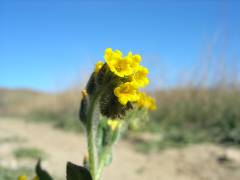
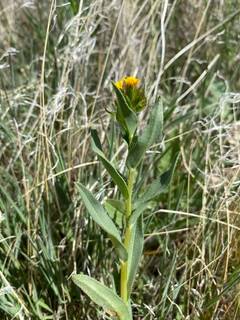
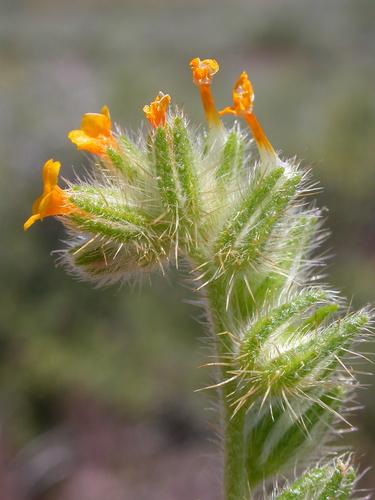
Amsinckia tessellata is a coarse, bristly annual in the borage family growing 6-24 inches (15-60 cm) tall with stiff, upright stems covered in harsh white hairs. The leaves are 1-5 inches (2.5-13 cm) long, narrow, and rough to the touch. Its flowers are borne in a tightly coiled cluster that uncurls as it blooms, a form known as a fiddleneck; each flower is a slender tube 0.3-0.5 inch (8-12 mm) long, orange-yellow and often marked with deeper orange in the throat. Native to the western United States and northern Mexico, it grows in deserts, dry grasslands, sandy flats, and disturbed open ground, flowering in early to mid spring after winter rains. A. tessellata tolerates poor, dry soil and completes its short life cycle before summer heat. The stiff bristles can irritate skin, and the seeds contain pyrrolizidine alkaloids that are toxic to cattle and horses if eaten in quantity; the plant can also accumulate nitrates. It self-sows readily and is treated as a weed in rangeland and grain fields.
Native Range
Native to the western United States and northern Mexico, from Washington and California east to Idaho, Utah, and Arizona. It grows in deserts, dry grasslands, sandy flats, and disturbed ground, often appearing after winter rains.Suggested Uses
Grown occasionally in native wildflower and pollinator plantings in arid regions, where the spring flowers draw bees and other insects, spaced about 8-12 inches (20-30 cm) apart. It is more often part of natural desert flora or managed as a rangeland weed than deliberately cultivated. Its early nectar supports native bees during the desert spring.How to Identify
Appearance
Size & Dimensions
Height6" - 2'
Width/Spread4" - 1'
Bloom Information
Flowering occurs in early to mid spring, mainly March through May, with timing tied to winter rainfall. The orange-yellow tubular flowers open in sequence along the unrolling coil, so each stem shows open flowers and buds together. The plant sets seed and dies as the soil dries in late spring.
Detailed Descriptions
Foliage Description
greenGrowing Conditions
Sun Requirements
Requires 6-12 hours of direct sunlight daily
• Full Sun: 6+ hours of direct sunlight
• Partial Shade: 3-6 hours of direct sunlight
• Full Shade: Less than 3 hours of direct sunlight
Water & Climate
Water Needs
Drought Tolerance
Drought tolerant when established
Care & Maintenance
Care Guide
As a desert winter annual, A. tessellata germinates with fall and winter rains, grows through the cool season, flowers in spring, and dies by early summer. It needs full sun and sharply drained sandy or rocky soil and tolerates drought, heat, and infertile ground. No irrigation or fertilizer is required where winter rain occurs. It self-sows abundantly and can spread into disturbed areas and rangeland. The seeds are toxic to livestock, and dense stands in grazed or cultivated land are managed as a weed. Bristly foliage may cause minor skin irritation when the plant is handled.Pruning
Pruning does not apply to this short-lived annual. Cutting or pulling plants before the seeds ripen limits self-sowing and reduces toxic seed in grazed areas.Toxicity Warning
Toxic to petsPlanting Guide
Planting Methods & Timing
Planting Method
direct sow
Direct Sow Timing
Fall in regions with winter rain
Days to Maturity
60–90 days
Plant Spacing
10 inches