Amsinckia, Genus, spp., Multiple species,
- Genus
- Multiple species
fiddlenecks
Western North America and western South America
SunFull Sun
Overview
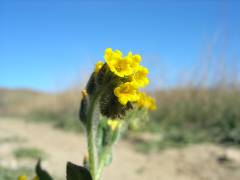
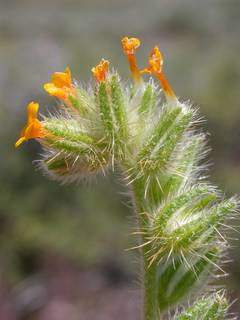
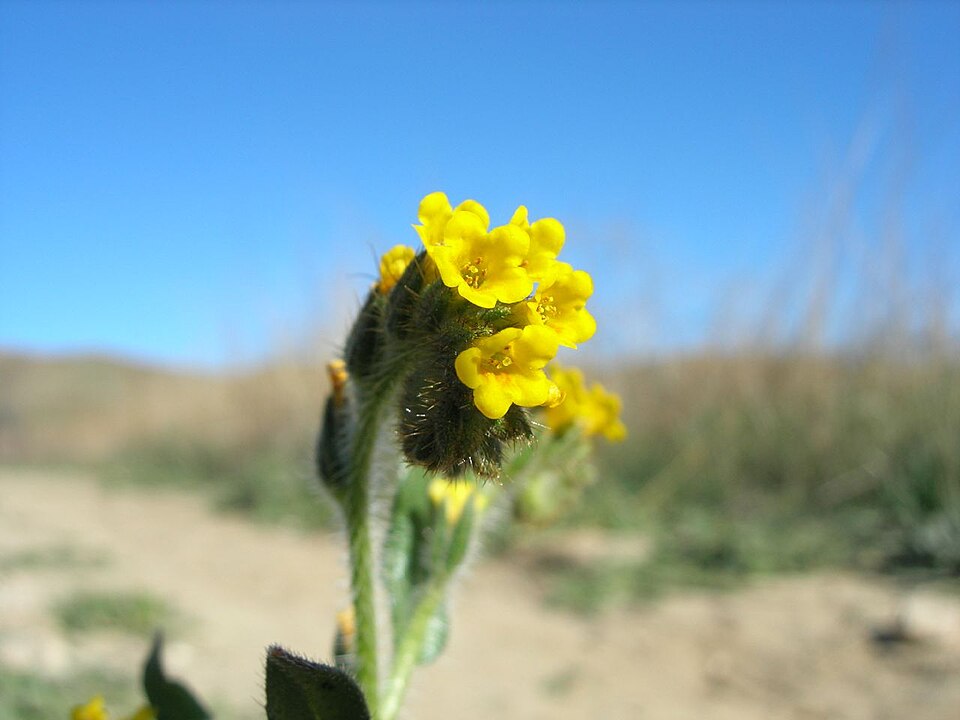
Amsinckia is a genus of about 12 annual herbs in the borage family (Boraginaceae), known as fiddlenecks for the coiled flowering stems that uncurl like the scroll of a fiddle. Plants grow 8–32 inches (20–80 cm) tall on stiff, branching stems covered in coarse, bristly hairs that can irritate skin. The narrow leaves are green to grey-green and rough to the touch. Small tubular flowers, yellow to orange and 0.2–0.6 inch (5–15 mm) long, are arranged along one side of the curled stem tip, which straightens as the flowers open from the base upward. The genus is native to open, dry habitats of western North America and western South America, including grassland, rangeland, roadsides, and disturbed fields, where some species are abundant spring wildflowers. Plants withstand drought and poor soil and self-seed readily. The foliage and seeds contain pyrrolizidine alkaloids and can accumulate nitrates, causing liver damage in cattle, horses, and other livestock that graze it heavily. A. menziesii and A. intermedia are among the species common across the western United States.
Native Range
The genus is native to western North America and western South America, reaching its greatest diversity in California and the western United States. Amsinckia grows in grassland, rangeland, roadsides, and disturbed open fields. Plants favor sunny sites with free-draining soil and appear in quantity after wet winters.Suggested Uses
Amsinckia is grown in native-plant and wildflower plantings and meadow seed mixes in western North America, sown directly into open ground. The flowers draw native bees and other pollinators in early spring. The seeds feed finches and other seed-eating birds.How to Identify
Appearance
Size & Dimensions
Height8" - 2'8"
Width/Spread4" - 1'
Colors
Bloom Information
Flowering runs through spring, roughly March through June, as the coiled stems straighten and open from the base toward the tip. Bloom follows winter rains and is heaviest in years with good soil moisture. Plants set seed and die as the soil dries in early summer.
Detailed Descriptions
Flower Description
yellow to orangeFoliage Description
green to grey-greenGrowing Conditions
Sun Requirements
Requires 6-12 hours of direct sunlight daily
• Full Sun: 6+ hours of direct sunlight
• Partial Shade: 3-6 hours of direct sunlight
• Full Shade: Less than 3 hours of direct sunlight
Water & Climate
Water Needs
Drought Tolerance
Drought tolerant when established
Care & Maintenance
Care Guide
Plants grow in full sun on free-draining sand, loam, clay, or rocky soil, and tolerate poor fertility and drought. Seed germinates with autumn or winter rains, and seedlings flower the following spring. Rich soil and shade produce weak growth and fewer flowers. Plants self-seed freely and can spread through open ground from a single season. The bristly foliage deters browsing and the alkaloid content makes the plant hazardous to grazing livestock.Pruning
Plants are pulled or cut before seed ripens where self-seeding into pasture or beds is unwanted. No other pruning is needed for this short-lived annual. Spent plants are cleared as they dry in early summer.Toxicity Warning
Toxic to pets and humansPlanting Guide
Planting Methods & Timing
Planting Method
direct sow
Direct Sow Timing
autumn or early spring in mild-winter regions