Amsinckia, Genus, menziesii, Species,
- Genus & species
common fiddleneck
SunFull Sun – Part Shade
Overview
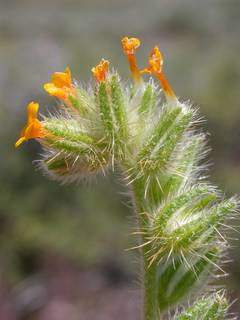
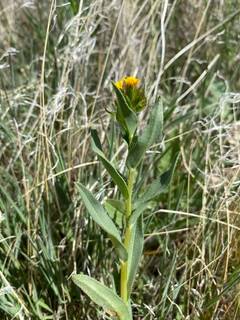
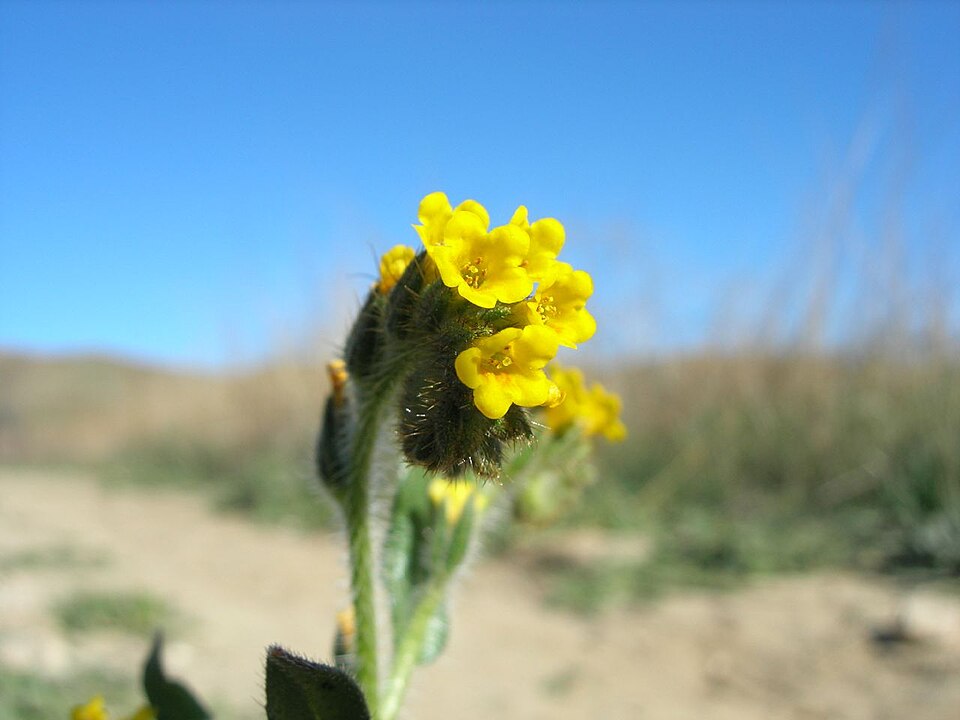
Amsinckia menziesii, common fiddleneck, is an annual wildflower in the borage family native to western North America. It grows 8-36 inches (20-90 cm) tall on branching stems covered, like the leaves, in stiff bristly hairs that can irritate skin. The narrow leaves are 1-6 inches (2.5-15 cm) long and roughly hairy. Its flowers are carried on a curled, one-sided stalk that uncoils like the neck of a fiddle as the buds open, giving the plant its common name. Each flower is a small orange to yellow tube about 0.25-0.5 inch (6-12 mm) long, often marked with deeper orange in the throat. It is a fast-growing colonizer of disturbed ground, fields, roadsides, and grazed rangeland, completing its life cycle from winter germination to summer seed set in a single season. The bristly herbage and seeds contain pyrrolizidine alkaloids and nitrates that are poisonous to horses, cattle, and other livestock when eaten in quantity. Because it self-sows heavily and spreads in croplands, it is often treated as a weed across much of its range.
Native Range
Native to western North America, from British Columbia south through California and east to the Rocky Mountains, and naturalized more widely. It grows in grasslands, open fields, roadsides, and disturbed or grazed ground, often forming dense stands after winter rains.Suggested Uses
Used in wildflower meadows, native annual mixes, and pollinator plantings on dry, sunny sites. Its quick cover of bare ground suits restoration and erosion control, though its weedy spread limits use near croplands or pastures.How to Identify
Appearance
Size & Dimensions
Height8" - 3'
Width/Spread6" - 1'
Bloom Information
Flowers open from March through June, with the curled spike unrolling and blooming from the base upward over several weeks. A stand can flower for 6-10 weeks as successive stems develop. Small, hard, beaked nutlets follow and shed as the plant dries.
Detailed Descriptions
Flower Description
orange to yellowFoliage Description
greenGrowing Conditions
Sun Requirements
Requires 6-12 hours of direct sunlight daily
• Full Sun: 6+ hours of direct sunlight
• Partial Shade: 3-6 hours of direct sunlight
• Full Shade: Less than 3 hours of direct sunlight
Water & Climate
Water Needs
Drought Tolerance
Drought tolerant when established
Care & Maintenance
Care Guide
Grows in full sun on well-drained sandy, loamy, or clay soils, including poor and disturbed ground. As a winter annual it germinates with fall and winter rains, flowers in spring, and dies after setting seed. It needs little water and tolerates drought once growing. Sow seed in fall or early spring directly in place, since the taproot does not transplant well. It self-seeds aggressively and can spread beyond the intended area. The bristly foliage and alkaloid content make it unsafe forage for grazing animals.Pruning
No pruning is needed for this annual. Plants can be pulled or cut after flowering to limit heavy self-seeding. Removing spent stems before the nutlets ripen reduces spread into nearby ground.Toxicity Warning
Toxic to pets and humansPlanting Guide
Planting Methods & Timing
Planting Method
direct sow
Direct Sow Timing
fall or early spring
Days to Maturity
90–150 days
Plant Spacing
8 inches