Amaranthus, Genus, palmeri, Species,
- Genus & species
Palmer's amaranth
Desert Southwest US and northern Mexico
SunFull Sun
Overview
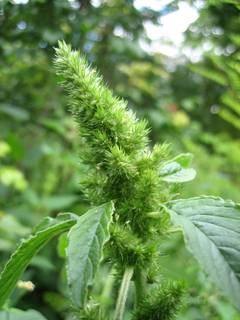
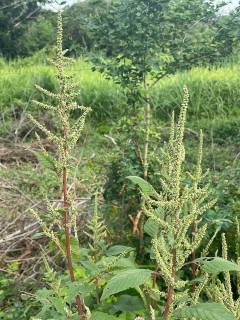
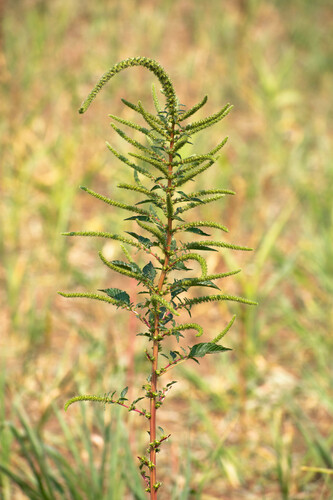
Amaranthus palmeri is an erect, fast-growing summer annual reaching 3-8 feet (0.9-2.4 m) tall, occasionally taller in rich soil, with a stout, smooth, often reddish central stem. The plant branches into a broad, candelabra-like form. Alternate leaves are oval to diamond-shaped, 1-3 inches (2.5-7.5 cm) long on long stalks, and often carry a small notch and a tiny bristle at the tip. The species is dioecious, with male and female flowers on separate plants in dense, slender terminal spikes 6-18 inches (15-45 cm) long. Female spikes bear sharp, rigid bracts that make them prickly to handle. A single female plant can produce 200,000 to 600,000 small seeds in one season. Flowering runs from June to October. It grows on disturbed ground, croplands, riverbanks, and roadsides, tolerating heat and drought through a deep taproot and water-efficient C4 photosynthesis. The species has evolved resistance to several herbicides and is a major weed of cotton and soybean fields. The young leaves and seeds are edible and were eaten by Indigenous peoples of the Southwest.
Native Range
Amaranthus palmeri is native to the desert Southwest of the United States and northern Mexico, centered on the lower Colorado River basin. It has spread widely across North America as an agricultural weed and grows on cultivated fields, disturbed soil, floodplains, and roadsides.Suggested Uses
Grown occasionally as a warm-season leaf and grain crop, where young leaves and seeds are harvested for food. In the wild it serves mainly as a seed source for birds and small mammals. It is more often managed as a weed than planted, given its rapid spread and herbicide resistance.How to Identify
Appearance
Size & Dimensions
Height3' - 8'
Width/Spread1' - 3'
Bloom Information
Detailed Descriptions
Foliage Description
Green, stems often reddishGrowing Conditions
Sun Requirements
Requires 6-12 hours of direct sunlight daily
• Full Sun: 6+ hours of direct sunlight
• Partial Shade: 3-6 hours of direct sunlight
• Full Shade: Less than 3 hours of direct sunlight
Water & Climate
Water Needs
Drought Tolerance
Drought tolerant when established
Care & Maintenance
Care Guide
Amaranthus palmeri grows readily in full sun on warm, fertile, disturbed soils and is rarely planted on purpose. It tolerates heat, drought, and a wide pH from 5.5 to 7.5 through a deep taproot and efficient warm-season photosynthesis. Seeds germinate over a long season once soils warm, and plants grow several inches a week in summer. The species is dioecious, so seed forms only where male and female plants grow together. It is regulated as a noxious weed in several US states because of its herbicide resistance and heavy seed production. Removal before the female plants set seed is the main means of control.Pruning
Pruning is not a normal practice for this weedy annual. Cutting or pulling plants before the female spikes mature prevents the large seed set. Severed stems can resprout from the base if soil moisture is high.Toxicity Warning
Toxic to petsPlanting Guide
Planting Methods & Timing
Planting Method
direct sow
Direct Sow Timing
Late spring after soil warms