Aloe, Genus, aristata, Species,
- Genus & species
lace aloe
South Africa, primarily in the Lesotho highlands and surrounding grasslands of the Eastern Cape, Free State, and KwaZulu-Natal provinces at elevations of 4,000-8,000 feet (1,200-2,400 m).
Overview
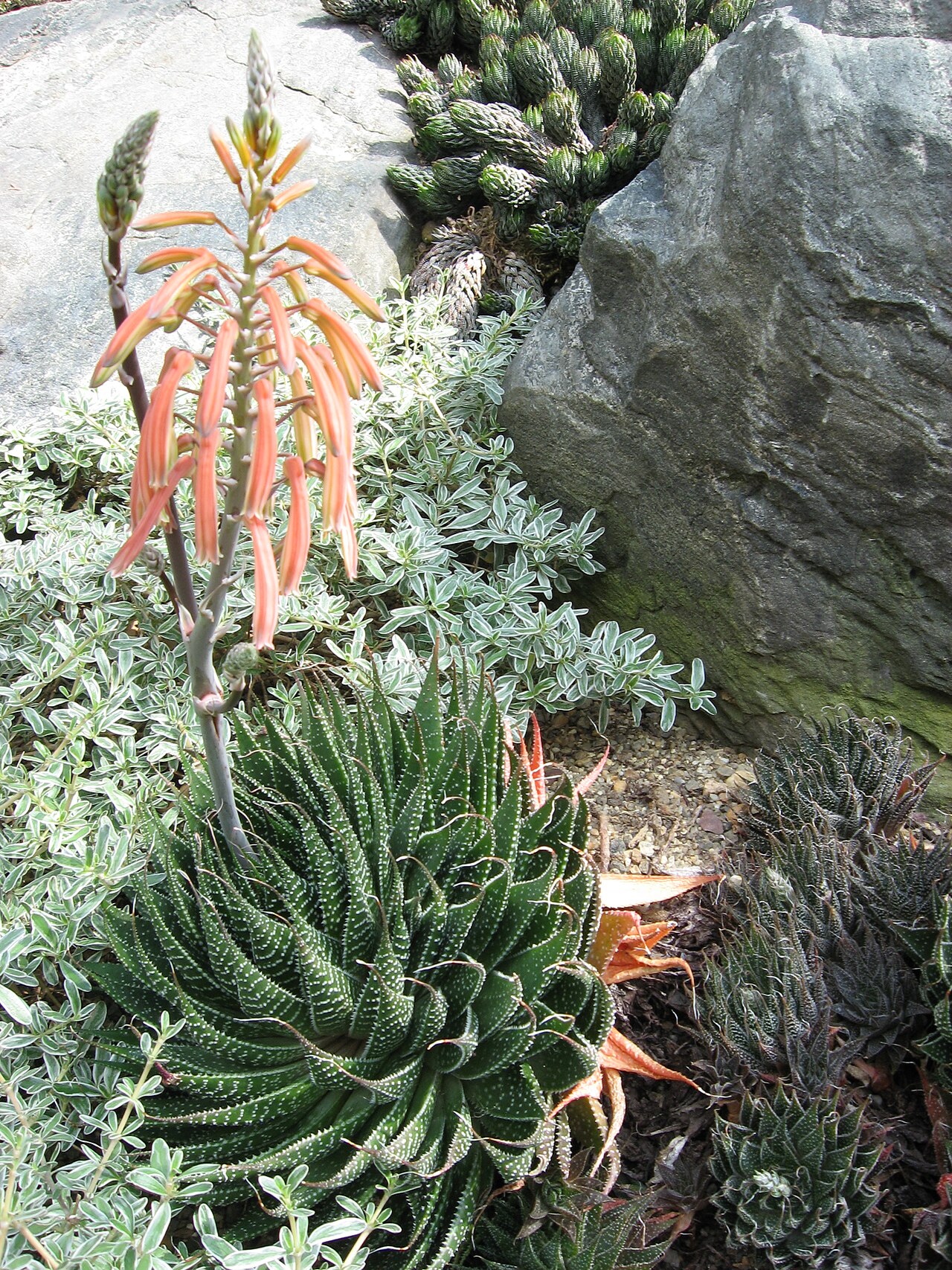
Aloe aristata is a compact stemless succulent in the asphodel family (Asphodelaceae) forming dense rosettes 6-10 inches (15-25 cm) tall and wide. Dark green lance-shaped leaves are covered in raised white tubercles arranged in transverse bands across each leaf surface, with soft white marginal teeth lining the leaf edges and a hair-like filament (arista) at each leaf tip that gives the species both its scientific name (aristata, meaning awned, refers to the leaf-tip bristle) and its common name (lace aloe, from the lacy appearance of the bristled rosette). Rosettes produce offset rosettes freely on short underground stolons, forming tight clusters over time as a small colony of mother and daughter rosettes builds. Tubular orange-red flowers appear on a branched raceme 12-20 inches (30-50 cm) tall in late spring to early summer (May through July in the Pacific Northwest), pollinated by hummingbirds (in cultivation outside the native range) and by sunbirds (the native pollinator group in southern Africa) along with various bee species. The species ranks at the cold-tolerant end of the Aloe genus, surviving temperatures down to approximately 15°F (-9°C) when soil drainage is sharp during winter wet periods, and the cold tolerance allows outdoor cultivation in USDA zones 7-10 in well-drained sites. In wet winter conditions on poorly drained soil, root and crown rot develop rapidly, so sharply drained mineral substrates are essential to over-winter performance. The compact size and prolific offsetting habit make the species suited to container culture, and the species is popular as a windowsill houseplant in cool-climate gardens. Some taxonomic authorities place this species in the genus Aristaloe as Aristaloe aristata, separating it from Aloe based on differences in flower structure and DNA evidence; the Aloe aristata name remains in widespread horticultural use. The leaves are softer and more flexible than many true Aloe species. All plant parts contain anthraquinone glycosides (notably aloin, also called barbaloin, which is the bitter yellow latex visible just below the leaf epidermis when a leaf is cut), and ingestion of the latex by dogs or cats produces gastrointestinal irritation including vomiting and diarrhea, with the laxative effect of anthraquinones potentially leading to dehydration in young or small animals. The same compound class produces the bitter taste that protects the plant from herbivory in its native range. Humans tolerate aloe-genus latex at small medicinal doses (the historical use of aloe latex as a laxative goes back centuries), but extended consumption produces the same gastrointestinal effects and the latex is no longer recommended for medicinal use.
Native Range
Aloe aristata is native to South Africa, with a primary range in the Lesotho highlands and surrounding provinces of the Eastern Cape, Free State, and KwaZulu-Natal at elevations of 4,000-8,000 feet (1,200-2,400 m). The high-elevation grassland habitat has shaped the species' cold tolerance (which exceeds the cold tolerance of most Aloe species native to lower-elevation ranges), the well-drained-soil preference, and the partial shade tolerance from grass-canopy shading in the native habitat. The species is the cold-tolerant end of the Aloe genus and is the species most commonly chosen for outdoor cultivation in cool-temperate climates where most aloes fail.Suggested Uses
Grown as a houseplant in bright windowsills and as a container succulent on patios and balconies in cool-temperate climates where outdoor over-wintering is not reliable. In frost-free or mild climates within USDA zones 7-10, used in rock gardens, succulent beds, and green roof plantings where the sharp drainage and low water requirement match the species' physiological preferences. The compact size suits small containers of 1 gallon (3.8 liters) or larger, and grouped plantings with other small succulents and cacti produce textural contrast in mineral-based plantings.How to Identify
Appearance
Size & Dimensions
Height6" - 10"
Width/Spread6" - 10"
Colors
Bloom Information
Tubular orange-red flowers in pendulous clusters on a branched raceme 12-20 inches (30-50 cm) tall open from late May through July across a 3-week active flowering window. The raceme blooms from the bottom upward and individual flowers hang downward in the typical Aloe-genus pendulous orientation. Pollination is by sunbirds in the species' South African native range and by hummingbirds in cultivation outside the native range, with bees also working the flowers; the long tubular flower architecture matches the long-billed bird pollination syndrome shared across the Aloe genus. Individual rosettes may not bloom every year, and mature clumps with multiple offset rosettes produce more consistent flowering than single-rosette plantings.
Detailed Descriptions
Flower Description
Orange-red tubular flowers carried in pendulous clusters on a branched raceme 12-20 inches (30-50 cm) tall above the rosetteFoliage Description
Dark green leaves covered in raised white tubercles arranged in transverse bands; soft white marginal teeth and a hair-like filament (arista) at each leaf tip giving the species its nameGrowing Conditions
Sun Requirements
Requires 4-8 hours of direct sunlight daily
• Full Sun: 6+ hours of direct sunlight
• Partial Shade: 3-6 hours of direct sunlight
• Full Shade: Less than 3 hours of direct sunlight
Care & Maintenance
Care Guide
Plant in bright light with 4-8 hours of direct or filtered sun. Sharply drained soil is essential; cactus and succulent mix or standard potting media amended with 50% coarse sand or perlite handles the drainage requirement. Watering is when the soil dries completely, approximately every 2-3 weeks during summer growth and monthly or less during winter dormancy. Water collecting in the rosette center promotes crown rot, so watering aims at the soil surface rather than over the rosette. In USDA zones colder than 7, container culture allows the plant to be moved indoors before temperatures drop below 20°F (-7°C). Offsets are removed periodically to prevent overcrowding within a container and to propagate new plants for additional pots or for sharing. Households with dogs or cats: the bitter yellow latex from cut leaves contains aloin (an anthraquinone glycoside) that produces gastrointestinal irritation and laxative effects in pets, with smaller body-weight animals at higher dose risk than larger ones; placement out of reach of pets handles the household concern, and substituting Sansevieria trifasciata (no equivalent toxicity) or Sempervivum tectorum (cold-tolerant European succulent with no aloin chemistry) gives comparable visual texture without the latex toxicity.Pruning
Spent flower stalks are cut at the base after bloom completes. Dead or damaged outer leaves are removed by pulling gently from the rosette base or by cutting cleanly at the rosette base. No routine pruning is needed beyond this clean-up. Offsets are separated from the parent rosette in spring or summer if the clump becomes overcrowded within its container or planting location, and the separated offsets root readily on damp media after a 2-3 day callus-formation period.Container Growing
Suitable for container growing
Minimum container size: 1 gallons