Allocasuarina, Genus, torulosa, Species,
- Genus & species
forest sheoak
Overview
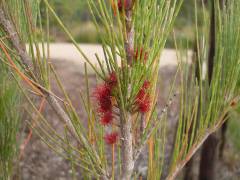
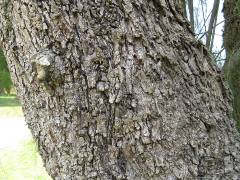
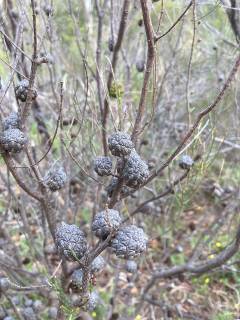
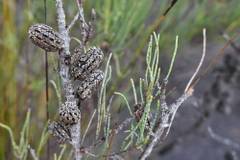
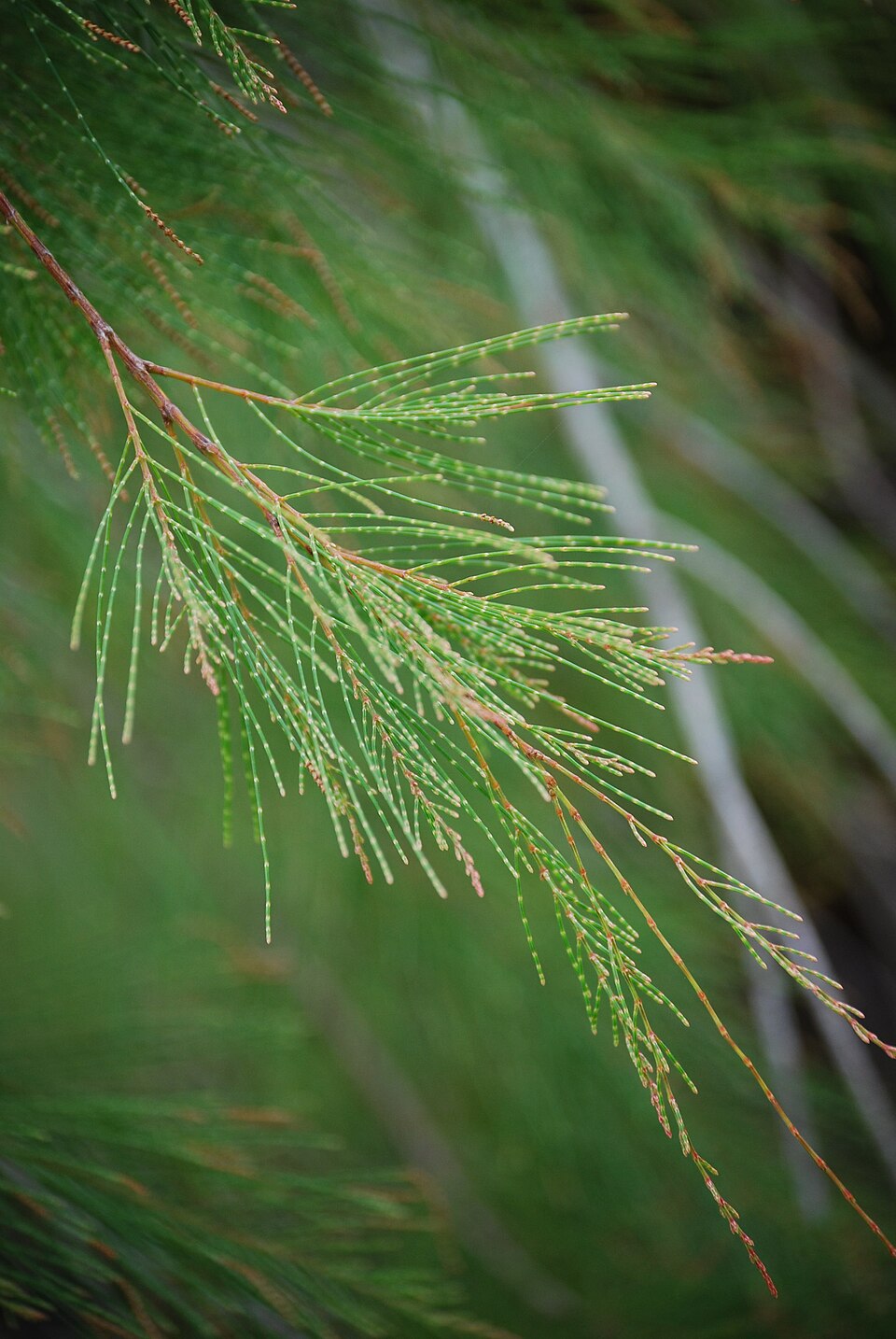
Allocasuarina torulosa is an evergreen tree in the family Casuarinaceae, typically reaching 30-50 feet (9-15 m) tall, occasionally to 65 feet (20 m), with a narrow to open crown and corky, deeply furrowed bark. In place of leaves it bears slender, drooping green branchlets 4-8 inches (10-20 cm) long that carry out photosynthesis; true leaves are reduced to tiny scale-like teeth in whorls of 4-5 around each branchlet joint. New growth flushes coppery to purple-bronze, giving the foliage seasonal colour shifts. The species is dioecious, with separate male and female trees. Male trees produce rusty brown pollen spikes at the branchlet tips, while female trees bear small red flowers followed by woody, cylindrical cones 0.5-1 inch (1.2-2.5 cm) long containing winged seeds. Growth is moderate, reaching mature height over 15-25 years. The dense litter of shed branchlets suppresses understorey plants and builds up beneath the canopy. Roots form nitrogen-fixing nodules, allowing growth on poor soils. Wind moving through the branchlets produces a soft sighing sound.
Native Range
Native to eastern Australia, from south-eastern Queensland through New South Wales. Grows in open forest and on the margins of rainforest, on soils ranging from sandy to clay, on slopes, ridges, and along watercourses up to about 3,300 feet (1,000 m) elevation.Suggested Uses
Planted as a shade and shelter tree in parks, large gardens, and rural windbreaks, spaced 15-25 feet (4.5-7.5 m) apart. Used for erosion control and revegetation on poor soils owing to its nitrogen-fixing roots. The heavy branchlet litter and surface roots limit its use close to lawns and paving.How to Identify
Appearance
Size & Dimensions
Height30' - 50'
Width/Spread15' - 25'
Bloom Information
Flowers mainly in autumn and winter (March to August in its native range). Male trees turn rusty brown as pollen spikes mature at the branchlet tips, while female flowers are small and red. Wind carries the pollen, and timing shifts earlier in warmer northern parts of the range.
Detailed Descriptions
Flower Description
Rusty brown (male), red (female)Foliage Description
Green with coppery-bronze new growthGrowing Conditions
Sun Requirements
Requires 6-12 hours of direct sunlight daily
• Full Sun: 6+ hours of direct sunlight
• Partial Shade: 3-6 hours of direct sunlight
• Full Shade: Less than 3 hours of direct sunlight
Care & Maintenance
Care Guide
Water through the first two summers to establish, after which trees tolerate extended dry periods. Plants grow in full sun to part shade on most soils, including poor and compacted ground, and fix their own nitrogen through root nodules. Drainage should be reasonable, though the species tolerates periodic wetness better than many trees. Few pests or diseases trouble established trees. Shed branchlets accumulate as a thick litter layer that breaks down slowly. Trees resprout from the base and from lignotubers after fire or cutting.Pruning
Lower branches can be removed in the early years to develop a clear trunk where a single-stemmed form is wanted. Mature trees need little pruning beyond removal of dead or damaged wood. The species tolerates cutting back into older wood and regenerates from the base.Pruning Schedule
Prune: June–July
winter