Agapanthus, Genus,
- Genus
lily of the Nile; African lily
Southern Africa — primarily South Africa and Lesotho; coastal grasslands, rocky slopes, and open woodland margins
Overview
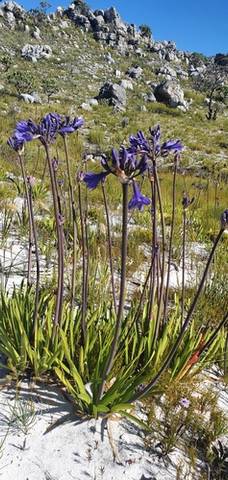
Agapanthus spp. are lily of the Nile (African lily), clumping semi-evergreen perennials growing 18-48 inches (45-120 cm) tall and 18-36 inches (45-90 cm) wide. Violet-blue, sky blue, deep blue, or white tubular flowers in large spherical umbels of 30-100+ flowers on tall bare stems above the foliage in June-August (8 weeks). Dark glossy green strap-shaped basal leaves 12-30 inches (30-75 cm). In Amaryllidaceae. Agapanthus = love-flower (Greek). Despite the common name 'Lily of the Nile,' the genus is not native to the Nile — all species are native to southern Africa, primarily South Africa and Lesotho. Roughly 6-10 species; most cultivated forms are hybrids of A. africanus, A. praecox, and A. campanulatus. Tolerates being root-bound — actually flowers better when crowded; do not divide too frequently. All parts contain saponins and toxic alkaloids — toxic to pets and humans; rhizome sap can cause skin irritation. Drought-tolerant once established. Deer-resistant. Hummingbird-attracting. Zones 7-10. Full sun. Growth rate is moderate.
Native Range
Native to southern Africa — primarily South Africa and Lesotho. Found in coastal grasslands, rocky slopes, and open woodland margins.Suggested Uses
Grown as a summer-flowering accent in mixed borders, mass plantings, and in containers of at least 5 gallons (19 L), spaced 18-24 inches (45-60 cm). Spherical blue umbels. Drought-tolerant. Hummingbird-attracting. All parts toxic. Zones 7-10.How to Identify
Appearance
Size & Dimensions
Height1'6" - 4'
Width/Spread1'6" - 3'
Bloom Information
Summer (June-August). Violet-blue, sky blue, deep blue, or white tubular flowers 1-2 inches (2.5-5 cm) in large spherical umbels of 30-100+ on tall bare stems 2-4 feet (60-120 cm) above the foliage. 8 weeks. Bee-, butterfly-, and hummingbird-visited.
Detailed Descriptions
Flower Description
Violet-blue, sky blue, deep blue, or white tubular flowers 1-2 inches (2.5-5 cm) in large spherical to hemispherical umbels of 30-100+ flowers, on tall bare stems 2-4 feet (60-120 cm) above the foliage; June-August (8 weeks)Foliage Description
Dark glossy green strap-shaped leaves 12-30 inches (30-75 cm), arising in a basal clump from a fleshy rhizome; evergreen in mild climates (zones 9-10), semi-evergreen to deciduous in colder zonesGrowing Conditions
Sun Requirements
Requires 6-12 hours of direct sunlight daily
• Full Sun: 6+ hours of direct sunlight
• Partial Shade: 3-6 hours of direct sunlight
• Full Shade: Less than 3 hours of direct sunlight
Care & Maintenance
Care Guide
Full sun (6-12 hours). Well-drained loam or sand pH 5.5-7.5. Drought-tolerant once established. Tolerates being root-bound — flowers better when crowded; do not divide too frequently. All parts toxic. Rhizome sap may irritate skin. Deer-resistant. Zones 7-10.Pruning
Cut spent flower stems to the base after bloom (August-September) — or leave spherical seed heads through fall. Remove winter-damaged foliage in early spring (March-April). Divide only when severely overcrowded after many years.Pruning Schedule
Prune: March–April
early spring
Container Growing
Suitable for container growing
Minimum container size: 5 gallons