Agapanthus, Genus, praecox, Species,
- Genus & species
blue lily
Overview
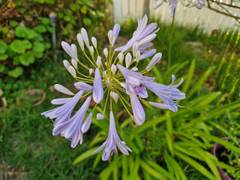
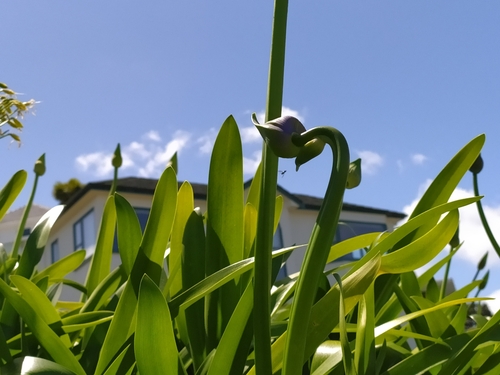
Agapanthus praecox is an evergreen perennial forming dense clumps of arching, strap-shaped leaves 12-28 inches (30-70 cm) long and 0.8-1.6 inches (2-4 cm) wide, growing from fleshy rhizomes and roots. In summer, leafless flower stalks rise 24-48 inches (60-120 cm) tall, each topped by a rounded umbel of 30 to 100 or more funnel-shaped flowers. Flowers are usually pale to mid-blue, sometimes white, 1.2-2 inches (3-5 cm) long, opening over several weeks. Rounded seed capsules follow, splitting to release flat black seeds. The clumps stay evergreen in mild climates but can be cut back by hard frost. Plants spread slowly outward by short rhizomes and form large clumps over several years. It grows in coastal and lowland areas of its native range and tolerates wind and salt spray. In cold-winter regions it survives outdoors only in sheltered sites or is grown in containers and protected from frost. It has naturalized on some coastlines, where it is treated as an invasive plant.
Native Range
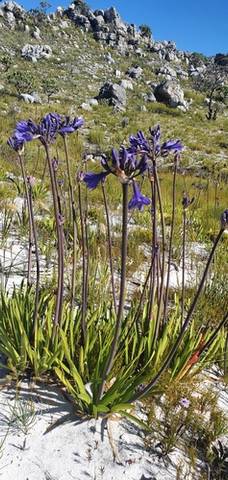
Native to the Eastern Cape and southern coastal regions of South Africa, where it grows on rocky hillsides, coastal slopes, and open grassland. Found from sea level to moderate elevations in areas with mild, frost-free or near-frost-free winters. Naturalized in parts of Australia, New Zealand, and other mild coastal regions.Suggested Uses
Planted in borders, coastal gardens, and mass plantings on banks, spaced 18-24 inches (45-60 cm) apart, and grown in containers where winters are cold. Used as cut flowers and for dried seed heads. In mild coastal climates its self-seeding and clump spread can crowd native vegetation.How to Identify
Appearance
Size & Dimensions
Height2' - 4'
Width/Spread1'6" - 3'
Bloom Information
Flowers from midsummer to early autumn, mainly December to February in its native Southern Hemisphere range and June to August in the Northern Hemisphere. Each umbel opens over 3-4 weeks, and the flowers are pollinated by bees and sunbirds in the wild. Seed heads ripen in autumn and can be left for structure or removed to limit self-seeding.
Detailed Descriptions
Flower Description
blue, sometimes whiteFoliage Description
greenGrowing Conditions
Sun Requirements
Requires 6-12 hours of direct sunlight daily
• Full Sun: 6+ hours of direct sunlight
• Partial Shade: 3-6 hours of direct sunlight
• Full Shade: Less than 3 hours of direct sunlight
Care & Maintenance
Care Guide
Grows in full sun to light shade on fertile, moist, well-drained soils, and tolerates coastal wind and salt. Establishes within a year or two and flowers more freely once the clump is well rooted and slightly crowded. Tolerates drought once established, though flowering is heavier with summer moisture. Hard frost damages the evergreen foliage and can kill plants in cold regions, where they need a sheltered spot, a thick mulch, or container culture with winter protection. Slugs and snails feed on young growth, and crowns rot in cold, wet, poorly drained winter soils. Congested clumps are divided in spring every 4-6 years.Pruning
Spent flower stalks are cut to the base after flowering to limit self-seeding, or left standing for the dried seed heads. Dead and frost-damaged leaves are removed in spring. Congested clumps are lifted and divided in spring every 4-6 years to maintain flowering.Pruning Schedule
Prune: September–October
fall
Container Growing
Suitable for container growing
Minimum container size: 5 gallons