Adenanthos, Genus, terminalis, Species,
- Genus & species
gland flower
Overview
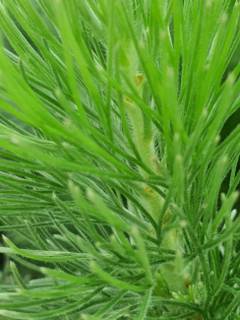
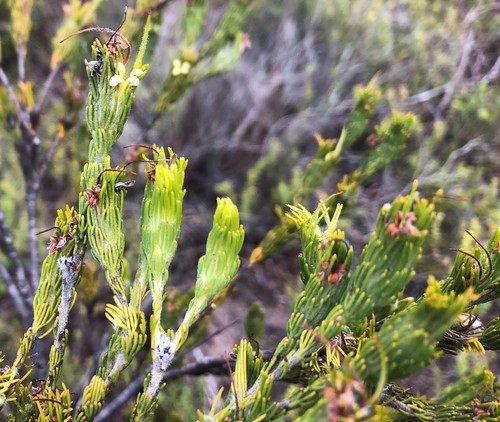
Adenanthos terminalis is an evergreen shrub reaching 1-3.3 feet (0.3-1 m) tall and 1.6-3.3 feet (0.5-1 m) wide, with an upright, open habit and slender branches. The leaves are crowded and deeply divided into narrow segments 0.4-1.2 inches (1-3 cm) long, green to grey-green and rigid. Small tubular flowers about 0.4-0.6 inch (1-1.5 cm) long sit singly at the branch tips, greenish-yellow to cream, surrounded by the uppermost leaves. Flowering occurs mainly in spring and summer. It grows in mallee, heath, and open woodland on well-drained sandy and gravelly soils. The flowers hold nectar and draw birds and insects. The open habit can become sparse with age, and the plant is short-lived in heavy, wet soils.
Native Range
Native to southern Australia across South Australia, western Victoria, and southern Western Australia. It grows in mallee, heath, and open woodland on well-drained sandy, gravelly, and lateritic soils.Suggested Uses
Planted in native gardens, rockeries, and dry embankments at 2-3.3 feet (0.6-1 m) spacing. The nectar-rich flowers suit bird-attracting and low-water plantings. It is not suited to heavy or poorly drained soils.How to Identify
Appearance
Size & Dimensions
Height1' - 3'3"
Width/Spread1'7" - 3'3"
Colors
Bloom Information
Detailed Descriptions
Flower Description
greenish-yellow to creamFoliage Description
green to grey-greenGrowing Conditions
Sun Requirements
Requires 5-10 hours of direct sunlight daily
• Full Sun: 6+ hours of direct sunlight
• Partial Shade: 3-6 hours of direct sunlight
• Full Shade: Less than 3 hours of direct sunlight
Care & Maintenance
Care Guide
It grows in full sun to light shade in well-drained sandy, gravelly, or lateritic soils with a pH of 5.0-6.5. Water through the first season to establish; mature plants tolerate extended drought. It tolerates frost to about 25°F (-4°C). Root rot develops in soils that stay wet, which shortens the plant's life. It needs little added phosphorus, like other Proteaceae.Pruning
Tip-prune after flowering to keep a denser shape. The plant tolerates light pruning but is slow to regrow from bare old wood. Removing spent flower tips keeps the form compact.Pruning Schedule
Prune: January–February
summer
Container Growing
Suitable for container growing
Minimum container size: 3 gallons