Adenanthos, Genus, sericeus, Species,
- Genus & species
woolly bush
Southwestern Australia (south coast of Western Australia)
Overview
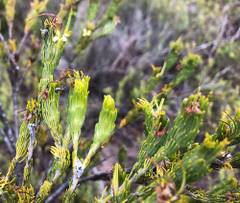
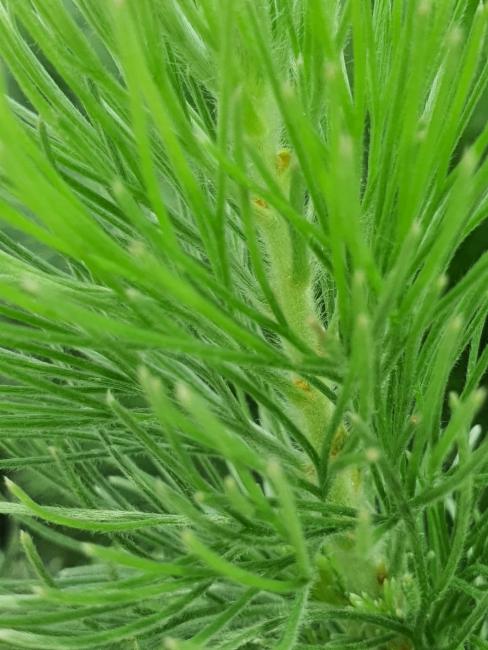
Adenanthos sericeus is an evergreen shrub in the Proteaceae family, reaching 6.5-16 feet (2-5 m) tall and 5-10 feet (1.5-3 m) wide, though plants in cultivation are often kept to 3-6.5 feet (1-2 m) by pruning. The foliage is the dominant feature: soft, finely divided leaves 0.8-1.2 inches (2-3 cm) long, each segment cylindrical and densely covered in silky silver-grey hairs that give the whole plant a soft texture. Small red tubular flowers 0.4-0.6 inch (1-1.5 cm) long are held singly among the leaves, partly hidden by foliage, and appear over much of the year with a peak in spring. The shrub holds an upright, often multi-stemmed form. It grows in coastal sand and tolerates salt-laden wind, but it is frost tender and is damaged below about 28F (-2C). Like most Proteaceae, it is sensitive to high soil phosphorus, which can cause leaf burn and decline. Growth is moderate, and plants typically reach mature height in 4-6 years. In containers the silver foliage is sometimes used as a potted specimen brought indoors briefly during winter holidays, then returned outdoors.
Native Range
Adenanthos sericeus is native to the south coast of Western Australia, where it grows in coastal heath and on sandy soils near Albany and along the southern shoreline. Its natural range is limited to this region of southwestern Australia.Suggested Uses
Grown as a coastal garden shrub, an informal screen, and a container specimen, spaced 5-8 feet (1.5-2.4 m) apart. The silver foliage is also used in cut-foliage arrangements. In frost-prone regions it is grown in pots that can be moved under cover in winter.How to Identify
Appearance
Size & Dimensions
Height6'7" - 16'5"
Width/Spread4'11" - 9'10"
Colors
Bloom Information
Flowering occurs over much of the year, with the heaviest display in spring (September to November in its native range). Individual red flowers are 0.4-0.6 inch (1-1.5 cm) long and are largely concealed by the surrounding foliage. Nectar-feeding birds visit the flowers.
Detailed Descriptions
Foliage Description
Silver-greyGrowing Conditions
Sun Requirements
Requires 6-10 hours of direct sunlight daily
• Full Sun: 6+ hours of direct sunlight
• Partial Shade: 3-6 hours of direct sunlight
• Full Shade: Less than 3 hours of direct sunlight
Care & Maintenance
Care Guide
Grows in full sun in light, sharply drained sandy or gravelly soil with a pH of 5.0-6.5. Water needs are low once established, and the plant tolerates extended dry periods and coastal salt spray. It is sensitive to soil phosphorus; standard high-phosphorus fertilisers can cause leaf scorch and root damage, and low-phosphorus or native-plant formulations are applied instead. It is frost tender, with foliage damage below about 28F (-2C), so it suits frost-free positions or container culture in colder areas. In humid climates with poor drainage, Phytophthora root rot is the main cause of decline.Pruning
Light tip pruning after the main flush keeps the shrub dense and compact. It tolerates regular trimming of soft growth but does not reliably reshoot from old bare wood, so cuts stay within foliage-bearing stems. Removing more than one-third of the canopy at once can slow recovery.Pruning Schedule
Prune: November–December
late springsummer
Container Growing
Suitable for container growing
Minimum container size: 5 gallons