Actinotus, Genus, minor, Species,
- Genus & species
lesser flannel flower
Overview
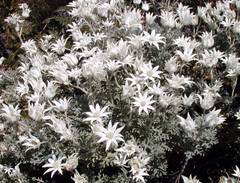
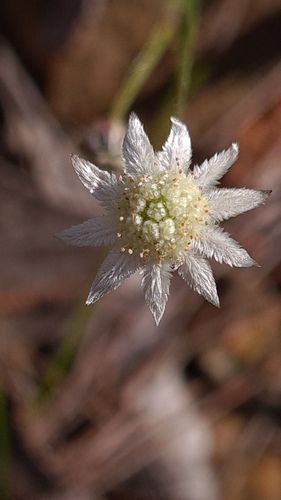
Actinotus minor is a slender, short-lived perennial or annual herb 4-16 inches (10-40 cm) tall, with wiry, branching stems rising from a small basal cluster of leaves. The leaves are finely divided into narrow segments 0.4-1.2 inches (1-3 cm) long, grey-green and sparsely hairy. Each stem tip carries a small flower head 0.3-0.6 inch (8-15 mm) across, surrounded by a ring of white, woolly, petal-like bracts with a felted texture, enclosing tiny cream to greenish florets. Flowering occurs mainly in spring and summer and continues sporadically after rain. The bracts are smaller and the whole plant slighter than the related Actinotus helianthi, the common flannel flower. It grows in nutrient-poor sandy soils and is short-lived, often persisting only two to three years and relying on self-sown seedlings to maintain a stand.
Native Range
Native to eastern Australia, mainly the coast and ranges of New South Wales and southern Queensland. Grows in heathland, dry sclerophyll woodland, and exposed sandstone country on shallow, nutrient-poor, sandy soils.Suggested Uses
Grown in rockeries, sandy native gardens, and containers of free-draining mix, spaced 6-10 inches (15-25 cm) apart. Suits exposed, low-fertility sites where richer soils would cause rot. Also grown as a cut flower for its woolly white heads.How to Identify
Appearance
Size & Dimensions
Height4" - 1'4"
Width/Spread4" - 10"
Bloom Information
Flowers mainly in spring and summer, roughly September to February, and produces scattered heads after rain at other times. Individual heads last 2-3 weeks. Flowering is heavier in the season following a bushfire or soil disturbance, when seedlings emerge from the seed bank.
Detailed Descriptions
Foliage Description
grey-greenGrowing Conditions
Sun Requirements
Requires 6-10 hours of direct sunlight daily
• Full Sun: 6+ hours of direct sunlight
• Partial Shade: 3-6 hours of direct sunlight
• Full Shade: Less than 3 hours of direct sunlight
Care & Maintenance
Care Guide
Grows in full sun in sharply drained, sandy or gravelly soil of low fertility, conditions that match its native heathland. Water sparingly; the plant tolerates dry spells but rots in rich, moist, or poorly drained soil. Phosphorus-rich fertilisers damage the roots, as with many plants from nutrient-poor Australian soils. It is short-lived and is usually maintained by letting seed drop, or by raising fresh seedlings every two to three years. Frost-tolerant to about 28°F (-2°C) in well-drained sites. Root and crown rot are the main causes of plant loss, almost always linked to excess soil moisture.Pruning
Spent flower heads are trimmed to prompt further bloom and to collect seed for propagation. No structural pruning is needed on this short-lived herb. Plants are usually replaced rather than cut back as they decline after two to three years.Pruning Schedule
Prune: December–January
summer
Container Growing
Suitable for container growing
Minimum container size: 1 gallons