Acianthus, Genus, fornicatus, Species,
- Genus & species
pixie caps
Overview
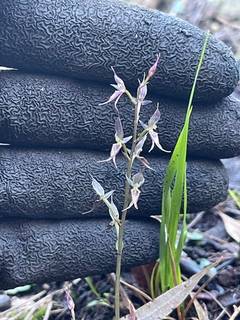
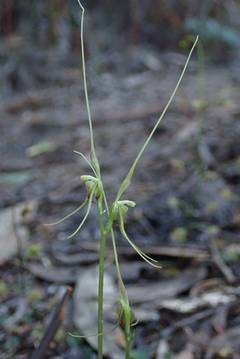
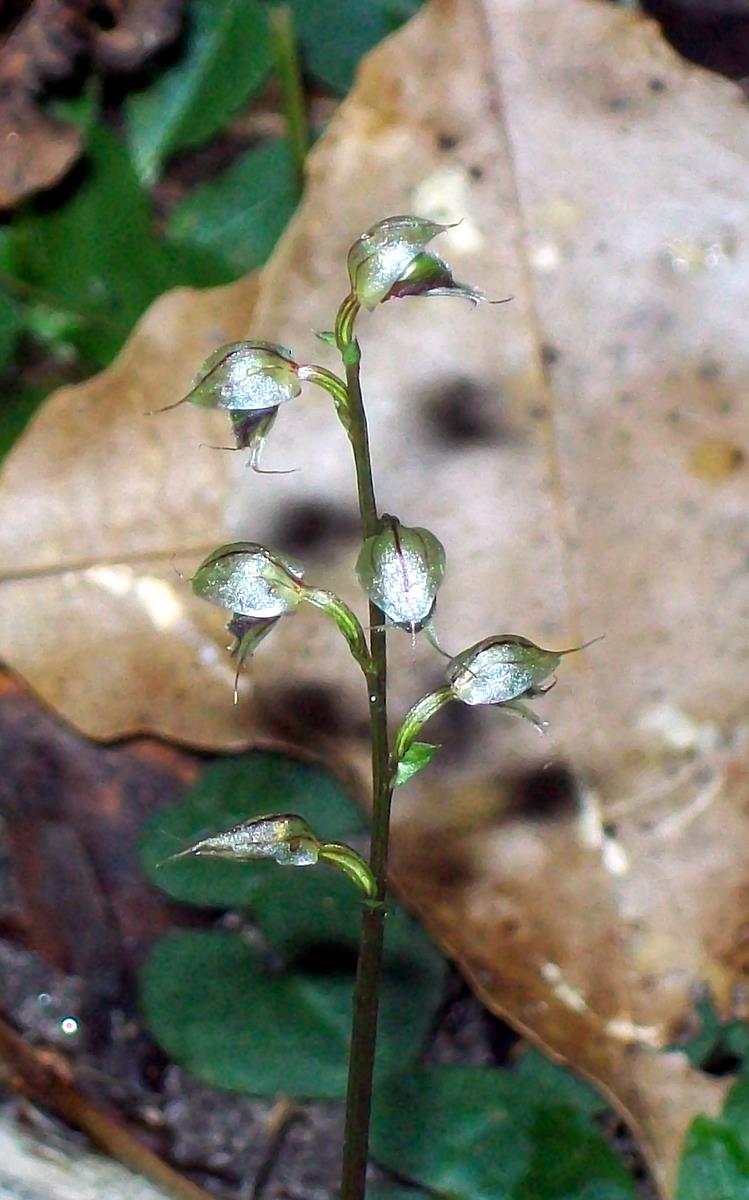
Acianthus fornicatus is a small deciduous terrestrial orchid that grows from an underground tuber and reaches 2-8 inches (5-20 cm) in flower. Each plant produces a single heart-shaped leaf 0.4-1.6 inches (10-40 mm) long held flat or angled near the ground, green above and purplish beneath. A slender stem carries 2 to 15 small flowers, each 0.2-0.4 inch (5-10 mm) across, translucent green to reddish, with the dorsal sepal arched into a hood over the column. Flowering occurs in autumn and winter, mainly May to August. The leaf appears in autumn before the flowers and dies back with the stem over the dry summer, when the plant survives as a dormant tuber. Plants multiply by tuber division and form colonies in leaf litter. The flowers attract small flies and fungus gnats, which pollinate them. The species grows in open forest and coastal scrub on sandy soils rich in leaf litter. Like other terrestrial orchids it depends on soil fungi and does not transplant readily.
Native Range
Native to eastern Australia, occurring in Queensland and New South Wales. Grows in open eucalypt forest, woodland, and coastal scrub on sandy, humus-rich soils, often under shrubs.Suggested Uses
Grown mainly in specialist native-orchid collections and in conservation plantings of local woodland species. Not suited to general garden beds owing to its reliance on soil fungi and summer dormancy. In the wild it forms scattered colonies across the forest floor.How to Identify
Appearance
Size & Dimensions
Height2" - 8"
Width/Spread1" - 4"
Bloom Information
Detailed Descriptions
Flower Description
translucent green to reddishFoliage Description
green, purplish beneathGrowing Conditions
Sun Requirements
Requires 2-5 hours of direct sunlight daily
• Full Sun: 6+ hours of direct sunlight
• Partial Shade: 3-6 hours of direct sunlight
• Full Shade: Less than 3 hours of direct sunlight