Acianthus, Genus, spp., Multiple species,
- Genus
- Multiple species
mosquito orchids
Australia, New Zealand, and New Caledonia
Overview
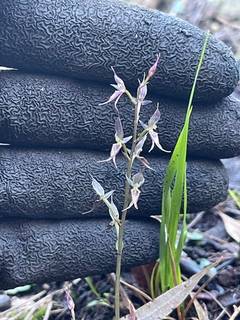
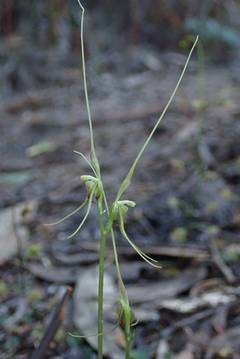
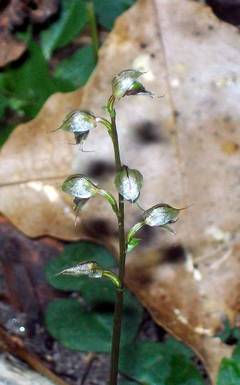
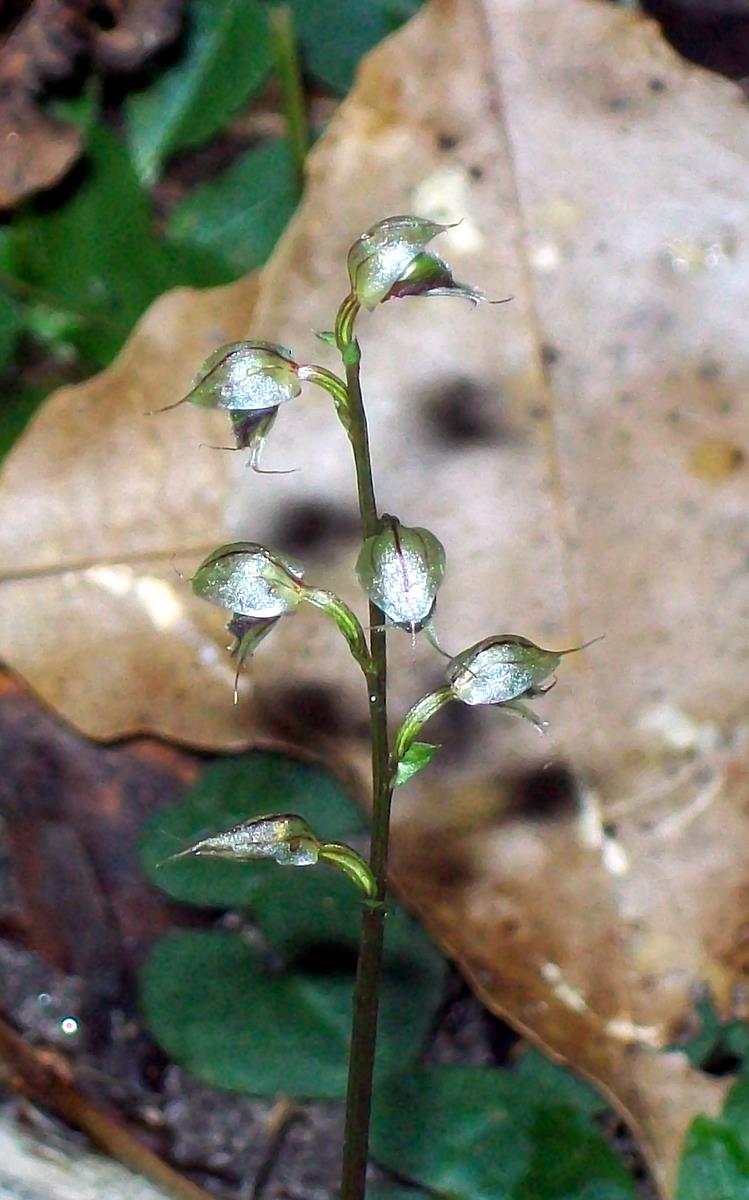
Acianthus is a genus of small terrestrial orchids in the family Orchidaceae, with roughly twenty species native to Australia, New Zealand, New Caledonia, and nearby islands. Each plant grows from a small underground tuber and produces a single heart-shaped leaf 1–4 cm (0.4–1.6 in) wide, often purplish beneath, pressed close to the ground. A slender stalk 5–25 cm (2–10 in) tall carries one to fifteen tiny flowers, usually translucent reddish, green, or near-black, with narrow spreading sepals that give an insect-like outline. Flowering occurs in the cool months, and the plants are pollinated by small flies and gnats drawn by a faint odour. After seed sets, the leaf and stem wither and the tuber rests dormant underground through the dry, warm season. Acianthus grows in moist, humus-rich, shaded soils in woodland, heath, and forest, often in moss or leaf litter. It depends on soil fungi for germination and growth, which makes it hard to cultivate and transplant, and it is sensitive to disturbance, drought, and loss of its woodland habitat.
Native Range
Acianthus is native to eastern and southern Australia, New Zealand, New Caledonia, and neighbouring Pacific islands. The orchids grow in shaded woodland, forest, heath, and scrub, in damp, humus-rich or mossy ground, mostly in cooler and coastal districts.Suggested Uses
Grown by specialist terrestrial-orchid enthusiasts in containers and shaded collections, and conserved in situ in native woodland. Used in conservation and native plant plantings. Not suited to general garden borders or open, sunny ground.How to Identify
Appearance
Size & Dimensions
Height2" - 10"
Width/Spread1" - 4"
Bloom Information
Acianthus flowers in the cool months, generally autumn through winter and into early spring depending on species and region. Each slender spike opens its small flowers over a few weeks. The flowers draw tiny flies and gnats before the plant sets seed and dies back.
Detailed Descriptions
Flower Description
translucent reddish to greenFoliage Description
green, purple beneathGrowing Conditions
Sun Requirements
Tolerates up to 3 hours of direct sunlight daily
• Full Sun: 6+ hours of direct sunlight
• Partial Shade: 3-6 hours of direct sunlight
• Full Shade: Less than 3 hours of direct sunlight
Care & Maintenance
Care Guide
Acianthus grows in cool, shaded, humus-rich and moisture-retentive soils that stay damp during the autumn-to-spring growing season and drier in summer dormancy. It depends on symbiotic soil fungi, so it resists ordinary cultivation and rarely survives transplanting. A slightly acidic soil pH of about 5.0 to 6.5 suits it. It needs deep shade, leaf litter, and undisturbed ground. Most species tolerate light frost while in growth. Plants are left in place in established colonies rather than lifted.Pruning
Acianthus needs no pruning. The single leaf and flower stalk wither naturally after seeding, and the tuber rests below ground until the next cool season. Leaving the surrounding leaf litter undisturbed shelters the dormant tubers and their fungal partners.Container Growing
Suitable for container growing
Minimum container size: 1 gallons