Image 1 of 8
1 / 8
© No machine-readable author provided. Casliber assumed (based on copyright claims)., some rights reserved (CC-BY-SA) · Wikimedia Commons
Acacia, Genus, cognata, Species,
- Genus & species
River wattle
Southeastern Australia, Victoria and southern New South Wales
Overview
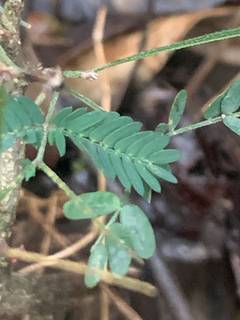
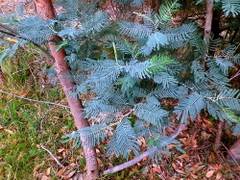
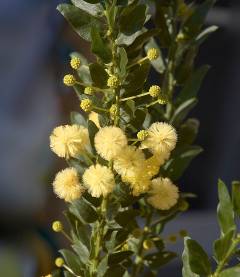
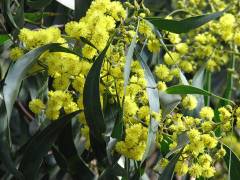
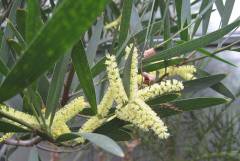
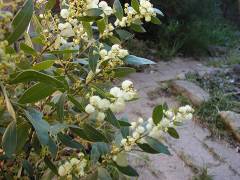
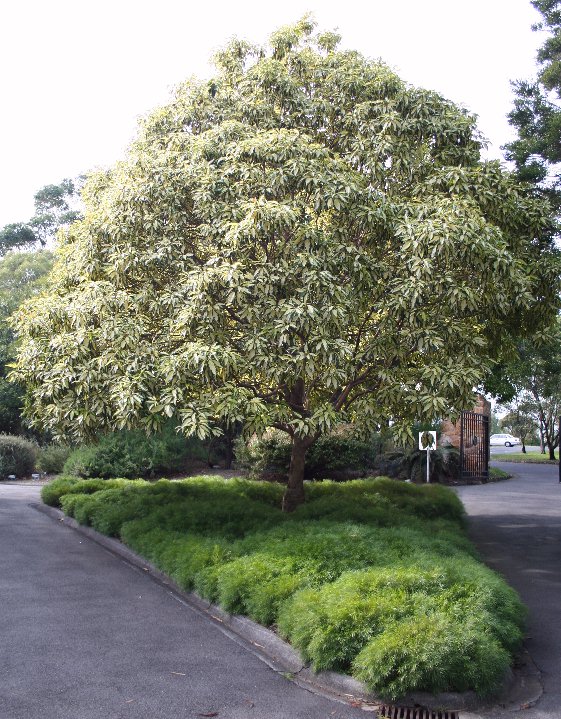
Acacia cognata is an evergreen large shrub or small tree 15-30 feet (4.5-9 m) tall and 10-20 feet (3-6 m) wide, with slender branchlets that arch out and hang, giving the crown a curtained outline. What appear to be leaves are phyllodes, flattened leaf stalks, narrow and linear at 1.5-4 inches (4-10 cm) long and 0.1-0.25 inch (2-6 mm) wide, slightly curved, bright to mid green, each with a single raised midvein and a resinous scent when crushed. Pale yellow to cream globular flower heads 0.2 inch (5 mm) across, each holding 15-25 individual flowers, open in short axillary racemes over four to six weeks in late winter and early spring. Flattened curved pods 2-4 inches (5-10 cm) long follow, browning and splitting to shed black seeds. The wood is brittle and long branchlets snap in strong wind. Along with most Australian Acacia, the species is damaged by phosphorus fertilisers at standard garden rates. Plants live 10-20 years and decline quickly at the end of that span. Hardy in USDA zones 9-11.
Native Range
Acacia cognata is native to southeastern Australia, in central and eastern Victoria and the far south of New South Wales. It grows along river banks, in gullies, and in moist sclerophyll forest, usually within reach of a watercourse, which is the source of the name river wattle. Plantings well outside that range depend on irrigation through summer.Suggested Uses
Grown as a screening and shade tree in frost-free gardens, along creek lines and swales, and as a windbreak backdrop, spaced 12-15 feet (3.7-4.5 m) apart. The hanging branchlets are used against walls and over retaining structures where the foliage falls forward. Dwarf selections of the species are planted as low mounding groundcover and in containers of 15 gallons (57 L) or larger.How to Identify
Appearance
Size & Dimensions
Height15' - 30'
Width/Spread10' - 20'
Colors
Bloom Information
Flower heads open over four to six weeks, between August and October in the southern hemisphere and between February and April in northern hemisphere plantings. Colour is cream to pale yellow rather than the deep gold of many wattles, so the effect reads as a soft haze along the hanging branchlets. Flowers form on wood produced the previous season, and cutting the plant back hard in autumn removes that bloom. Native and introduced bees collect the pollen, which is the only reward, as the flowers hold no nectar.
Detailed Descriptions
Flower Description
Cream to pale yellowFoliage Description
Bright to mid green narrow phyllodes with a single raised midveinGrowing Conditions
Sun Requirements
Requires 5-10 hours of direct sunlight daily
• Full Sun: 6+ hours of direct sunlight
• Partial Shade: 3-6 hours of direct sunlight
• Full Shade: Less than 3 hours of direct sunlight
Care & Maintenance
Care Guide
Full sun to light shade with five or more hours of direct light produces the densest branchlet cover, and heavier shade opens the crown. The species grows in free-draining loam, sand, or drained clay at pH 5.5-7.0, and tolerates seasonally damp ground better than most wattles, matching its riverbank origin. Roughly 1 inch (2.5 cm) of water per week through the first two summers establishes the root system, after which the plant runs two to three weeks between waterings. Fertilisers containing phosphorus above about 3 percent damage the roots of Australian Acacia, so native-plant formulations or no feeding at all are what the species takes. A 3-inch (8 cm) mulch of coarse bark over the root zone, held clear of the trunk, holds moisture and moderates soil temperature. Sites sheltered from strong prevailing wind show less breakage of the long arching branchlets.Pruning
Light tip cutting immediately after flowering holds the crown dense and keeps the plant within its space, taking no more than 10 percent of branchlet length at a time. Cutting into older bare wood produces no regrowth, since the species does not shoot readily from bare stems. Broken and dead branchlets are removed at their point of origin at any time of year. Hard reduction of a mature plant leads to dieback rather than renewal.Pruning Schedule
Prune: April–May
late spring
Container Growing
Suitable for container growing
Minimum container size: 15 gallons