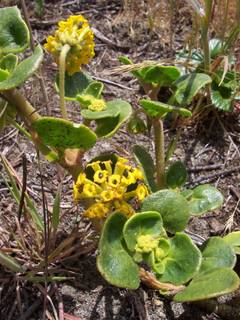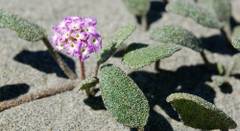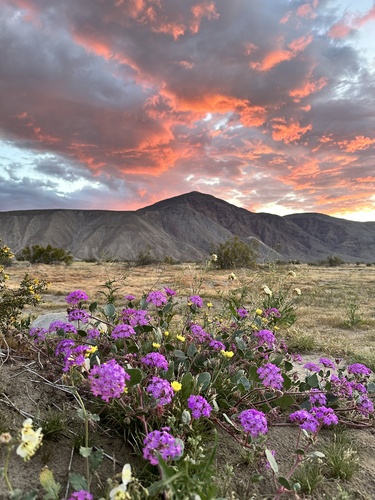
Abronia, Genus, villosa, Species,
- Genus & species
desert sand verbena
Overview
Abronia villosa is a low, trailing desert annual reaching 4-8 inches (10-20 cm) tall and spreading 12-36 inches (30-90 cm) wide, with sprawling, reddish, glandular-hairy stems that feel sticky. The opposite leaves are oval, 0.5-1.5 inches (1-4 cm) long, on stalks, and coated with sticky hairs that trap sand. After winter rains, from late winter into spring, it produces rounded clusters of small trumpet-shaped flowers, pink to rose-magenta with a paler center, that release a sweet scent strongest in the evening. The fruit is a winged, ribbed structure adapted to wind dispersal. It germinates and grows quickly with seasonal rain, carpeting open sand in deserts of the southwestern United States and northwestern Mexico, including dunes, sandy flats, and washes. The species needs deep sand, full sun, and sharp drainage; it fails in heavy or wet soils and depends on a wet winter for a good display. The whole plant withers as the soil dries in early summer.
Native Range
Abronia villosa is native to the deserts of the southwestern United States and northwestern Mexico, including the Mojave and Sonoran Deserts of California, Arizona, Nevada, Utah, and Baja California. It grows on sandy flats, dunes, and washes.Suggested Uses
Used in desert and dry-garden plantings, sandy banks, containers, and wildflower seed mixes for spring color. It suits deep, sunny sand where little else grows and self-sows in open ground. Sown or spaced about 12 inches (30 cm) apart in drifts.How to Identify
Appearance
Size & Dimensions
Height4" - 8"
Width/Spread1' - 3'
Bloom Information
Flowering occurs in late winter and spring, mainly February through May, and depends on winter and early spring rain. In wet years plants carpet the sand with flowers for several weeks. In dry years few plants appear and bloom is sparse.
Detailed Descriptions
Flower Description
pink to magentaFoliage Description
greenGrowing Conditions
Sun Requirements
Requires 6-10 hours of direct sunlight daily
• Full Sun: 6+ hours of direct sunlight
• Partial Shade: 3-6 hours of direct sunlight
• Full Shade: Less than 3 hours of direct sunlight
Water & Climate
Water Needs
Drought Tolerance
Drought tolerant when established
Care & Maintenance
Care Guide
Grow in full sun in deep, loose, sharply drained sand. This desert annual germinates with fall and winter rain and flowers in spring. It needs very little water beyond seasonal rainfall and rots in heavy, wet, or poorly drained soil. Sow seed in fall for spring bloom, scattering it on open sand. No fertilizer is needed. Plants complete their cycle and die as the soil dries in early summer.Pruning
No pruning is needed for this trailing annual. Plants can be left to set and drop seed for the next wet season. Spent plants can be cleared once they dry out.Container Growing
Suitable for container growing
Minimum container size: 2 gallons
Toxicity
Non-toxicPlanting Guide
Planting Methods & Timing
Planting Method
direct sow
Direct Sow Timing
Fall
Days to Maturity
60–90 days
Plant Spacing
12 inches