Abronia, Genus, umbellata, Species,
- Genus & species
pink sand verbena
Overview
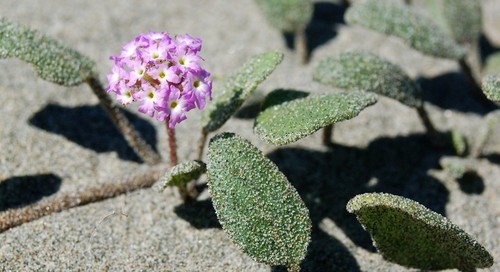
Abronia umbellata is a low, trailing perennial of coastal dunes, forming prostrate mats with stems 8-40 inches (20-100 cm) long that root along the sand and rise only 2-6 inches (5-15 cm). The stems and oval to lance-shaped leaves, 0.5-2 inches (1.3-5 cm) long, are slightly sticky and often hold drifting sand. Rounded clusters of 8 to 27 small trumpet-shaped flowers sit on stalks above the foliage, each flower pink to rose-purple with a white throat, about 0.4 inch (1 cm) across. The clusters are fragrant, especially in the evening. Flowering can occur much of the year in mild coastal climates, peaking from spring through fall. Winged, papery fruits follow and ride the wind and tides to new dunes. The species grows on open sand of beaches, foredunes, and dune hollows, tolerating salt spray, wind, and shifting sand. It is sensitive to trampling and dune development and has declined across parts of its range. Plants are short-lived and depend on a steady seed supply.
Native Range
Abronia umbellata is native to the Pacific coast of North America, from British Columbia south through California into Baja California. It grows on coastal beaches, foredunes, and sandy hollows just above the high-tide line.Suggested Uses
Used in coastal dune restoration, beachside plantings, and sandy containers, spaced 12-18 inches (30-45 cm) apart. Suited to hot, sandy, salt-exposed sites where few plants grow. The fragrant flowers draw moths and bees and the plant helps stabilize loose sand.How to Identify
Appearance
Size & Dimensions
Height2" - 6"
Width/Spread8" - 3'4"
Bloom Information
Fragrant pink flower clusters open over a long season, heaviest from spring through fall and continuing year-round in the mildest coastal sites. Each cluster blooms for one to two weeks, with scent strongest in the evening. Night-flying moths and bees pollinate the flowers.
Detailed Descriptions
Flower Description
Pink to rose-purple with white throatFoliage Description
Green, stickyGrowing Conditions
Sun Requirements
Requires 6-12 hours of direct sunlight daily
• Full Sun: 6+ hours of direct sunlight
• Partial Shade: 3-6 hours of direct sunlight
• Full Shade: Less than 3 hours of direct sunlight
Care & Maintenance
Care Guide
Grow Abronia umbellata in full sun on pure sand or very sandy, sharply drained soil that mimics its dune habitat. It tolerates salt spray, wind, and lean soil but rots in clay or moist, rich ground. Light, infrequent water supports growth in cultivation, while overwatering kills it quickly. A neutral to slightly alkaline pH from 6.5 to 8.0 suits it. Seed germinates unevenly and benefits from removal of the papery husk before sowing. The species is short-lived, so a planting is renewed from seed every few years.Pruning
No pruning is needed for this trailing dune plant. Spent flower clusters can be removed to tidy the mat or left to set seed. Stray stems are easily trimmed to shape a container or bed.Container Growing
Suitable for container growing
Minimum container size: 2 gallons