Image 1 of 22
1 / 22
Plant Reference
Zelkova, Genus, serrata, Species,
- Genus & species
sawleaf zelkova
Japan, Korea, and Taiwan; mountain forests and lowland woodlands
Overview
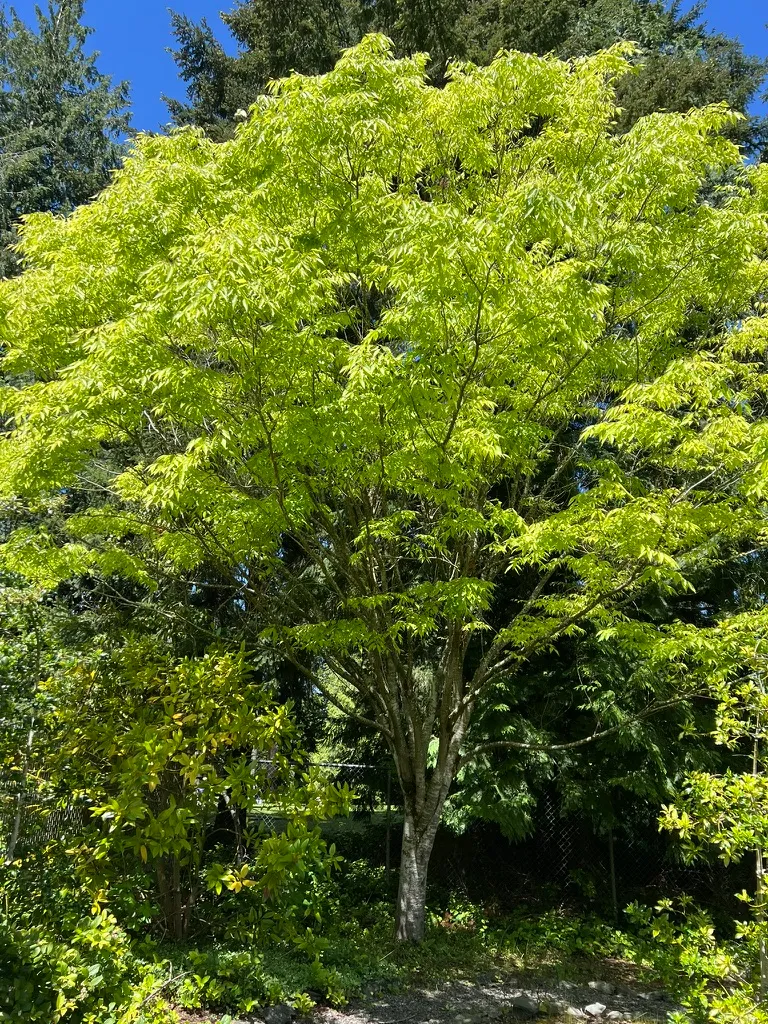
Zelkova serrata is sawleaf zelkova (Japanese zelkova), a large upright deciduous tree growing 50-80 feet (15-24 m) tall and 40-60 feet (12-18 m) wide with a vase-shaped crown of many upright ascending branches. Dark green simple ovate alternate sharply serrated leaves 1.5-3 inches (4-7 cm) — serrata = saw-toothed. Turns yellow, orange, copper, and red in fall — fall color variable from seed. The smooth gray bark exfoliates on mature trunks to reveal orange-brown patches. In Ulmaceae. Native to Japan, Korea, and Taiwan. Resistant to Dutch elm disease (DED) and elm leaf beetle — the primary replacement tree for Ulmus americana (American elm) in street plantings. The vase-shaped crown resembles the American elm form. Narrow branch crotch angles on some seed-grown trees lead to splitting in ice storms — this structural weakness in seed-grown stock is the primary limitation. Select cultivars with documented wide crotch angles: 'Green Vase' (vigorous, wide angles), 'Village Green' (fast, wide angles). Japanese beetle feeds on the foliage in some regions. Drought-tolerant once established. Tolerates urban conditions. Non-toxic. Zones 5-8. Full sun. Growth rate is moderate to fast.
Native Range
Native to Japan, Korea, and Taiwan. Found in mountain forests and lowland woodlands.Suggested Uses
Grown as a shade tree, street tree, and park tree in place of DED-susceptible American elm, spaced 40-60 feet (12-18 m). Vase-shaped crown. DED-resistant. Select wide-crotch cultivars. Non-toxic. Zones 5-8.How to Identify
Appearance
Size & Dimensions
Height50' - 80'
Width/Spread40' - 60'
Bloom Information
Early spring (April). Inconspicuous greenish flowers. Wind-pollinated. 1 week. Small round drupes 0.2 inch (5 mm) in fall.
Detailed Descriptions
Foliage Description
Dark green, simple, ovate, alternate, 1.5-3 inches (4-7 cm), sharply serrated (serrata = saw-toothed); turns yellow, orange, copper, and red in fall — fall color variable from seedGrowing Conditions
Sun Requirements
Requires 6-10 hours of direct sunlight daily
• Full Sun: 6+ hours of direct sunlight
• Partial Shade: 3-6 hours of direct sunlight
• Full Shade: Less than 3 hours of direct sunlight
Care & Maintenance
Care Guide
Full sun (6+ hours). Well-drained soil pH 5.5-7.5. Drought-tolerant once established. Tolerates urban conditions. Select cultivars with wide branch angles ('Green Vase', 'Village Green') to avoid ice-storm splitting. Resistant to Dutch elm disease and elm leaf beetle. Japanese beetle in some regions. Prune in winter (January-February). Non-toxic. Zones 5-8.Pruning
Prune in winter (January-February). Develop a central leader when young — the natural tendency is to fork into multiple co-dominant stems. Remove narrow-angled co-dominant stems early. Remove dead or crossing branches. The vase-shaped crown develops naturally at maturity.Pruning Schedule
Prune: January–February
winter