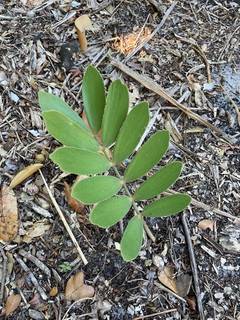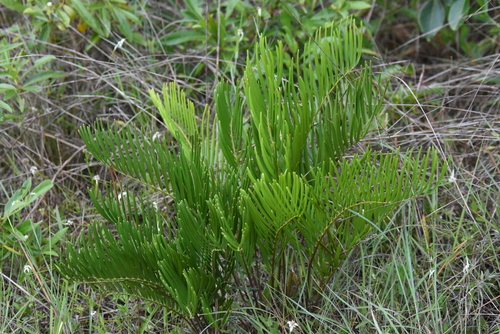
Zamia, Genus, integrifolia, Species,
- Genus & species
coontie palm
Florida and coastal southeastern United States
Overview
Zamia integrifolia is the coontie (Florida arrowroot), growing 18–36 inches (45–90 cm) tall and 24–48 inches (60–120 cm) wide. Dark green glossy stiff pinnate (feather-shaped) fronds with 5–15 pairs of leaflets, each 3–5 inches (7–13 cm) long. A cycad — not a palm and not a fern. Cycads are gymnosperms (cone-bearing, naked-seeded plants) that predate flowering plants by over 100 million years, with fossils dating to the Permian period (280+ million years ago). The sole cycad species native to the continental United States. Sole larval host plant for the Atala butterfly (Eumaeus atala), which depends entirely on Zamia for reproduction. Dioecious — separate male and female plants produce different cone types (male cones are elongated; female cones are rounded and produce bright red toxic seeds when ripe). All parts contain cycasin, a carcinogenic glycoside — toxic to humans, dogs, and cats if ingested. The Seminole and Tequesta peoples historically processed the starchy underground stem through repeated washing to remove the toxin, producing a starch called Florida arrowroot. Full sun to deep shade — tolerates a wider light range than many landscape plants. Drought-tolerant once established. Well-draining sandy to loamy soil. Zones 8–11. Growth rate is extremely slow — 1–3 new fronds per year. Cycad scale (Aulacaspis yasumatsui) is a serious invasive pest in Florida. Deer-resistant (toxicity).
Native Range
Native to Florida and the coastal southeastern United States, from southeastern Georgia through peninsular Florida. Found in pine flatwoods, hammocks, and coastal scrub.Suggested Uses
Grown as a groundcover, border, or understory planting in zones 8–11, spaced 24–36 inches (60–90 cm) apart. Full sun to deep shade. Native to Florida. Host plant for the Atala butterfly. All parts toxic (cycasin). Containers of 3+ gallons (12+ liters). Deer-resistant.How to Identify
Appearance
Size & Dimensions
Height1'6" - 3'
Width/Spread2' - 4'
Bloom Information
Cycads produce cones, not flowers. Male cones are elongated cylinders; female cones are rounded and produce bright red toxic seeds when ripe. Cone production occurs on mature plants. Dioecious (separate male and female individuals).
Detailed Descriptions
Flower Description
Cones — not a flowering plantFoliage Description
Dark green, glossy, stiff pinnate frondsGrowing Conditions
Sun Requirements
Requires 1-8 hours of direct sunlight daily
• Full Sun: 6+ hours of direct sunlight
• Partial Shade: 3-6 hours of direct sunlight
• Full Shade: Less than 3 hours of direct sunlight
Care & Maintenance
Care Guide
Full sun to deep shade. Well-draining sandy to loamy soil. Drought-tolerant once established. Extremely slow-growing (1–3 fronds per year). All parts toxic (cycasin). Sole host for Atala butterfly. Cycad scale is a serious pest in Florida. Native to Florida. Deer-resistant. Zones 8–11.Pruning
Remove browned fronds at the base. No other pruning needed. Extremely slow-growing — each frond persists for years.Container Growing
Suitable for container growing
Minimum container size: 3 gallons