Youngia, Genus, spp., Multiple species,
- Genus
- Multiple species
youngia
Overview
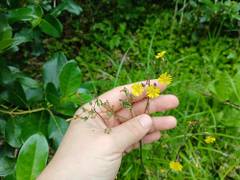
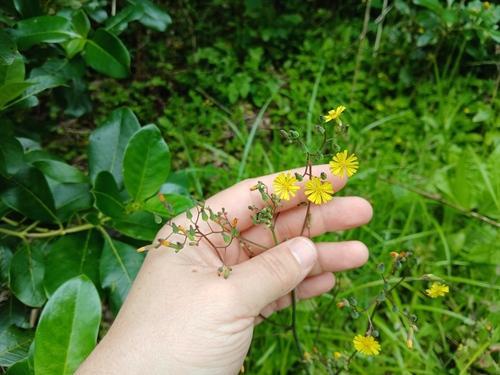
Youngia is a genus of about 30 species of annual, biennial, and perennial herbs in the daisy family Asteraceae, native to eastern and southern Asia, with centres in China, Japan, and the Himalaya. The genus is closely related to the hawksbeards and resembles a small dandelion, forming a basal rosette of lobed or lyre-shaped leaves 2-8 in (5-20 cm) long from which slender, branched flowering stems rise 6-36 in (15-90 cm) tall. The stems and leaves exude milky latex when broken. Numerous small yellow flower heads, each composed entirely of strap-shaped ligulate florets and measuring 0.2-0.5 in (5-12 mm) across, are carried in open branched clusters. The heads are followed by ribbed one-seeded fruits topped with a parachute of white hairs that carry the seed on the wind. Y. japonica, the oriental false hawksbeard, has spread far beyond its native range as a common weed of lawns, gardens, and disturbed ground in warm-temperate and subtropical regions worldwide. The genus grows readily in disturbed, moist soils and completes its life cycle quickly, so most species behave as short-lived colonisers rather than long-term garden plants.
Native Range
The genus is native to eastern, southern, and southeastern Asia, ranging from the Himalaya through China and Japan to Southeast Asia. Y. japonica has since naturalised across the southeastern United States, Australia, and other warm regions as a weed.Suggested Uses
Youngia is rarely planted on purpose and is encountered mostly as a self-sown weed of lawns, paths, and disturbed ground. Where grown, it suits informal wildflower and pollinator patches in spaces where self-seeding is acceptable. The young leaves of Y. japonica are eaten as a cooked or salad green in parts of Asia.How to Identify
Appearance
Size & Dimensions
Height6" - 3'
Width/Spread4" - 1'
Bloom Information
Youngia flowers over a long season from spring into autumn, and year-round in mild and subtropical climates where Y. japonica grows. Each small head is short-lived, but plants produce them continuously. Seed sets quickly and abundantly, often within days of flowering.
Detailed Descriptions
Foliage Description
greenGrowing Conditions
Sun Requirements
Requires 4-8 hours of direct sunlight daily
• Full Sun: 6+ hours of direct sunlight
• Partial Shade: 3-6 hours of direct sunlight
• Full Shade: Less than 3 hours of direct sunlight
Water & Climate
Water Needs
Care & Maintenance
Care Guide
Youngia needs little care and grows in sun to part shade in almost any moist, disturbed soil across a pH range of 5.5-7.5. Most species are short-lived and maintain themselves by prolific self-seeding rather than persistence. Removing flower heads before they set seed limits unwanted spread, as Y. japonica can become weedy in lawns and beds. The genus tolerates poor soils and regular mowing, regrowing from the rosette. No feeding is required in average ground. Plants grown deliberately are usually raised from seed sown in spring.Pruning
Youngia is not pruned. Flower stems are cut or mowed off before seed sets to control self-sowing. Whole plants are pulled once they decline after flowering, since most species are annual or short-lived.Toxicity
Non-toxicPlanting Guide
Planting Methods & Timing
Planting Method
direct sow
Direct Sow Timing
spring
Days to Maturity
60–90 days
Plant Spacing
8 inches