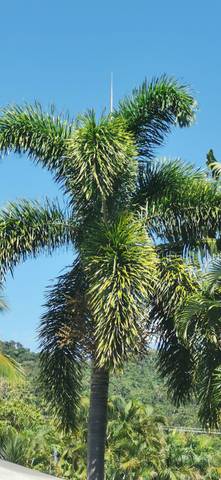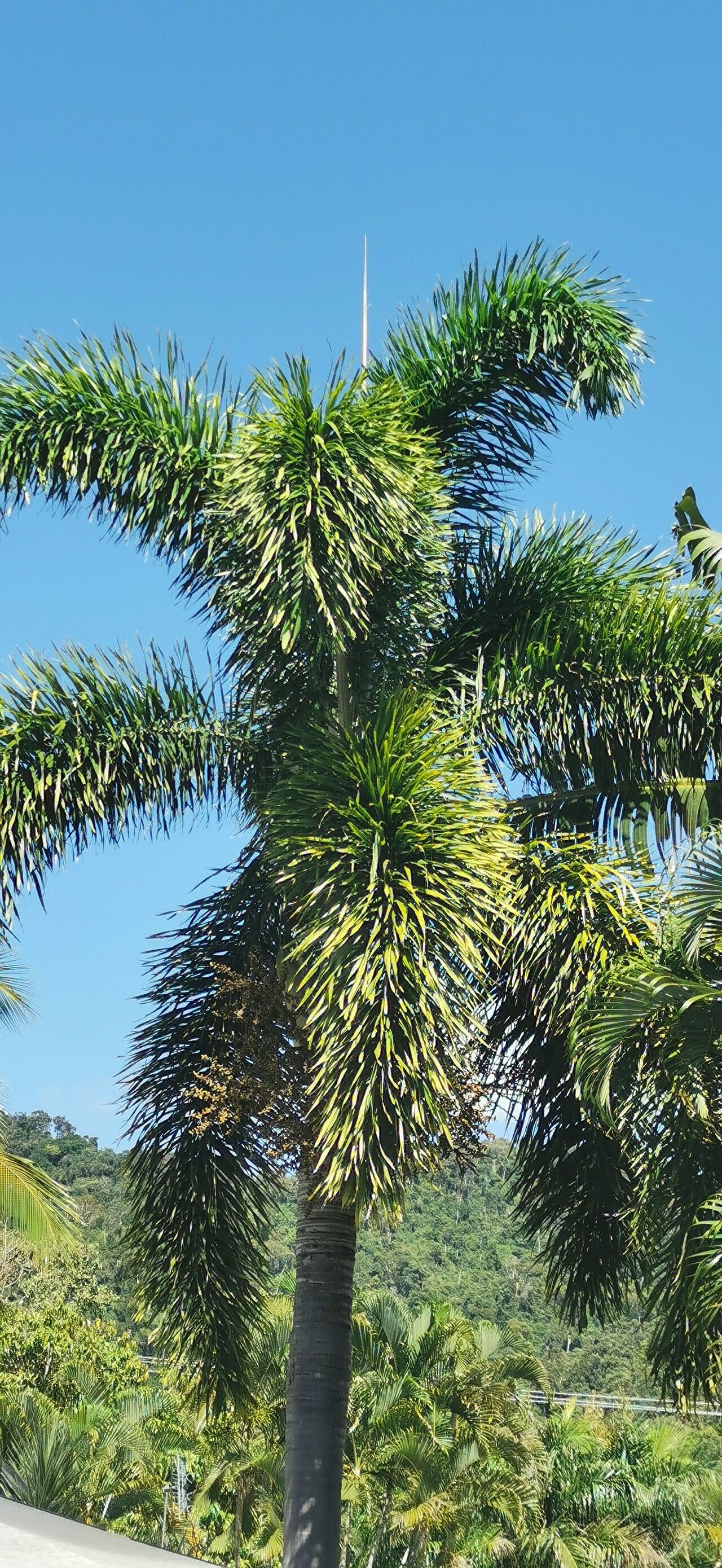
Wodyetia, Genus, bifurcata, Species,
- Genus & species
foxtail palm
Overview
Wodyetia is a monotypic genus in the palm family, containing only W. bifurcata, the foxtail palm, native to a small area of northeastern Queensland, Australia. It is a solitary palm with a smooth, grey, closely ringed trunk that swells slightly at the base and tapers upward, topped by a bright green crownshaft. The crown carries six to ten arching fronds 2-3 m (6.5-10 ft) long, each with many slender leaflets that radiate around the rachis in all directions, giving the bushy, bottlebrush look that earns the common name. Mature palms reach 10-15 m (33-50 ft) tall with a canopy 3-5 m (10-16 ft) across. Cream flowers are borne on branched stalks below the crownshaft and ripen into egg-shaped orange-red fruits about 5 cm (2 in) long. The species grows naturally among granite boulders in open woodland on free-draining soil and full sun, and it tolerates heat and, once established, drought. Growth is fast for a palm, and the crownshaft sheds old fronds cleanly. Frost and prolonged cold below about 0C (32F) damage or kill it, restricting outdoor use to tropical and warm subtropical climates.
Native Range
W. bifurcata is endemic to the Melville Range and nearby areas of Cape Melville in far northeastern Queensland, Australia. In the wild it grows among large granite boulders in open woodland on sandy, free-draining soil. Its natural range is small, though the palm is now widely planted in tropical regions worldwide.Suggested Uses
Used as a feature and avenue palm in tropical and subtropical gardens, parks, and streetscapes, and as a poolside or courtyard palm. Young palms are grown in containers and indoors in bright light. Groups of three create a clustered look from a naturally solitary palm.How to Identify
Appearance
Size & Dimensions
Height33' - 50'
Width/Spread10' - 16'
Bloom Information
Flowering can occur through the warm months, often in spring and summer, on branched flower stalks that emerge below the crownshaft. Cream flowers give way to clusters of orange-red fruit that ripen over several months. Established palms in warm climates flower and fruit freely once trunking.
Detailed Descriptions
Foliage Description
greenGrowing Conditions
Sun Requirements
Requires 6-10 hours of direct sunlight daily
• Full Sun: 6+ hours of direct sunlight
• Partial Shade: 3-6 hours of direct sunlight
• Full Shade: Less than 3 hours of direct sunlight
Care & Maintenance
Care Guide
The palm grows in full sun on light, free-draining sandy or loamy soil and tolerates a range of fertility. Young plants grow faster with regular water and feeding, while established palms tolerate short dry spells. It is frost-tender, and temperatures near or below freezing damage the fronds and can kill young palms, so it is grown outdoors only in tropical and warm subtropical zones. The crownshaft is self-cleaning, dropping spent fronds without trimming. Manganese or potassium shortages on poor sandy soils show as frizzled or spotted fronds and are corrected with palm fertiliser. Few pests trouble it, though sensitivity to cold is the main limit.Pruning
Little pruning is needed because the self-cleaning crownshaft sheds old fronds on its own. Completely brown, fully dead fronds are removed at the base if they do not drop. Green and partly green fronds are left in place, as over-trimming weakens the palm.Container Growing
Suitable for container growing
Minimum container size: 10 gallons