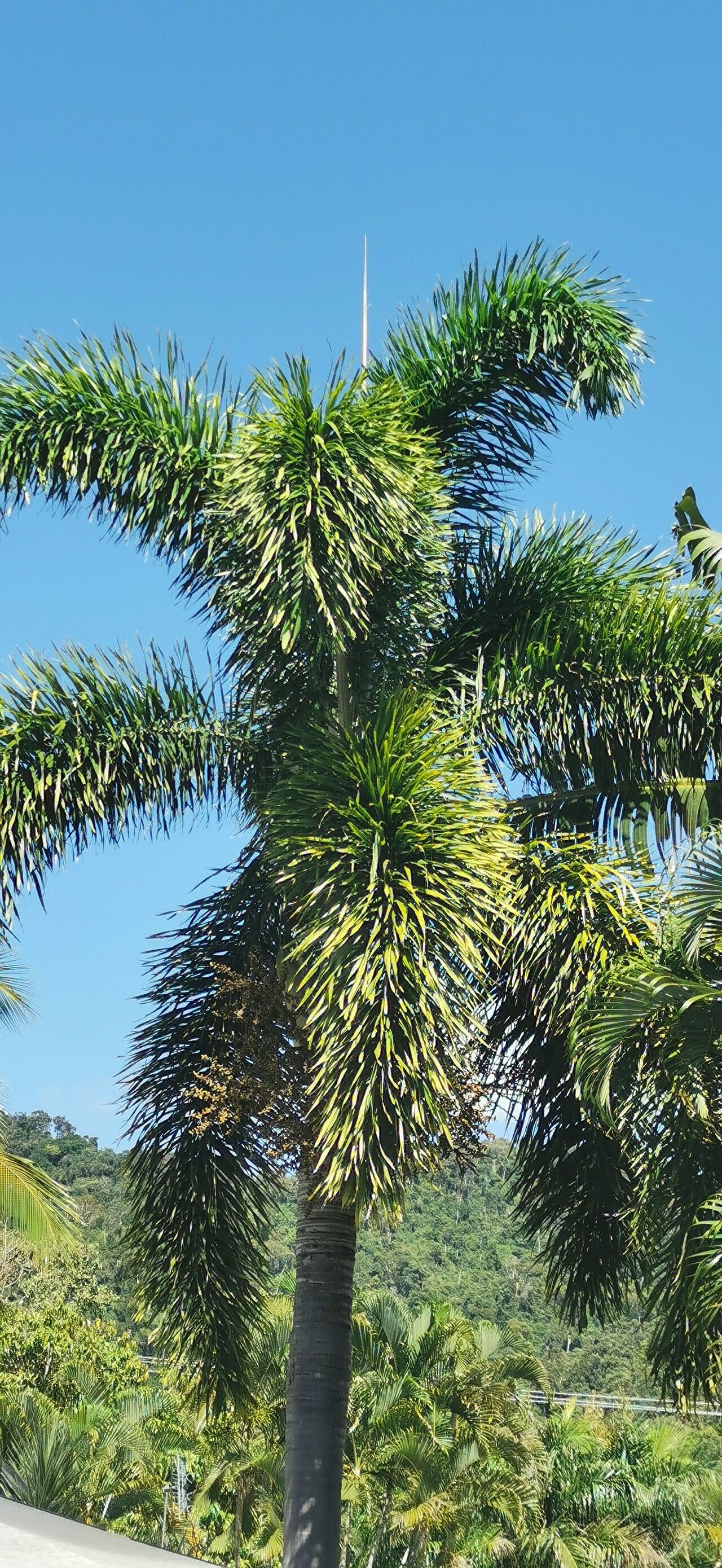
Wodyetia, Genus, bifurcata, Species,
- Genus & species
foxtail palm tree
Cape Melville Range, Cape York Peninsula, Queensland, Australia
Overview
Wodyetia bifurcata is an evergreen single-trunked palm reaching 30-40 feet (9-12 m) tall and 12-15 feet (3.6-4.5 m) wide, with a self-cleaning crown of 8-12 fronds. Each frond is 8-10 feet (2.4-3 m) long with leaflets arranged radially around the rachis, producing a plumose, brushlike appearance. Leaflets are bifurcated at the tip, narrow, dark green, 12-18 inches (30-45 cm) long. The smooth, ringed trunk reaches 8-12 inches (20-30 cm) in diameter and is light gray with a slightly bulging base. Inflorescences emerge from beneath the crownshaft as branched panicles 2-3 feet (60-90 cm) long bearing cream-colored flowers, followed by 2-inch (5 cm) orange-red drupes ripening over 6-9 months. Fruits contain a single fibrous seed. Annual growth rate is 1-2 feet (30-60 cm) of trunk extension under tropical conditions with regular irrigation. Cold sensitive; foliage is damaged at 30°F (-1°C), and trunks fail at sustained temperatures below 25°F (-4°C). The species is restricted by Australian export regulations as a Queensland native, while seed-propagated stock is widely grown in tropical and subtropical landscapes worldwide.
Native Range
W. bifurcata is native to a small area on the Cape Melville Range of Cape York Peninsula, far north Queensland, Australia, growing among granitic boulder fields at 100-1,300 feet (30-400 m) elevation. The species was first described in 1978, and wild populations are confined to roughly 12 square miles (31 sq km). Wild seed collection is regulated under Queensland nature conservation laws.Suggested Uses
Used as a single specimen, in groups of three or five for tropical landscape effect, or lining drives spaced 12-15 feet (3.6-4.5 m) apart. Common in tropical and subtropical residential landscapes in zones 10b-11; in zones 9b-10a it grows as a smaller specimen with periodic frost damage. Container specimens reach 4-6 feet (1.2-1.8 m) in 5-7 years and are grown indoors as juvenile palms in cooler climates.How to Identify
Appearance
Size & Dimensions
Height30' - 40'
Width/Spread12' - 15'
Bloom Information
Cream-colored flowers in branched panicles 2-3 feet (60-90 cm) long emerge from beneath the crownshaft year-round in tropical climates; flowering peaks in spring and summer in subtropical areas. Individual inflorescences last 4-6 weeks. Orange-red drupes ripen over 6-9 months and may persist on the panicle for several additional months.
Detailed Descriptions
Foliage Description
Dark greenGrowing Conditions
Sun Requirements
Requires 6-12 hours of direct sunlight daily
• Full Sun: 6+ hours of direct sunlight
• Partial Shade: 3-6 hours of direct sunlight
• Full Shade: Less than 3 hours of direct sunlight
Care & Maintenance
Care Guide
Water deeply 2-3 times weekly during the first two growing seasons after transplanting, with 10-15 gallons (38-57 L) per session. Established palms tolerate short drought of 3-4 weeks but show frond yellowing and reduced leaf production during prolonged dry periods. Fertilize three to four times per year with a complete palm fertilizer containing magnesium and micronutrients to prevent potassium and magnesium deficiencies, which appear as yellow leaflet tips on older fronds. Cold damage occurs at temperatures below 30°F (-1°C); container specimens require greenhouse protection in zones 9 and below. Plant in well-drained sandy or loamy soils; root rot develops on continuously wet, poorly drained sites. Self-cleaning fronds drop naturally; trimming green fronds reduces nutrient reserves and slows growth.Pruning
The self-cleaning crown drops dead fronds without intervention; pruning is rarely required. Dead or damaged fronds may be removed at any time of year with a saw cut close to the trunk, without taking off green fronds. Trimming green fronds reduces nutrient reserves stored in the leaves and produces deficiency symptoms within 6-12 months. The crownshaft and inflorescence stalks are not pruned.Pruning Schedule
springsummerfallwinter
Container Growing
Suitable for container growing
Minimum container size: 25 gallons