Strelitzia, Genus, nicolai, Species,
- Genus & species
giant bird of paradise
South Africa (Eastern Cape, KwaZulu-Natal)
Overview
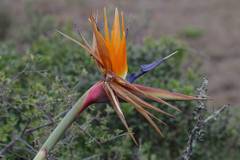
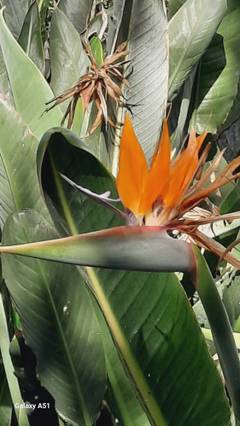
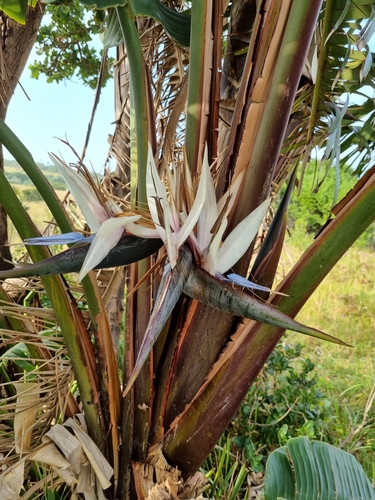
Strelitzia nicolai is the giant bird of paradise (white bird of paradise), growing 180–360 inches (450–900 cm) tall and 120–180 inches (300–450 cm) wide — 3–5 times larger than the orange-flowered S. reginae (bird of paradise, 36–60 inches / 90–150 cm). Large banana-like dark green leaves 36–72 inches (90–180 cm) on long petioles — the leaves tear along the lateral veins in wind, a structural characteristic of the banana order (Zingiberales), not damage. The white and blue-purple flowers resemble a bird's head in profile: white sepals forming the 'crest' and a blue-purple tongue forming the 'beak,' enclosed in a dark purple-blue boat-shaped bract 12–18 inches (30–45 cm). Flowers only on mature outdoor plants (5–8 years old, in full sun) — rarely flowers indoors, where it is grown as a foliage plant. Multi-stemmed: produces suckers from the rhizome base, forming a clump. Named after Czar Nicholas I of Russia. In the bird of paradise family (Strelitziaceae), in the order Zingiberales (related to bananas and heliconias). Native to South Africa (Eastern Cape and KwaZulu-Natal). Mildly toxic to dogs and cats (gastrointestinal irritation). Deer-resistant. Full sun to partial shade. Drought-tolerant once established. Frost-tender: foliage damage at 28°F (−2°C). Growth rate is moderate to fast. Containers of 10+ gallons (40+ liters) indoors. Zones 9–11 outdoors.
Native Range
Native to South Africa (Eastern Cape and KwaZulu-Natal provinces), growing in coastal and riverine forest margins.Suggested Uses
Grown outdoors in zones 9–11 as a large tropical foliage specimen, or indoors in containers of 10+ gallons (40+ liters) as a foliage plant. The large banana-like leaves create a tropical effect. Flowers only outdoors on mature plants. Mildly toxic to pets. Deer-resistant.How to Identify
Appearance
Size & Dimensions
Height15' - 30'
Width/Spread10' - 15'
Bloom Information
Detailed Descriptions
Flower Description
White sepals with blue-purple tongue; enclosed in dark purple-blue bractFoliage Description
Dark green, large banana-like, on long petiolesGrowing Conditions
Sun Requirements
Requires 6-10 hours of direct sunlight daily
• Full Sun: 6+ hours of direct sunlight
• Partial Shade: 3-6 hours of direct sunlight
• Full Shade: Less than 3 hours of direct sunlight
Care & Maintenance
Care Guide
Full sun to partial shade. Drought-tolerant once established. Leaves tear in wind (normal — structural trait). Flowers only on mature outdoor plants in full sun (rarely indoors). Mildly toxic to pets. Deer-resistant. Frost-tender at 28°F (−2°C). Zones 9–11 outdoors; indoor foliage plant elsewhere.Pruning
Remove dead or damaged leaves at the petiole base. Remove suckers to control spread, or allow clumping. Torn leaves are normal — do not remove green torn leaves. Remove spent flower stalks at the base.Container Growing
Suitable for container growing
Minimum container size: 10 gallons